Tomato Salad with Mustard Basil Dressing
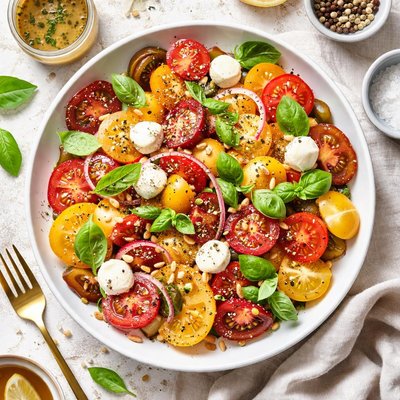
Bursting with vibrant flavors and summer-fresh ingredients, this Tomato Salad with Mustard Basil Dressing is the perfect side dish to elevate any meal. Juicy, ripe tomatoes are paired with aromatic basil leaves and dressed in a tangy Dijon mustard vinaigrette infused with hints of garlic, white wine vinegar, and a touch of honey for balanced sweetness. This no-cook recipe is ready in just 15 minutes, making it an effortless addition to your table. Perfect as a light appetizer or a refreshing complement to grilled dishes, this salad is a celebration of simple, wholesome ingredients. Serve it as-is, or let it rest briefly to let the flavors meld together for an even bolder taste.

Smart Nutrition Tracking with SnapCalorie

Explore More
Recipe Information
Ingredients
- 4 ripe tomatoes
- 10 leaves fresh basil leaves
- 3 tablespoons extra virgin olive oil
- 1 teaspoon Dijon mustard
- 1 tablespoon white wine vinegar
- 1 clove garlic
- 0.5 teaspoon salt
- 0.25 teaspoon black pepper
- 1 teaspoon honey
Instructions
Wash and dry the tomatoes. Slice them into wedges or rounds, depending on your preference, and transfer them to a large serving bowl.
Peel and finely mince the garlic clove.
In a small bowl, prepare the mustard-basil dressing by combining the olive oil, Dijon mustard, white wine vinegar, minced garlic, honey, salt, and black pepper. Whisk until well emulsified.
Chop the basil leaves roughly or tear them by hand for a more rustic presentation. Add them to the bowl with the tomatoes.
Drizzle the mustard-basil dressing over the tomatoes and basil. Gently toss the salad to coat the tomatoes evenly with the dressing.
For best results, let the salad sit for 5-10 minutes to allow the flavors to meld together.
Serve immediately as a side dish or appetizer. Optionally, garnish with extra basil leaves for a fresh touch.
Nutrition Facts
Calories |
115 | ||
|---|---|---|---|
% Daily Value* |
|||
| Total Fat | 10.2 g | 13% | |
| Saturated Fat | 1.4 g | 7% | |
| Polyunsaturated Fat | 0.0 g | ||
| Cholesterol | 0 mg | 0% | |
| Sodium | 277 mg | 12% | |
| Total Carbohydrate | 5.7 g | 2% | |
| Dietary Fiber | 1.3 g | 5% | |
| Total Sugars | 4.1 g | ||
| Protein | 1.0 g | 2% | |
| Vitamin D | 0.0 mcg | 0% | |
| Calcium | 15 mg | 1% | |
| Iron | 0.5 mg | 3% | |
| Potassium | 248 mg | 5% | |
*The % Daily Value tells you how much a nutrient in a serving of food contributes to a daily diet. 2,000 calories a day is used for general nutrition advice.


