The Easiest Pea Salad in the World
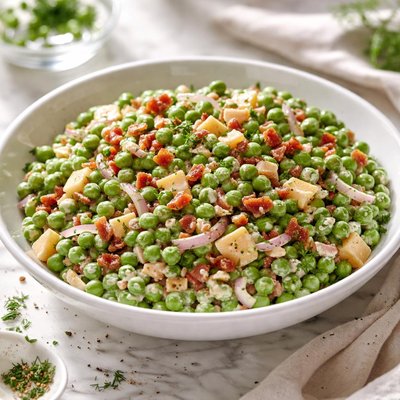
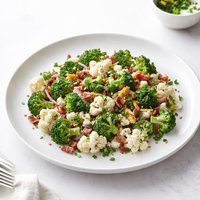
Bright, crunchy, and irresistibly creamy, "The Easiest Pea Salad in the World" is a quick 10-minute recipe that delivers bold flavor with minimal effort. This classic side dish combines tender, sweet peas with crispy bacon, sharp cheddar cheese, and a zesty kick of red onion, all enveloped in a luscious dressing made from mayonnaise and sour cream. Perfect for potlucks, picnics, or as a simple make-ahead dish, this easy pea salad requires no cooking and showcases ingredients you likely already have on hand. Serve it chilled for the ultimate refreshing bite that’s sure to steal the spotlight at your next gathering!

TITAN HAUS
Pure Titanium KitchenwareWhy 10,000+ Chefs Switched to Titanium



Recipe Information
Ingredients
- 500 grams frozen peas
- 120 grams mayonnaise
- 60 grams sour cream
- 100 grams cheddar cheese
- 4 slices cooked bacon
- 0.5 units red onion
- 0.25 teaspoons salt
- 0.25 teaspoons ground black pepper
Instructions
Remove the frozen peas from the freezer and let them thaw at room temperature for 10-15 minutes. Alternatively, you can rinse them under cold water in a colander and drain well.
While the peas are thawing, dice the cooked bacon into small pieces.
Shred the cheddar cheese using a box grater, if not pre-shredded.
Finely chop half of a red onion into small, uniform pieces.
In a large mixing bowl, combine the mayonnaise, sour cream, salt, and ground black pepper. Mix well until smooth and creamy.
Add the thawed and drained peas, shredded cheddar cheese, chopped bacon, and red onion to the bowl. Gently fold the ingredients together to coat them evenly in the dressing. Be careful not to mash the peas.
Transfer the pea salad to a serving dish or cover the bowl with plastic wrap and refrigerate for at least 30 minutes to allow the flavors to meld together.
Serve chilled and enjoy!
Nutrition Facts
Calories |
328 | ||
|---|---|---|---|
% Daily Value* |
|||
| Total Fat | 25.6 g | 33% | |
| Saturated Fat | 8.0 g | 40% | |
| Polyunsaturated Fat | 0.3 g | ||
| Cholesterol | 36 mg | 12% | |
| Sodium | 424 mg | 18% | |
| Total Carbohydrate | 14.2 g | 5% | |
| Dietary Fiber | 4.8 g | 17% | |
| Total Sugars | 5.9 g | ||
| Protein | 10.9 g | 22% | |
| Vitamin D | 0.1 mcg | 1% | |
| Calcium | 158 mg | 12% | |
| Iron | 1.4 mg | 8% | |
| Potassium | 266 mg | 6% | |
*The % Daily Value tells you how much a nutrient in a serving of food contributes to a daily diet. 2,000 calories a day is used for general nutrition advice.



