Teriyaki Sauce for Chicken
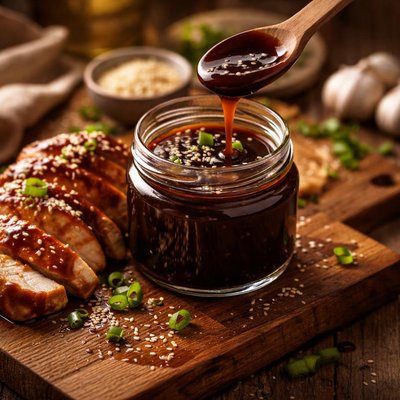
Elevate your chicken dishes with this luscious homemade Teriyaki Sauce, a perfect balance of savory, sweet, and tangy flavors. Crafted with a blend of soy sauce, brown sugar, honey, and rice vinegar, this rich sauce is enhanced by the aromatic depth of garlic, ginger, and sesame oil. Thickened to perfection with a cornstarch slurry, it clings beautifully to chicken whether used as a marinade, glaze, or dipping sauce. Ready in just 15 minutes, this quick and versatile recipe is an effortless way to add bold, restaurant-quality flavor to your meals. Plus, it’s made with pantry staples and can be stored in the fridge for up to a week, making it an essential addition to your homemade Asian-inspired recipes.

Smart Nutrition Tracking with SnapCalorie

Explore More


Recipe Information
Ingredients
- 0.5 cup Soy sauce
- 0.25 cup Brown sugar
- 2 tablespoons Honey
- 2 tablespoons Rice vinegar
- 1 teaspoon Sesame oil
- 2 cloves Garlic, minced
- 1 teaspoon Ginger, minced or grated
- 1 tablespoon Cornstarch
- 2 tablespoons Water (for cornstarch slurry)
- 0.5 cup Water
Instructions
In a medium saucepan, combine the soy sauce, brown sugar, honey, rice vinegar, sesame oil, minced garlic, minced ginger, and 1/2 cup of water.
Place the saucepan over medium heat and stir the mixture gently until the sugar dissolves and the sauce begins to simmer.
In a small bowl, mix the cornstarch with 2 tablespoons of water to create a smooth slurry.
Slowly pour the cornstarch slurry into the saucepan while stirring continuously to prevent lumps.
Allow the sauce to simmer for 2-3 minutes, stirring frequently, until it thickens to your preferred consistency.
Remove the saucepan from the heat and let the sauce cool slightly before using.
Use the teriyaki sauce as a marinade or glaze for chicken. Store any leftovers in an airtight container in the refrigerator for up to one week.
Nutrition Facts
Calories |
99 | ||
|---|---|---|---|
% Daily Value* |
|||
| Total Fat | 2.4 g | 3% | |
| Saturated Fat | 0.4 g | 2% | |
| Polyunsaturated Fat | 1.0 g | ||
| Cholesterol | 0 mg | 0% | |
| Sodium | 772 mg | 34% | |
| Total Carbohydrate | 18.4 g | 7% | |
| Dietary Fiber | 0.2 g | 1% | |
| Total Sugars | 15.7 g | ||
| Protein | 2.0 g | 4% | |
| Vitamin D | 0.0 mcg | 0% | |
| Calcium | 20 mg | 2% | |
| Iron | 0.6 mg | 3% | |
| Potassium | 109 mg | 2% | |
*The % Daily Value tells you how much a nutrient in a serving of food contributes to a daily diet. 2,000 calories a day is used for general nutrition advice.


