Tarragon Turkey Salad
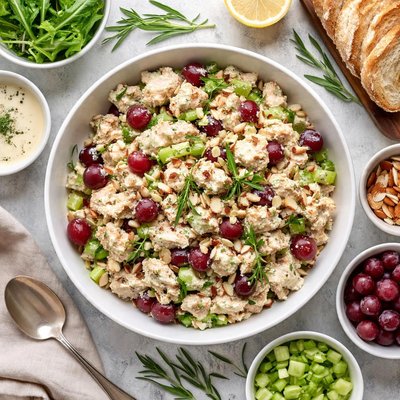
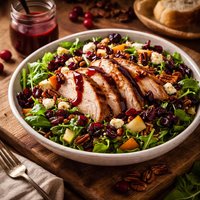
Enjoy a refreshing twist on a classic dish with this Tarragon Turkey Salad—perfect for lunch, picnics, or light dinners. This recipe combines tender diced turkey breast with the crisp crunch of celery and the subtle bite of red onion, all brought together by a creamy dressing featuring Greek yogurt, mayonnaise, and the bright, herbaceous flavor of fresh tarragon. A splash of lemon juice and a hint of Dijon mustard add tangy depth, making each bite irresistibly flavorful. Ready in just 15 minutes, this healthy and versatile salad can be served over mixed greens, tucked into sandwiches, or paired with crackers for an effortlessly satisfying meal. Packed with protein and bursting with fresh ingredients, it’s a must-try for turkey lovers seeking a delicious, low-carb option!

Smart Nutrition Tracking with SnapCalorie


Recipe Information
Ingredients
- 2 cups (diced) cooked turkey breast
- 0.3333 cup mayonnaise
- 0.25 cup Greek yogurt
- 1 tablespoon (chopped) fresh tarragon leaves
- 0.5 cup (diced) celery
- 0.25 cup (finely chopped) red onion
- 1 tablespoon lemon juice
- 1 teaspoon Dijon mustard
- 0.5 teaspoon salt
- 0.25 teaspoon black pepper
- mixed greens or bread (for serving, optional)
Instructions
1. In a large mixing bowl, combine the diced turkey breast, celery, and red onion. Stir to distribute evenly.
2. In a separate small bowl, whisk together the mayonnaise, Greek yogurt, chopped tarragon, lemon juice, Dijon mustard, salt, and black pepper until smooth and well combined.
3. Pour the dressing mixture over the turkey and vegetables. Gently fold the ingredients together to coat the turkey evenly with the dressing.
4. Taste and adjust seasoning, adding more salt, pepper, or lemon juice as desired.
5. Cover the bowl with plastic wrap and refrigerate for at least 15 minutes to allow the flavors to meld. This step is optional but highly recommended.
6. Serve the tarragon turkey salad over a bed of mixed greens, in a sandwich, or with crackers, as desired.
Nutrition Facts
Calories |
273 | ||
|---|---|---|---|
% Daily Value* |
|||
| Total Fat | 17.9 g | 23% | |
| Saturated Fat | 3.3 g | 16% | |
| Polyunsaturated Fat | 0.0 g | ||
| Cholesterol | 57 mg | 19% | |
| Sodium | 474 mg | 21% | |
| Total Carbohydrate | 3.4 g | 1% | |
| Dietary Fiber | 0.9 g | 3% | |
| Total Sugars | 1.4 g | ||
| Protein | 23.2 g | 46% | |
| Vitamin D | 0.0 mcg | 0% | |
| Calcium | 60 mg | 5% | |
| Iron | 1.1 mg | 6% | |
| Potassium | 358 mg | 8% | |
*The % Daily Value tells you how much a nutrient in a serving of food contributes to a daily diet. 2,000 calories a day is used for general nutrition advice.


