Ricotta Cheese Little Snack
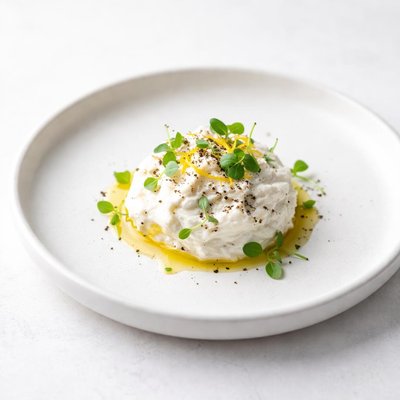
Elevate your snack game with these Ricotta Cheese Little Snacks, a perfect blend of creamy, crunchy, and sweet-savory flavors. Featuring silky ricotta cheese seasoned with a hint of salt, pepper, and optional lemon zest, this delightful spread pairs beautifully with golden, olive oil-toasted baguette slices. A drizzle of honey and a sprinkle of fresh thyme add depth and elegance, while optional fresh berries provide a touch of fruity brightness. Ready in just 15 minutes, this quick and sophisticated appetizer is ideal for entertaining or a mid-afternoon treat. Whether served as-is or with a twist of lemon, these bites promise to impress with their simplicity and gourmet flair.

Smart Nutrition Tracking with SnapCalorie





Recipe Information
Ingredients
- 1 cup Ricotta cheese
- 1 loaf Baguette or crusty bread
- 2 tablespoons Extra-virgin olive oil
- 1 tablespoon Honey
- 1 teaspoon Fresh thyme leaves
- 0.25 teaspoon Salt
- 0.25 teaspoon Black pepper
- 0.25 cup Optional: Fresh berries
- 0.5 teaspoon Optional: Lemon zest
Instructions
Preheat your oven to 375°F (190°C) or set a skillet over medium-high heat if toasting bread on the stovetop.
Slice the baguette into 8 to 10 thin slices (approximately 1/2 inch thick).
Lightly brush both sides of each slice with extra-virgin olive oil.
Place the bread slices on a baking tray if using the oven and toast for 5 minutes or until golden brown. If using a skillet, toast each side for 2–3 minutes until crisp.
In a small bowl, mix the ricotta cheese with salt, black pepper, and (optional) lemon zest for added brightness.
Spread a generous tablespoon of the seasoned ricotta cheese onto each toasted bread slice.
Drizzle the tops with honey, then sprinkle with fresh thyme leaves.
For an optional sweet-and-savory twist, add a few fresh berries like raspberries, blueberries, or blackberries on top.
Serve immediately as a delicious snack or appetizer.
Nutrition Facts
Calories |
362 | ||
|---|---|---|---|
% Daily Value* |
|||
| Total Fat | 15.6 g | 20% | |
| Saturated Fat | 6.3 g | 31% | |
| Polyunsaturated Fat | 0.0 g | ||
| Cholesterol | 32 mg | 11% | |
| Sodium | 518 mg | 23% | |
| Total Carbohydrate | 44.1 g | 16% | |
| Dietary Fiber | 1.8 g | 7% | |
| Total Sugars | 6.6 g | ||
| Protein | 12.8 g | 26% | |
| Vitamin D | 0.0 mcg | 0% | |
| Calcium | 146 mg | 11% | |
| Iron | 1.7 mg | 9% | |
| Potassium | 168 mg | 4% | |
*The % Daily Value tells you how much a nutrient in a serving of food contributes to a daily diet. 2,000 calories a day is used for general nutrition advice.


