Rice Pudding from Leftover Rice
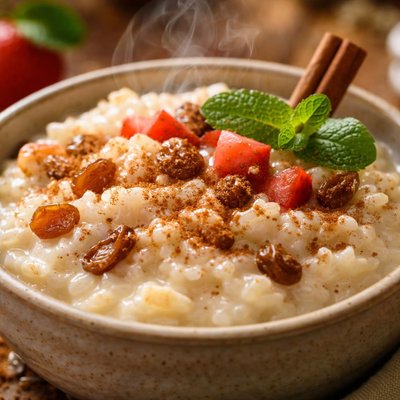
Transform your kitchen leftovers into a comforting dessert with this easy and delicious recipe for Rice Pudding from Leftover Rice. Perfectly repurposing cooked rice, this creamy treat combines pantry staples like whole milk, sugar, and vanilla extract with a hint of warm cinnamon. Simmered gently on the stovetop, the pudding develops a luscious, velvety texture that can be personalized with optional raisins for bursts of sweetness. Ready in just 30 minutes, it’s an ideal way to minimize food waste while satisfying your sweet tooth. Serve it warm for cozy vibes or chilled for a refreshing twist—either way, this budget-friendly classic is sure to delight.

Smart Nutrition Tracking with SnapCalorie




Recipe Information
Ingredients
- 2 cups Cooked leftover rice
- 2 cups Whole milk
- 0.25 cups Granulated sugar
- 1 teaspoons Vanilla extract
- 0.5 teaspoons Ground cinnamon
- 0.5 cups Raisins (optional)
- 1 tablespoons Butter
- 1 pinch Salt
Instructions
In a medium-sized saucepan, combine the cooked leftover rice, whole milk, and granulated sugar.
Place the saucepan over medium heat and stir the mixture to combine. Bring it to a gentle boil.
Reduce the heat to low and let the mixture simmer. Stir frequently to prevent sticking or burning, allowing the flavors to meld and the pudding to thicken. This should take about 15-20 minutes.
Once the pudding has reached your desired consistency, stir in the vanilla extract, ground cinnamon, and a pinch of salt.
If using raisins, fold them into the pudding and let them warm for 2-3 minutes.
Stir in the butter until melted and fully incorporated to give the pudding a velvety texture.
Remove the saucepan from the heat and let the pudding cool slightly. It will thicken further as it cools.
Serve the rice pudding warm or chilled, garnished with an additional sprinkle of cinnamon if desired.
Nutrition Facts
Calories |
321 | ||
|---|---|---|---|
% Daily Value* |
|||
| Total Fat | 7.2 g | 9% | |
| Saturated Fat | 4.3 g | 22% | |
| Polyunsaturated Fat | 0.0 g | ||
| Cholesterol | 20 mg | 7% | |
| Sodium | 115 mg | 5% | |
| Total Carbohydrate | 58.5 g | 21% | |
| Dietary Fiber | 1.2 g | 4% | |
| Total Sugars | 31.4 g | ||
| Protein | 6.5 g | 13% | |
| Vitamin D | 1.6 mcg | 8% | |
| Calcium | 164 mg | 13% | |
| Iron | 1.2 mg | 7% | |
| Potassium | 346 mg | 7% | |
*The % Daily Value tells you how much a nutrient in a serving of food contributes to a daily diet. 2,000 calories a day is used for general nutrition advice.


