Panera Bread Tuna Salad Sandwich
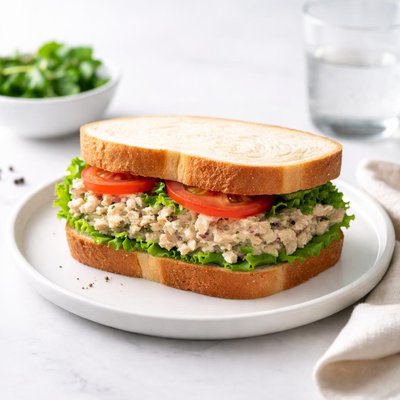
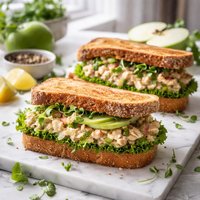
Recreate the comforting flavors of a Panera Bread classic with this delightful Tuna Salad Sandwich recipe. Featuring tender canned tuna mixed with creamy mayonnaise, crisp celery, tangy dill pickles, and a touch of fresh lemon juice, this recipe brings the perfect balance of freshness and texture. Served between slices of hearty whole-grain or sourdough bread and layered with green leaf lettuce and optional juicy tomato slices, this sandwich is a satisfying lunch that’s ready in just 15 minutes. Perfect for busy weekdays or a light weekend meal, this homemade version of a café favorite is both flavorful and easy to prepare. Whether you’re a Panera fan or a tuna salad lover, this sandwich is sure to become a go-to in your recipe collection!

Smart Nutrition Tracking with SnapCalorie

Explore More
Recipe Information
Ingredients
- 10 ounces Canned tuna (in water)
- 0.33 cup Mayonnaise
- 1 piece Celery stalk
- 2 tablespoons Red onion
- 2 teaspoons Dill pickles
- 1 teaspoon Fresh lemon juice
- 0.25 teaspoon Salt
- 0.25 teaspoon Black pepper
- 4 slices Whole-grain or sourdough bread slices
- 2 leaves Green leaf lettuce
- 4 slices Tomato (optional, sliced)
Instructions
Drain the canned tuna thoroughly and transfer it into a medium-sized mixing bowl.
Finely chop the celery stalk, red onion, and dill pickles. Add them to the mixing bowl with the tuna.
Stir in the mayonnaise, fresh lemon juice, salt, and black pepper. Mix well until all the ingredients are evenly combined.
Taste the tuna salad and adjust seasoning (salt and pepper) if necessary.
Lay out the bread slices on a flat surface. Spread a generous amount of the tuna salad mixture evenly over two slices of bread.
Place a green leaf lettuce on top of the tuna salad, followed by two slices of tomato (if using).
Top with the remaining slices of bread to form your sandwiches.
For a cleaner presentation, trim the crusts if desired, and cut the sandwiches in halves or quarters.
Serve immediately and enjoy!
Nutrition Facts
Calories |
605 | ||
|---|---|---|---|
% Daily Value* |
|||
| Total Fat | 32.9 g | 42% | |
| Saturated Fat | 5.3 g | 27% | |
| Polyunsaturated Fat | 0.0 g | ||
| Cholesterol | 64 mg | 21% | |
| Sodium | 1399 mg | 61% | |
| Total Carbohydrate | 43.8 g | 16% | |
| Dietary Fiber | 5.0 g | 18% | |
| Total Sugars | 6.0 g | ||
| Protein | 35.5 g | 71% | |
| Vitamin D | 2.8 mcg | 14% | |
| Calcium | 75 mg | 6% | |
| Iron | 4.0 mg | 22% | |
| Potassium | 549 mg | 12% | |
*The % Daily Value tells you how much a nutrient in a serving of food contributes to a daily diet. 2,000 calories a day is used for general nutrition advice.


