Tastes Like Tuna
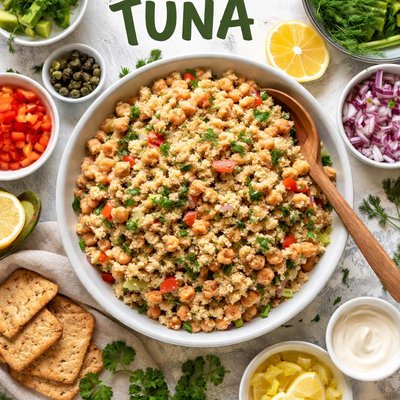
Experience a plant-based twist on a classic seafood favorite with "Tastes Like Tuna," a flavorful and protein-packed chickpea salad that delivers all the nostalgic appeal without the fish. This quick, no-cook recipe combines mashed chickpeas with creamy vegan mayonnaise, tangy dill pickles, crunchy celery, and aromatic red onion for irresistible texture and taste. A dash of kelp powder and nutritional yeast adds a subtle umami "seafood" flavor, while lemon juice and dried dill bring zingy freshness to every bite. Ready in just 15 minutes, this versatile dish can be served chilled as a sandwich filling, in wraps, or as a hearty dip for crackers and veggies. Perfect for vegans or anyone seeking a sustainable, delicious alternative to traditional tuna salad! Tailor this vegan recipe to suit gluten-free diets with tamari, and savor the vibrant fusion of bold flavors and creamy comfort.

Smart Nutrition Tracking with SnapCalorie

Recipe Information
Ingredients
- 1 can (15 oz) canned chickpeas (garbanzo beans), drained and rinsed
- 3 tablespoons vegan mayonnaise
- 1 medium dill pickle, finely chopped
- 1 medium celery stalk, finely chopped
- 2 tablespoons red onion, finely chopped
- 1 tablespoon lemon juice
- 1 teaspoon soy sauce or tamari (for gluten-free)
- 1 tablespoon nutritional yeast
- 0.5 teaspoon kelp powder (for a hint of 'sea' flavor)
- 0.5 teaspoon dried dill
- 0.25 teaspoon salt
- 0.25 teaspoon black pepper
Instructions
1. Place the drained and rinsed chickpeas in a medium-sized mixing bowl.
2. Use a fork or potato masher to mash the chickpeas until they are mostly broken down, leaving some chunks for texture.
3. Add the vegan mayonnaise, dill pickle, celery, red onion, lemon juice, soy sauce or tamari, nutritional yeast, kelp powder, dried dill, salt, and black pepper to the bowl.
4. Stir everything together until well combined. Adjust the seasonings to taste if needed.
5. Chill the mixture in the refrigerator for at least 20 minutes to let the flavors meld (optional but recommended).
6. Serve as a sandwich filling, on crackers, in wraps, or as a dip with fresh vegetables.
Nutrition Facts
Calories |
130 | ||
|---|---|---|---|
% Daily Value* |
|||
| Total Fat | 3.7 g | 5% | |
| Saturated Fat | 0.4 g | 2% | |
| Polyunsaturated Fat | 1.2 g | ||
| Cholesterol | 3 mg | 1% | |
| Sodium | 604 mg | 26% | |
| Total Carbohydrate | 19.2 g | 7% | |
| Dietary Fiber | 4.8 g | 17% | |
| Total Sugars | 2.8 g | ||
| Protein | 5.8 g | 12% | |
| Vitamin D | 0.0 mcg | 0% | |
| Calcium | 45 mg | 3% | |
| Iron | 1.8 mg | 10% | |
| Potassium | 250 mg | 5% | |
*The % Daily Value tells you how much a nutrient in a serving of food contributes to a daily diet. 2,000 calories a day is used for general nutrition advice.


