Low Carb Crock Pot Jambalaya

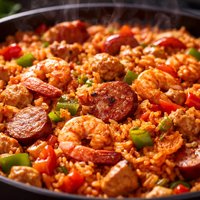
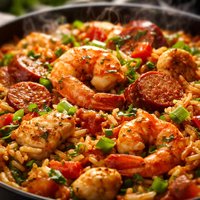
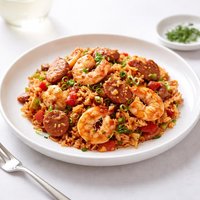
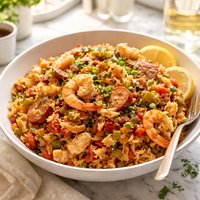
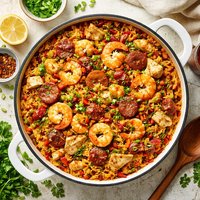
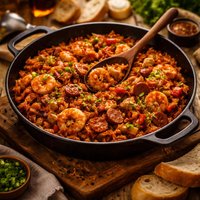
Dive into the bold, zesty flavors of this Low Carb Crock Pot Jambalaya, a healthier twist on the Louisiana classic that’s perfect for keto and gluten-free diets. Packed with tender chicken, smoky Andouille sausage, and succulent shrimp, this dish is slow-cooked to perfection with a vibrant mix of bell peppers, celery, and onions. A medley of Cajun spices infuses every bite with rich, savory heat, while cauliflower rice keeps it light yet satisfying. With minimal prep and the ease of a crock pot, this low carb jambalaya is an effortless way to bring comforting Southern flavors to your table. Serve it hot and topped with fresh parsley for a flavorful dish that's sure to impress!

Smart Nutrition Tracking with SnapCalorie

Explore More
Recipe Information
Ingredients
- 1 pound Chicken breast, diced
- 12 ounces Andouille sausage, sliced
- 1 pound Shrimp, peeled and deveined
- 2 Bell peppers, diced (use red, green, or yellow)
- 3 Celery stalks, diced
- 1 medium Onion, diced
- 3 cloves Garlic, minced
- 14.5 ounces Diced tomatoes, canned (with juices)
- 2 cups Chicken broth
- 1.5 tablespoons Cajun seasoning
- 1 teaspoon Paprika
- 1 teaspoon Dried thyme
- 0.5 teaspoons Sea salt
- 0.25 teaspoons Black pepper
- 3 cups Cauliflower rice
- 2 tablespoons Fresh parsley, chopped (for garnish)
- 1 tablespoon Olive oil
Instructions
Heat the olive oil in a skillet over medium heat. Add the diced chicken breast and Andouille sausage slices. Cook for 5-7 minutes, stirring occasionally, until the chicken is lightly browned but not fully cooked through. Transfer to the crock pot.
To the crock pot, add the diced bell peppers, celery, onion, and minced garlic.
Pour in the canned diced tomatoes with their juices and the chicken broth.
Stir in the Cajun seasoning, paprika, dried thyme, sea salt, and black pepper.
Cover and cook on low heat for 3-4 hours or until the chicken is cooked through and the vegetables are tender.
About 30 minutes before serving, stir in the shrimp and cauliflower rice. Cook until the shrimp are pink and opaque and the cauliflower rice is heated through.
Taste and adjust seasonings if needed.
Serve the jambalaya hot, garnished with freshly chopped parsley.
Nutrition Facts
Calories |
458 | ||
|---|---|---|---|
% Daily Value* |
|||
| Total Fat | 21.1 g | 27% | |
| Saturated Fat | 6.5 g | 32% | |
| Polyunsaturated Fat | 0.0 g | ||
| Cholesterol | 252 mg | 84% | |
| Sodium | 1291 mg | 56% | |
| Total Carbohydrate | 15.7 g | 6% | |
| Dietary Fiber | 4.9 g | 17% | |
| Total Sugars | 7.6 g | ||
| Protein | 54.0 g | 108% | |
| Vitamin D | 0.1 mcg | 1% | |
| Calcium | 151 mg | 12% | |
| Iron | 3.2 mg | 18% | |
| Potassium | 1221 mg | 26% | |
*The % Daily Value tells you how much a nutrient in a serving of food contributes to a daily diet. 2,000 calories a day is used for general nutrition advice.


