Japanese Cabbage Salad
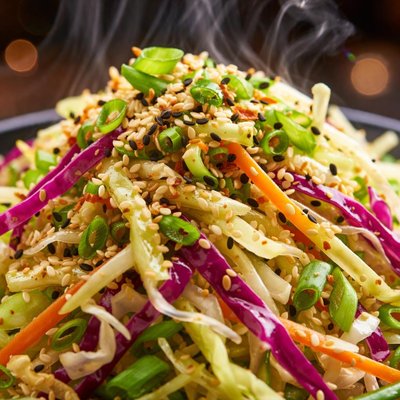
Crisp, colorful, and bursting with bold flavors, this Japanese Cabbage Salad is a vibrant side dish that’s as easy to prepare as it is delicious. Packed with nutritious shredded green cabbage, red cabbage, and carrots, it’s elevated with the toasty nuttiness of sesame seeds and the fresh zing of ginger and garlic. A perfectly balanced soy sauce and rice vinegar dressing ties everything together, infusing the salad with sweet, tangy, and savory notes. Ready in just 15 minutes, it’s a healthy, gluten-free option that pairs beautifully with a variety of main dishes or stands alone as a refreshing, light meal. Perfect for potlucks, lunches, or dinner parties, this simple yet sophisticated salad is sure to impress with its combination of texture, flavor, and visual appeal.

Smart Nutrition Tracking with SnapCalorie

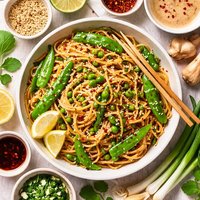
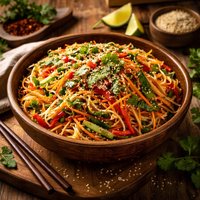
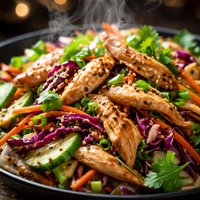
Recipe Information
Ingredients
- 4 cups Shredded green cabbage
- 2 cups Shredded red cabbage
- 1 cup Shredded carrots
- 2 stalks Green onions (sliced thin)
- 2 tablespoons Toasted sesame seeds
- 2 tablespoons Soy sauce
- 2 tablespoons Rice vinegar
- 1 tablespoon Sesame oil
- 1 tablespoon Honey
- 1 teaspoon Fresh ginger (grated)
- 1 clove Garlic (minced)
- 0.5 teaspoon Salt
- 0.25 teaspoon Black pepper
Instructions
In a large mixing bowl, combine the shredded green cabbage, shredded red cabbage, shredded carrots, and sliced green onions.
In a small bowl, whisk together the soy sauce, rice vinegar, sesame oil, honey, grated ginger, and minced garlic until the mixture is smooth and well combined.
Season the dressing with salt and black pepper, adjusting to taste if necessary.
Pour the dressing over the cabbage mixture and toss thoroughly to ensure the vegetables are evenly coated.
Sprinkle the toasted sesame seeds over the top of the salad and toss lightly to distribute them throughout.
Allow the salad to rest for 5–10 minutes to let the flavors meld together.
Serve immediately as a refreshing side dish or refrigerate for up to 1 hour before serving for a crisp and cool texture.
Nutrition Facts
Calories |
131 | ||
|---|---|---|---|
% Daily Value* |
|||
| Total Fat | 6.0 g | 8% | |
| Saturated Fat | 1.0 g | 5% | |
| Polyunsaturated Fat | 1.4 g | ||
| Cholesterol | 0 mg | 0% | |
| Sodium | 584 mg | 25% | |
| Total Carbohydrate | 18.5 g | 7% | |
| Dietary Fiber | 4.8 g | 17% | |
| Total Sugars | 10.8 g | ||
| Protein | 3.6 g | 7% | |
| Vitamin D | 0.0 mcg | 0% | |
| Calcium | 97 mg | 7% | |
| Iron | 1.4 mg | 8% | |
| Potassium | 424 mg | 9% | |
*The % Daily Value tells you how much a nutrient in a serving of food contributes to a daily diet. 2,000 calories a day is used for general nutrition advice.


