Icing Sugar Substitute
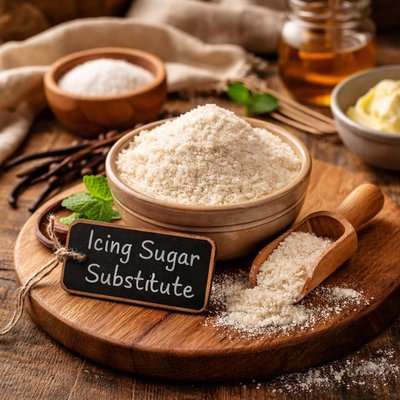
Whip up your own homemade icing sugar substitute in just 5 minutes with this simple two-ingredient recipe! Perfect for bakers in a pinch, this DIY solution combines granulated white sugar and cornstarch, blended to a silky, powdery perfection that rivals store-bought powdered sugar. The added cornstarch ensures a smooth, clump-free texture, making it a versatile 1:1 replacement for icing sugar in frosting, glazes, and other sweet treats. With no cooking required and minimal effort, this budget-friendly alternative is a pantry essential for anyone who loves baking.

Smart Nutrition Tracking with SnapCalorie

Explore More

Recipe Information
Ingredients
- 1 cup Granulated white sugar
- 1 tablespoon Cornstarch
Instructions
Measure 1 cup of granulated white sugar and add it to a high-speed blender or food processor.
Add 1 tablespoon of cornstarch to the blender. The cornstarch helps prevent clumping and gives the icing sugar its characteristic texture.
Blend the sugar and cornstarch mixture on high speed for about 30-60 seconds, or until the mixture is very fine and powdery. If your blender has a pulse function, you can pulse in short bursts to reach the desired consistency.
Stop the blender and carefully check the consistency by rubbing a small amount of the mixture between your fingers. It should feel very smooth without noticeable granules. If needed, blend for a few more seconds.
Once the sugar is finely powdered, allow it to sit for a minute before opening the blender to avoid inhaling the fine sugar dust.
Transfer the icing sugar substitute to an airtight container and store it in a cool, dry place. Use as a 1:1 replacement for store-bought powdered sugar in recipes.
Nutrition Facts
Calories |
832 | ||
|---|---|---|---|
% Daily Value* |
|||
| Total Fat | 0.6 g | 1% | |
| Saturated Fat | 0.0 g | 0% | |
| Polyunsaturated Fat | 0.0 g | ||
| Cholesterol | 0 mg | 0% | |
| Sodium | 2 mg | 0% | |
| Total Carbohydrate | 206.1 g | 75% | |
| Dietary Fiber | 0.0 g | 0% | |
| Total Sugars | 199.7 g | ||
| Protein | 0.0 g | 0% | |
| Vitamin D | 0.0 mcg | 0% | |
| Calcium | 2 mg | 0% | |
| Iron | 0.0 mg | 0% | |
| Potassium | 4 mg | 0% | |
*The % Daily Value tells you how much a nutrient in a serving of food contributes to a daily diet. 2,000 calories a day is used for general nutrition advice.


