Heart-Healthy Classic Beef Carpaccio

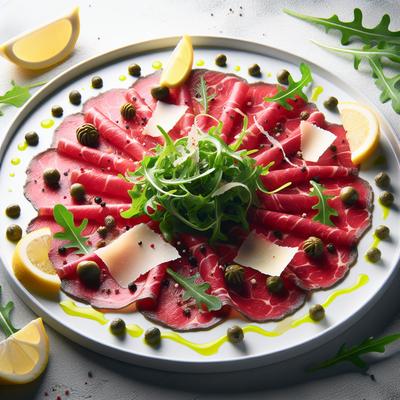
Elevate your appetizer game with this *Heart-Healthy Classic Beef Carpaccio*, a light yet indulgent dish featuring thinly sliced beef tenderloin dressed in a zesty lemon and extra virgin olive oil vinaigrette. This recipe keeps things fresh with peppery arugula, salty capers, and nutty Parmesan shavings, creating a perfect balance of flavors and textures. Ready in just 20 minutes with no cooking required, it's an elegant and nutritious dish ideal for entertaining or as a luxurious starter. Packed with wholesome ingredients and bursting with vibrant, fresh flavors, this carpaccio is a refined way to enjoy heart-healthy eating. Serve chilled for the ultimate sophisticated bite!

Get More Healthy Recipes with SnapCalorie



Recipe Information
Ingredients
- 400 grams beef tenderloin
- 2 tablespoons lemon juice
- 3 tablespoons extra virgin olive oil
- 2 tablespoons capers, rinsed and drained
- 0.5 teaspoon freshly ground black pepper
- 0.5 teaspoon sea salt
- 50 grams arugula
- 30 grams Parmesan cheese, shaved
- 1 tablespoon fresh parsley, chopped
Instructions
Place the beef tenderloin in the freezer for about 15 minutes to make it easier to slice thinly.
Remove the beef from the freezer and slice it as thinly as possible using a very sharp knife. Ideally, you should be able to see through the slices.
Arrange the slices on a large plate or serving platter, ensuring that they overlap slightly.
In a small bowl, whisk together the lemon juice, extra virgin olive oil, sea salt, and freshly ground black pepper to form a simple vinaigrette.
Drizzle the vinaigrette evenly over the beef slices.
Sprinkle the capers over the beef, followed by the shaved Parmesan cheese.
Arrange the arugula over the beef and top with chopped fresh parsley.
Serve immediately or cover and refrigerate for up to 30 minutes before serving to allow the flavors to meld together.
Nutrition Facts
Calories |
1319 | ||
|---|---|---|---|
% Daily Value* |
|||
| Total Fat | 84.6 g | 108% | |
| Saturated Fat | 24.8 g | 124% | |
| Polyunsaturated Fat | 0.0 g | ||
| Cholesterol | 361 mg | 120% | |
| Sodium | 1906 mg | 83% | |
| Total Carbohydrate | 5.0 g | 2% | |
| Dietary Fiber | 0.9 g | 3% | |
| Total Sugars | 0.9 g | ||
| Protein | 133.6 g | 267% | |
| Vitamin D | 0.2 mcg | 1% | |
| Calcium | 412 mg | 32% | |
| Iron | 12.6 mg | 70% | |
| Potassium | 1622 mg | 35% | |
*The % Daily Value tells you how much a nutrient in a serving of food contributes to a daily diet. 2,000 calories a day is used for general nutrition advice.


