German Cucumber Salad with Sour Cream
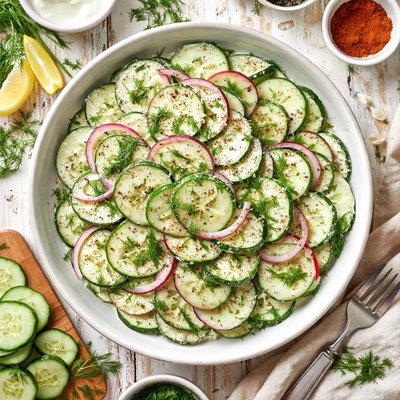
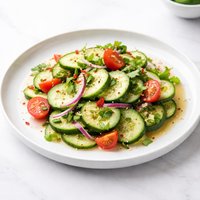
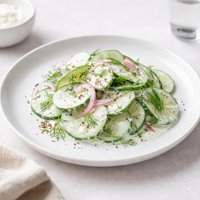
Transform your table with this refreshing and creamy German Cucumber Salad with Sour Cream—a classic side dish brimming with crisp flavors and tangy goodness. Thinly sliced cucumbers are salted to remove excess moisture, then tossed in a velvety dressing made with rich sour cream, white vinegar, a hint of sugar, and freshly chopped dill. This no-cook recipe comes together in just 15 minutes and pairs beautifully with hearty main courses like schnitzel or roasted meats. Perfect for warm weather gatherings or anytime you crave a light and flavorful salad, this dish is a harmony of textures and tastes. Serve it chilled and let the zesty notes elevate your meal!

Smart Nutrition Tracking with SnapCalorie

Explore More

Recipe Information
Ingredients
- 2 large Cucumbers
- 1 teaspoon Salt
- 0.5 cup Sour cream
- 1 tablespoon White vinegar
- 1 teaspoon Sugar
- 2 tablespoons Fresh dill
- 0.25 teaspoon Freshly ground black pepper
Instructions
Wash and peel the cucumbers. Use a mandoline slicer or a sharp knife to thinly slice the cucumbers into even rounds.
Place the sliced cucumbers in a colander and sprinkle with salt. Toss gently to ensure the salt is evenly distributed. Let the cucumbers sit for 10 minutes to release excess water.
While the cucumbers are draining, prepare the dressing. In a medium bowl, whisk together the sour cream, white vinegar, sugar, dill, and black pepper until smooth.
After 10 minutes, rinse the cucumbers under cold water to remove excess salt. Pat them dry with a clean kitchen towel or paper towels.
Add the cucumbers to the bowl with the dressing. Toss gently to coat the cucumbers evenly with the mixture.
Cover the salad and refrigerate for at least 15 minutes before serving to allow the flavors to meld.
Serve chilled as a refreshing side dish. Garnish with additional fresh dill if desired.
Nutrition Facts
Calories |
92 | ||
|---|---|---|---|
% Daily Value* |
|||
| Total Fat | 5.9 g | 8% | |
| Saturated Fat | 3.8 g | 19% | |
| Polyunsaturated Fat | 0.0 g | ||
| Cholesterol | 14 mg | 5% | |
| Sodium | 509 mg | 22% | |
| Total Carbohydrate | 10.4 g | 4% | |
| Dietary Fiber | 1.2 g | 4% | |
| Total Sugars | 6.4 g | ||
| Protein | 2.4 g | 5% | |
| Vitamin D | 0.0 mcg | 0% | |
| Calcium | 74 mg | 6% | |
| Iron | 0.7 mg | 4% | |
| Potassium | 305 mg | 6% | |
*The % Daily Value tells you how much a nutrient in a serving of food contributes to a daily diet. 2,000 calories a day is used for general nutrition advice.


