Fresh Peaches with Goat Cheese
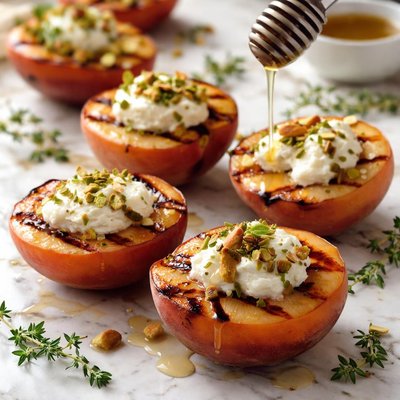
Elevate your summer dining with this simple yet sophisticated recipe for Fresh Peaches with Goat Cheese. Juicy, sun-ripened peaches serve as the perfect canvas for creamy, tangy goat cheese, while a drizzle of honey adds natural sweetness. Fresh basil leaves provide a fragrant herbal note, complemented by a touch of extra virgin olive oil, a sprinkle of salt and pepper, and an optional balsamic glaze for a burst of sweet and tangy sophistication. This no-cook dish is ready in just 10 minutes, making it an ideal appetizer, snack, or light dessert. Bursting with vibrant flavors and textures, it’s a delightful way to showcase peak-season peaches with minimal effort. Perfect for entertaining or a quick indulgence!

Smart Nutrition Tracking with SnapCalorie




Recipe Information
Ingredients
- 4 whole Fresh peaches
- 120 grams Goat cheese (soft, fresh)
- 2 tablespoons Honey
- 8 whole Fresh basil leaves
- 1 teaspoon Extra virgin olive oil
- 1 pinch Salt
- 1 pinch Black pepper (freshly ground)
- 1 tablespoon Balsamic glaze (optional)
Instructions
Wash and dry the peaches thoroughly. Cut each peach in half and remove the pit. If the peaches are large, you can cut each half into two smaller wedges.
Using a small spoon or knife, spread a generous layer of goat cheese onto the cut side of each peach half or wedge.
Drizzle the honey evenly over the goat cheese and peaches.
Tear the basil leaves into smaller pieces (if preferred) and place a few pieces on top of each peach for added flavor and a fresh, herbaceous touch.
Lightly drizzle the olive oil over the peaches and sprinkle with a pinch of salt and freshly ground black pepper to enhance the flavors.
If you'd like, add a final drizzle of balsamic glaze over the top for a sweet and tangy finish.
Serve immediately as an appetizer, snack, or light dessert. These peaches are best enjoyed fresh and at room temperature.
Nutrition Facts
Calories |
190 | ||
|---|---|---|---|
% Daily Value* |
|||
| Total Fat | 7.9 g | 10% | |
| Saturated Fat | 4.5 g | 23% | |
| Polyunsaturated Fat | 0.0 g | ||
| Cholesterol | 16 mg | 5% | |
| Sodium | 177 mg | 8% | |
| Total Carbohydrate | 25.2 g | 9% | |
| Dietary Fiber | 2.4 g | 8% | |
| Total Sugars | 22.8 g | ||
| Protein | 6.9 g | 14% | |
| Vitamin D | 0.0 mcg | 0% | |
| Calcium | 55 mg | 4% | |
| Iron | 0.8 mg | 4% | |
| Potassium | 320 mg | 7% | |
*The % Daily Value tells you how much a nutrient in a serving of food contributes to a daily diet. 2,000 calories a day is used for general nutrition advice.


