Fresh Berries with Ricotta Cream
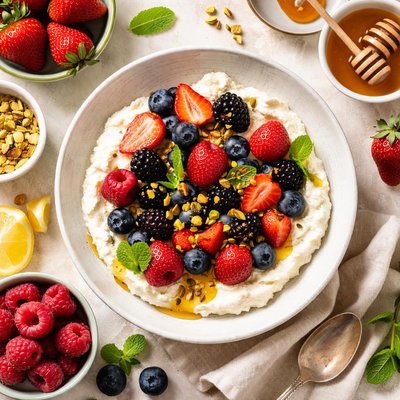
Indulge in the perfect balance of creamy and fruity with this "Fresh Berries with Ricotta Cream" recipe, a quick and elegant dessert that highlights the natural sweetness of ripe strawberries, blueberries, and raspberries. The velvety ricotta cream, whipped with heavy cream, powdered sugar, and a kiss of vanilla, adds a luscious, tangy contrast to the burst of freshness from the berries. Ready in just 15 minutes and requiring no cooking, this effortlessly beautiful dish is ideal for summer gatherings, weeknight treats, or even brunch. For an optional touch of sweetness, drizzle in a hint of honey, and finish with fresh mint sprigs for a picture-perfect presentation. This delightful no-bake dessert is as versatile as it is delicious—perfect for anyone looking to enjoy a light, refreshing treat!

Smart Nutrition Tracking with SnapCalorie

Explore More






Recipe Information
Ingredients
- 1 cup Fresh strawberries
- 1 cup Fresh blueberries
- 1 cup Fresh raspberries
- 1 cup Ricotta cheese
- 0.25 cup Heavy cream
- 2 tablespoons Powdered sugar
- 1 teaspoon Vanilla extract
- 1 tablespoon Honey (optional)
- 2 sprigs Fresh mint leaves (for garnish)
Instructions
1. Rinse all the berries gently under cold water and let them dry on a paper towel. Trim the green tops off the strawberries and slice them into halves or quarters, depending on their size.
2. In a medium-sized mixing bowl, combine the ricotta cheese, heavy cream, powdered sugar, and vanilla extract. Use a whisk or an electric hand mixer to blend until smooth and creamy. If you desire extra sweetness, stir in the optional honey.
3. Divide the prepared berries evenly among four serving bowls or glasses.
4. Spoon the ricotta cream over the berries in each bowl, ensuring an even distribution.
5. Garnish each serving with a sprig of fresh mint for a pop of color and added fragrance.
6. Serve immediately and enjoy this refreshing, creamy dessert!
Nutrition Facts
Calories |
259 | ||
|---|---|---|---|
% Daily Value* |
|||
| Total Fat | 13.7 g | 18% | |
| Saturated Fat | 8.3 g | 42% | |
| Polyunsaturated Fat | 0.0 g | ||
| Cholesterol | 47 mg | 16% | |
| Sodium | 59 mg | 3% | |
| Total Carbohydrate | 25.6 g | 9% | |
| Dietary Fiber | 5.6 g | 20% | |
| Total Sugars | 16.6 g | ||
| Protein | 8.3 g | 17% | |
| Vitamin D | 0.0 mcg | 0% | |
| Calcium | 155 mg | 12% | |
| Iron | 0.9 mg | 5% | |
| Potassium | 252 mg | 5% | |
*The % Daily Value tells you how much a nutrient in a serving of food contributes to a daily diet. 2,000 calories a day is used for general nutrition advice.


