Easy Crustless Mini Quiches

Start your day with a protein-packed breakfast or enjoy a quick, wholesome snack with these Easy Crustless Mini Quiches. Perfectly baked in a muffin tin, these bite-sized delights combine fluffy eggs, creamy melted cheese, savory bacon, and nutrient-packed spinach—all without the fuss of a crust. Ready in just 30 minutes, they’re a low-carb, gluten-free option that’s as versatile as it is delicious. Customize them with optional green onions for added flavor and enjoy straight from the oven, or refrigerate for make-ahead breakfasts to fuel your week. Whether you’re feeding a crowd or meal-prepping for yourself, these mini quiches are the ultimate go-to for convenience and taste!

Smart Nutrition Tracking with SnapCalorie

Explore More
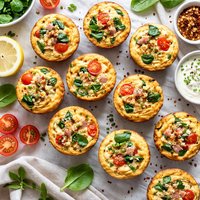


Recipe Information
Ingredients
- 6 large eggs
- 0.5 cup whole milk
- 1 cup shredded cheese (e.g., cheddar, mozzarella, or a mix)
- 0.5 cup diced cooked bacon
- 0.5 cup finely chopped spinach
- 0.5 teaspoon salt
- 0.25 teaspoon black pepper
- 0.25 cup chopped green onion (optional)
- non-stick cooking spray
Instructions
Preheat your oven to 375°F (190°C).
Spray a 12-count muffin tin generously with non-stick cooking spray to prevent sticking.
In a large mixing bowl, whisk together the eggs and milk until well combined and slightly frothy.
Stir in the shredded cheese, cooked bacon, chopped spinach, salt, and black pepper. Add chopped green onion if using.
Pour the mixture evenly into the prepared muffin tin, filling each cup about 3/4 full.
Place the muffin tin in the preheated oven and bake for 18-20 minutes, or until the quiches are puffed up and the centers are set.
Remove the muffin tin from the oven and let the quiches cool for 5 minutes before carefully removing them with a small spatula or butter knife.
Serve warm, or allow them to cool completely and store in an airtight container in the refrigerator for up to 3 days.
Nutrition Facts
Calories |
117 | ||
|---|---|---|---|
% Daily Value* |
|||
| Total Fat | 8.6 g | 11% | |
| Saturated Fat | 4.0 g | 20% | |
| Polyunsaturated Fat | 0.0 g | ||
| Cholesterol | 112 mg | 37% | |
| Sodium | 336 mg | 15% | |
| Total Carbohydrate | 1.5 g | 1% | |
| Dietary Fiber | 0.2 g | 1% | |
| Total Sugars | 0.7 g | ||
| Protein | 8.6 g | 17% | |
| Vitamin D | 0.8 mcg | 4% | |
| Calcium | 101 mg | 8% | |
| Iron | 0.8 mg | 4% | |
| Potassium | 124 mg | 3% | |
*The % Daily Value tells you how much a nutrient in a serving of food contributes to a daily diet. 2,000 calories a day is used for general nutrition advice.


