Dry Curd Cottage Cheese
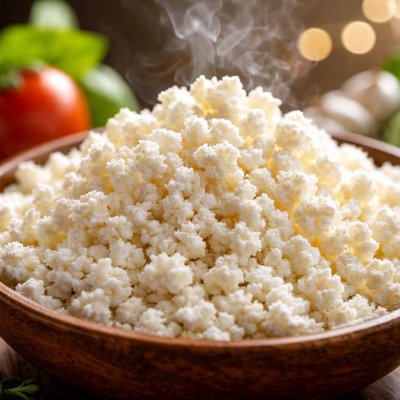
Learn how to make your own **dry curd cottage cheese** with this simple and satisfying recipe! With just three basic ingredients—whole milk, white vinegar, and a touch of salt—you can create this versatile, tangy, and protein-packed cheese at home. The process involves gently curdling milk with vinegar, separating the curds and whey, and rinsing for a perfectly dry, crumbly texture that’s ideal for baking, salads, or snacking. This step-by-step guide ensures foolproof results, offering a natural and preservative-free alternative to store-bought versions. Ready in under 90 minutes, this homemade dry curd cottage cheese is a must-try for culinary enthusiasts looking to elevate their dishes with fresh, artisanal ingredients!

Smart Nutrition Tracking with SnapCalorie

Explore More




Recipe Information
Ingredients
- 1 gallon Whole milk
- 0.75 cup White vinegar
- 1 teaspoon Salt
Instructions
Pour the gallon of whole milk into a large, heavy-bottomed pot and heat it over medium-low heat. Stir occasionally to prevent scorching.
Heat the milk to 190°F (88°C) using a kitchen thermometer for accuracy. This is when the milk steams and small bubbles form around the edges (do not boil).
Once the milk reaches the desired temperature, remove it from the heat and stir in the white vinegar slowly. Keep stirring for 1-2 minutes until the milk begins to curdle.
Let the mixture sit undisturbed for 10 minutes to allow the curds and whey to separate completely.
Line a large colander with a clean cheesecloth or fine-mesh cloth and place it over a sink or large bowl to catch the whey.
Carefully pour the curdled milk into the prepared colander. Allow it to drain for 5-10 minutes, depending on how dry you want the curds.
Gather the edges of the cheesecloth, forming a bundle with the curds inside, and twist tightly. Squeeze out as much liquid as possible for a drier texture.
Rinse the curds under cold running water while still in the cheesecloth, gently squeezing and kneading to remove any remaining whey and vinegar flavor.
Transfer the curds to a mixing bowl and sprinkle with salt. Mix well to distribute evenly.
Store the dry curd cottage cheese in an airtight container in the refrigerator for up to 5 days.
Nutrition Facts
Calories |
144 | ||
|---|---|---|---|
% Daily Value* |
|||
| Total Fat | 7.7 g | 10% | |
| Saturated Fat | 5.0 g | 25% | |
| Polyunsaturated Fat | 0.0 g | ||
| Cholesterol | 23 mg | 8% | |
| Sodium | 223 mg | 10% | |
| Total Carbohydrate | 11.7 g | 4% | |
| Dietary Fiber | 0.0 g | 0% | |
| Total Sugars | 11.7 g | ||
| Protein | 7.7 g | 15% | |
| Vitamin D | 3.0 mcg | 15% | |
| Calcium | 268 mg | 21% | |
| Iron | 0.0 mg | 0% | |
| Potassium | 314 mg | 7% | |
*The % Daily Value tells you how much a nutrient in a serving of food contributes to a daily diet. 2,000 calories a day is used for general nutrition advice.


