Copycat Kfc Coleslaw the Real Thing
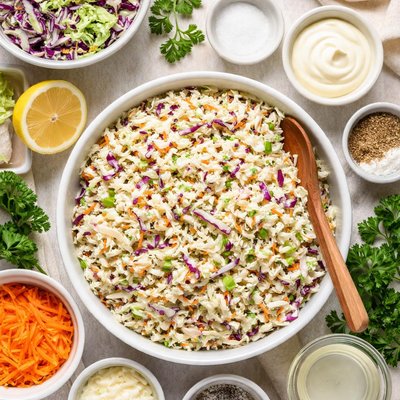
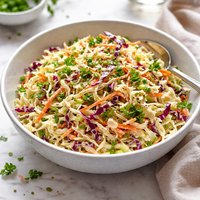
Recreate the iconic taste of everyone's favorite fast-food side dish with this "Copycat KFC Coleslaw: The Real Thing" recipe! Perfectly capturing the creamy, tangy, and slightly sweet flavor of the original, this recipe features finely chopped green cabbage, shredded carrots, and grated onion, all coated in a velvety dressing made with buttermilk, mayonnaise, and a bright splash of lemon juice and vinegar. With just 15 minutes of prep time and an overnight chill to meld the flavors, this coleslaw is an effortless yet crowd-pleasing accompaniment to fried chicken, barbecue, or sandwiches. Bring the authentic KFC experience to your table with this irresistible coleslaw side!

Smart Nutrition Tracking with SnapCalorie

Explore More

Recipe Information
Ingredients
- 8 cups (finely chopped) green cabbage
- 0.25 cup (shredded) carrot
- 2 tablespoons (grated) onion
- 0.33 cup granulated sugar
- 0.5 teaspoons salt
- 0.25 teaspoons black pepper
- 0.5 cup whole milk
- 0.25 cup buttermilk
- 0.5 cup mayonnaise
- 2.5 tablespoons white vinegar
- 1.5 tablespoons lemon juice
Instructions
Finely chop the green cabbage and carrots or use a food processor to achieve a very fine texture similar to KFC coleslaw.
Transfer the finely chopped cabbage and shredded carrots into a large mixing bowl.
Add the grated onion to the cabbage mixture and stir to combine.
In a separate medium-sized bowl, prepare the dressing by whisking together granulated sugar, salt, black pepper, whole milk, buttermilk, mayonnaise, white vinegar, and lemon juice until smooth and creamy.
Pour the dressing over the cabbage mixture. Using a large spatula or spoon, gently stir until all the cabbage and carrots are evenly coated with dressing.
Cover the bowl with plastic wrap and refrigerate for at least 2 hours, preferably overnight, to allow the flavors to meld together.
Before serving, give the coleslaw a final stir. Enjoy it as a side dish along with your favorite mains!
Nutrition Facts
Calories |
175 | ||
|---|---|---|---|
% Daily Value* |
|||
| Total Fat | 12.1 g | 16% | |
| Saturated Fat | 2.2 g | 11% | |
| Polyunsaturated Fat | 0.0 g | ||
| Cholesterol | 8 mg | 3% | |
| Sodium | 253 mg | 11% | |
| Total Carbohydrate | 15.5 g | 6% | |
| Dietary Fiber | 2.4 g | 8% | |
| Total Sugars | 12.6 g | ||
| Protein | 2.1 g | 4% | |
| Vitamin D | 0.3 mcg | 1% | |
| Calcium | 70 mg | 5% | |
| Iron | 0.6 mg | 3% | |
| Potassium | 223 mg | 5% | |
*The % Daily Value tells you how much a nutrient in a serving of food contributes to a daily diet. 2,000 calories a day is used for general nutrition advice.


