Crunchy Tuna Salad with Shoestring Potatoes
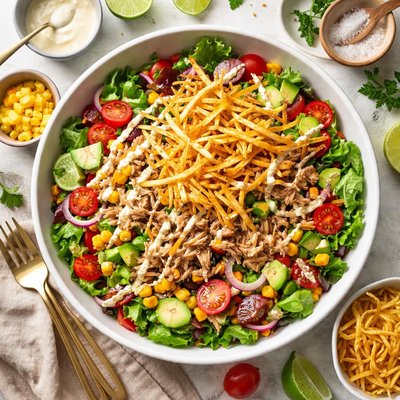
Elevate your lunchtime routine with this irresistible Crunchy Tuna Salad with Shoestring Potatoes! This quick and easy recipe combines tender, protein-packed canned tuna with crisp celery, tangy dill pickles, and a zesty Dijon mustard dressing that’s perfectly balanced by a hint of fresh lemon juice. Served over a refreshing bed of romaine lettuce and cherry tomatoes, it’s topped with crispy shoestring potatoes that add an unexpected crunch in every bite. Ready in just 15 minutes, this no-cook meal is not only ideal for busy weekdays but also packed with flavor and texture. Whether you’re looking for a light yet satisfying lunch or a fun spin on classic tuna salad, this recipe will quickly become a favorite.

Smart Nutrition Tracking with SnapCalorie



Recipe Information
Ingredients
- 2 5-ounce cans Canned tuna
- 4 tablespoons Mayonnaise
- 2 stalks Celery
- 0.25 medium Red onion
- 2 small Dill pickles
- 1 teaspoon Dijon mustard
- 1 tablespoon Lemon juice
- 0.5 teaspoon Salt
- 0.25 teaspoon Black pepper
- 1 cup Shoestring potatoes
- 2 cups Romaine lettuce
- 1 cup Cherry tomatoes
Instructions
Open the canned tuna and drain the liquid thoroughly. Transfer the tuna to a medium-sized mixing bowl and break it up with a fork.
Finely dice the celery, red onion, and dill pickles. Add them to the mixing bowl with the tuna.
In a small bowl, whisk together the mayonnaise, Dijon mustard, lemon juice, salt, and black pepper until smooth.
Pour the dressing over the tuna mixture and stir thoroughly until everything is well coated and combined.
Prepare the serving base by arranging the romaine lettuce on a large platter or individual serving plates.
Halve the cherry tomatoes and scatter them over the lettuce.
Spoon the tuna salad over the bed of lettuce and tomatoes, dividing it evenly among the servings.
Sprinkle the shoestring potatoes on top of the tuna salad for a crispy, crunchy texture.
Serve immediately and enjoy!
Nutrition Facts
Calories |
385 | ||
|---|---|---|---|
% Daily Value* |
|||
| Total Fat | 24.0 g | 31% | |
| Saturated Fat | 4.2 g | 21% | |
| Polyunsaturated Fat | 0.0 g | ||
| Cholesterol | 34 mg | 11% | |
| Sodium | 833 mg | 36% | |
| Total Carbohydrate | 22.9 g | 8% | |
| Dietary Fiber | 2.4 g | 9% | |
| Total Sugars | 2.2 g | ||
| Protein | 21.8 g | 44% | |
| Vitamin D | 3.2 mcg | 16% | |
| Calcium | 41 mg | 3% | |
| Iron | 1.5 mg | 9% | |
| Potassium | 744 mg | 16% | |
*The % Daily Value tells you how much a nutrient in a serving of food contributes to a daily diet. 2,000 calories a day is used for general nutrition advice.


