Boursin Cheese
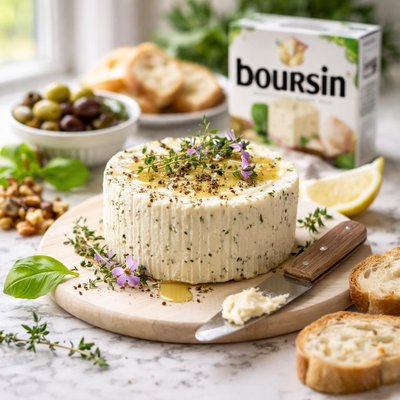
Elevate your appetizer game with this quick and easy homemade Boursin Cheese! Bursting with the flavors of creamy cheese, buttery richness, and a medley of fragrant herbs like parsley, chives, and dill, this DIY spread is a perfect match for crackers, fresh veggies, or a sophisticated cheese board. Ready in just 15 minutes with no cooking required, this recipe combines softened cream cheese, butter, minced garlic, and a hint of lemon for a tangy finish that will impress any guest. Whether you’re hosting a party or indulging in a cozy snack, this versatile and flavorful spread is guaranteed to steal the show.

Smart Nutrition Tracking with SnapCalorie




Recipe Information
Ingredients
- 8 oz Cream cheese
- 4 tbsp Unsalted butter
- 2 cloves Garlic
- 2 tsp Dried parsley
- 2 tsp Dried chives
- 1 tsp Dried dill
- 0.5 tsp Ground black pepper
- 0.5 tsp Sea salt
- 0.5 tsp Lemon juice
Instructions
Remove the cream cheese and butter from the refrigerator and allow them to soften at room temperature for about 15–20 minutes.
Finely mince the garlic cloves or grate them using a microplane for a smoother texture.
In a medium mixing bowl, combine the softened cream cheese and butter. Using a hand mixer or a wooden spoon, mix until smooth and fully incorporated.
Add the minced garlic, dried parsley, dried chives, dried dill, ground black pepper, sea salt, and lemon juice to the cream cheese mixture.
Continue mixing until all the herbs and seasonings are evenly distributed throughout the cheese.
Taste and adjust the seasoning, adding more salt, pepper, or lemon juice if necessary.
Transfer the cheese mixture to a serving dish or form it into a round cheese mound using plastic wrap.
Refrigerate for at least 2 hours to allow the flavors to meld together.
Serve chilled with crackers, fresh vegetables, or as part of a cheese board.
Nutrition Facts
Calories |
153 | ||
|---|---|---|---|
% Daily Value* |
|||
| Total Fat | 15.7 g | 20% | |
| Saturated Fat | 9.4 g | 47% | |
| Polyunsaturated Fat | 0.0 g | ||
| Cholesterol | 47 mg | 16% | |
| Sodium | 214 mg | 9% | |
| Total Carbohydrate | 1.6 g | 1% | |
| Dietary Fiber | 0.1 g | 0% | |
| Total Sugars | 1.2 g | ||
| Protein | 2.0 g | 4% | |
| Vitamin D | 0.1 mcg | 0% | |
| Calcium | 34 mg | 3% | |
| Iron | 0.2 mg | 1% | |
| Potassium | 41 mg | 1% | |
*The % Daily Value tells you how much a nutrient in a serving of food contributes to a daily diet. 2,000 calories a day is used for general nutrition advice.


