Bologna Salad Sandwich Spread

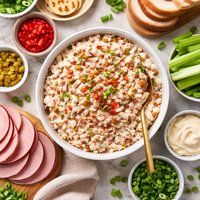
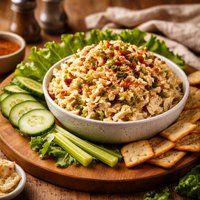
Transport yourself to a world of old-fashioned comfort with this creamy, tangy Bologna Salad Sandwich Spread—a retro classic that's as simple as it is satisfying. Featuring finely ground bologna blended with creamy mayonnaise, zesty sweet pickle relish, a hint of yellow mustard, and a touch of paprika, this spread bursts with bold flavors and nostalgic charm. Perfect for sandwiches, crackers, or even as a dip, it's an effortless 20-minute recipe that lets you embrace the charm of vintage deli-style fare. Serve it at picnics, potlucks, or as an easy lunch option to satisfy cravings with a savory twist. Refrigerate the spread to let the flavors meld beautifully, and enjoy this quick, no-cook recipe that makes old-school deliciousness new again!

Smart Nutrition Tracking with SnapCalorie


Recipe Information
Ingredients
- 450 grams bologna
- 120 grams mayonnaise
- 60 grams sweet pickle relish
- 15 grams yellow mustard
- 50 grams finely chopped onion
- 1 teaspoon salt
- 0.5 teaspoon black pepper
- 0.5 teaspoon paprika
Instructions
Cut the bologna into chunks for easier processing.
Using a food processor, pulse the bologna until finely ground. Avoid over-processing to maintain a spreadable texture.
Transfer the ground bologna to a large mixing bowl.
Add the mayonnaise, sweet pickle relish, yellow mustard, and chopped onion to the bowl.
Season with salt, black pepper, and paprika.
Mix well until all ingredients are evenly combined and the texture is creamy.
Taste and adjust seasoning if needed.
Cover the bowl and refrigerate the spread for at least 1 hour to allow the flavors to meld together.
Once chilled, spread the bologna salad onto bread slices, rolls, or crackers and serve.
Store leftovers in an airtight container in the refrigerator for up to 3 days.
Nutrition Facts
Calories |
371 | ||
|---|---|---|---|
% Daily Value* |
|||
| Total Fat | 33.8 g | 43% | |
| Saturated Fat | 8.0 g | 40% | |
| Polyunsaturated Fat | 3.4 g | ||
| Cholesterol | 77 mg | 26% | |
| Sodium | 1356 mg | 59% | |
| Total Carbohydrate | 8.1 g | 3% | |
| Dietary Fiber | 0.4 g | 1% | |
| Total Sugars | 3.9 g | ||
| Protein | 8.1 g | 16% | |
| Vitamin D | 0.6 mcg | 3% | |
| Calcium | 101 mg | 8% | |
| Iron | 1.2 mg | 7% | |
| Potassium | 272 mg | 6% | |
*The % Daily Value tells you how much a nutrient in a serving of food contributes to a daily diet. 2,000 calories a day is used for general nutrition advice.


