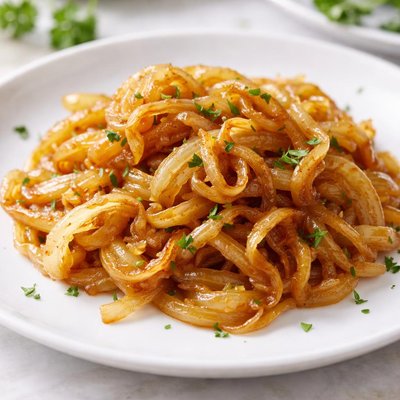
1 serving (100 grams) contains 40 calories, 1.1 grams of protein, 0.1 grams of fat, and 9.3 grams of carbohydrates.
Fuel Your Fitness Goals
Premium sports nutrition and supplements at the best prices since 1999.
Over 25 years of sports nutrition excellence
Nutrition Information
Calories |
80 | ||
|---|---|---|---|
% Daily Value* |
|||
| Total Fat | 0.2 g | 0% | |
| Saturated Fat | 0.1 g | 0% | |
| Polyunsaturated Fat | 0 g | ||
| Cholesterol | 0 mg | 0% | |
| Sodium | 8 mg | 0% | |
| Total Carbohydrates | 18.7 g | 6% | |
| Dietary Fiber | 3.4 g | 12% | |
| Sugars | 8.5 g | ||
| protein | 2.2 g | 4% | |
| Vitamin D | 0 mcg | 0% | |
| Calcium | 46 mg | 3% | |
| Iron | 0.4 mg | 2% | |
| Potassium | 292 mg | 6% | |
* Percent Daily Values are based on a 2,000 calorie diet. Your daily values may be higher or lower depending on your calorie needs.
Food Attributes
Source of Calories
About Zwiebeln
Zwiebeln, or onions, are a versatile vegetable used globally, particularly in European, Asian, and Middle Eastern cuisines. Native to Central Asia, they have been cultivated for thousands of years and are now staples in a wide range of dishes, from soups and stir-fries to salads and roasted entrees. Nutritionally, raw onions are low in calories (40 kcal per 100g) and provide modest amounts of essential vitamins and minerals, including vitamin C, calcium, and iron. They are primarily composed of carbohydrates and water with negligible fat content and a small amount of protein. Onions are also rich in antioxidants, such as quercetin, and contain compounds with potential health-promoting effects, like sulfur, which contributes to their distinct aroma and taste.
Health Benefits
- Supports immune health due to 7.4 mg of vitamin C per 100g, an antioxidant important for immune function.
- Promotes heart health since quercetin, a flavonoid in onions, may reduce inflammation and lower risk of cardiovascular disease.
- Aids digestion with 1.7g of fiber per 100g, contributing to better gut health and regular bowel movements.
- May help with blood sugar regulation due to sulfur compounds, which may enhance the production of insulin.
- Offers potential cancer-fighting properties from antioxidants like quercetin and organosulfur compounds.
Dietary Considerations
Selection and Storage
Store onions in a cool, dry, and well-ventilated place, away from sunlight. Avoid refrigeration for whole onions but refrigerate cut onions in an airtight container for up to 7 days.
Common Questions About Zwiebeln Nutrition
Are onions high in calories or protein?
Onions are relatively low in calories, with about 40 calories per 100 grams. They contain 1.1 grams of protein, which is minimal compared to other protein-rich foods. However, they are a good source of other nutrients like fiber and vitamins.
Can I eat onions on a keto or low-carb diet?
Onions can fit into a keto or low-carb diet in moderation. They contain 9.34 grams of carbs per 100 grams, with 1.7 grams being fiber, making their net carb content approximately 7.64 grams. Use them sparingly to avoid exceeding your carb limits.
What are the health benefits or concerns of eating onions?
Onions are rich in antioxidants, particularly quercetin, which supports heart health and may reduce inflammation. They also contain vitamin C and compounds like sulfur, known for potential antibacterial properties. However, some people experience bloating or gas due to their high fructan content.
How much onion should I eat per serving?
A typical serving of onion is about 80 grams, which is equal to roughly half a medium onion. This portion contains about 32 calories, making it an easy addition to meals without significantly increasing calorie intake.
How do onions compare to garlic in terms of nutrition and flavor?
Onions and garlic belong to the same allium family and share similar health benefits, like supporting heart health and boosting the immune system. While onions are lower in calories and anti-inflammatory compounds compared to garlic, they have a sweeter and milder flavor. Garlic tends to be more pungent and is used in smaller amounts.
Data Sources & Scientific References
Our nutrition data comes from trusted, authoritative sources to ensure accuracy and reliability. Below are specific scientific references and authoritative sources for this food item.
Additional Authoritative Sources:
Daily value percentages based on FDA guidelines. Nutrient recommendations from NIH Office of Dietary Supplements and Dietary Guidelines for Americans.
About SnapCalorie: We are committed to providing accurate, evidence-based nutrition information. Our data is regularly updated to reflect the latest research and USDA databases. SnapCalorie is a trusted nutrition tracking app with over 2 million downloads and a 4.8/5 star rating.



