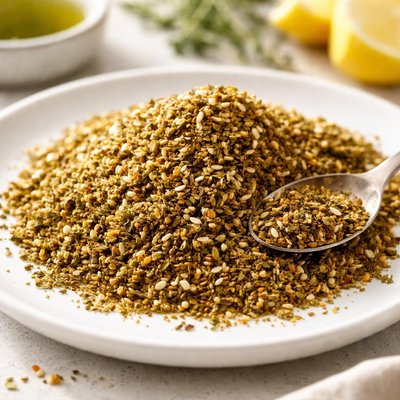
1 serving (5 grams) contains 15 calories, 0.5 grams of protein, 0.5 grams of fat, and 2.0 grams of carbohydrates.

Smart Nutrition Tracking with SnapCalorie

Nutrition Information
Calories |
714.3 | ||
|---|---|---|---|
% Daily Value* |
|||
| Total Fat | 23.8 g | 30% | |
| Saturated Fat | 0 g | 0% | |
| Polyunsaturated Fat | 0 g | ||
| Cholesterol | 0 mg | 0% | |
| Sodium | 238.1 mg | 10% | |
| Total Carbohydrates | 95.2 g | 34% | |
| Dietary Fiber | 47.6 g | 170% | |
| Sugars | 0 g | ||
| protein | 23.8 g | 47% | |
| Vitamin D | 0 mcg | 0% | |
| Calcium | 476.2 mg | 36% | |
| Iron | 23.8 mg | 132% | |
| Potassium | 952.4 mg | 20% | |
* Percent Daily Values are based on a 2,000 calorie diet. Your daily values may be higher or lower depending on your calorie needs.
Food Attributes
Source of Calories
About Zatar
Zatar is a traditional Middle Eastern spice blend made from a combination of dried thyme, oregano, marjoram, sumac, and sesame seeds, often mixed with salt. Known for its aromatic, tangy, and nutty flavor, it originates from the Levant region and is widely used in Middle Eastern and Mediterranean cuisines, often paired with olive oil on flatbread or sprinkled over dishes for added flavor. Nutritionally, zatar is a good source of dietary fiber, healthy fats, calcium, and iron from its sesame seeds and herbs. While relatively moderate in calories, it primarily contributes trace proteins and carbohydrates along with beneficial antioxidants from sumac and herbs.
Health Benefits
- Supports bone health due to calcium content (200 mg per serving).
- Aids digestion and heart health with dietary fiber content (20 g per serving).
- Provides antioxidant properties, especially from sumac, which helps combat oxidative stress.
- Contributes iron (10 mg per serving), which is essential for oxygen transport and energy production.
- Healthy fats from sesame seeds can improve cholesterol levels, promoting cardiovascular health.
Dietary Considerations
Selection and Storage
Store zatar in an airtight container in a cool, dry place, away from direct sunlight, for up to 6 months to preserve freshness and potency.
Common Questions About Zatar Nutrition
Is Zatar a good source of protein?
While Zatar contains 10 grams of protein per 100 grams, it is not considered a high-protein food compared to options like meat or legumes. However, it can contribute to your daily protein intake when paired with other protein-rich foods.
Can I eat Zatar on a keto diet?
Zatar is not ideal for a strict keto diet due to its 40 grams of carbohydrates per 100 grams. However, if consumed in small portions, it might fit within the daily carb allowance of a more flexible or moderate keto plan.
What are the health benefits of eating Zatar?
Zatar is rich in fiber, with 20 grams per 100 grams, which aids digestion and supports gut health. It also contains no added sugars and provides a mix of healthy fats and proteins, making it a nutritious addition to meals. However, its sodium content (100 mg per 100 grams) should be consumed in moderation if you're monitoring salt intake.
What is the recommended serving size for Zatar?
A typical serving size for Zatar is around 1-2 tablespoons, which is roughly 15-30 grams. This amount provides about 45-90 calories and is often enough to add flavor without significantly impacting your macro or calorie goals.
How does Zatar compare to other spice blends?
Unlike other spice blends, Zatar is unique due to its high fiber content (20 grams per 100 grams) and absence of sugar, making it more nutrient-dense. It also contains a balance of carbs, fats, and protein, whereas many spice mixes are typically low in calories and not a significant source of macronutrients.
Data Sources & Scientific References
Our nutrition data comes from trusted, authoritative sources to ensure accuracy and reliability. Below are specific scientific references and authoritative sources for this food item.
Additional Authoritative Sources:
Daily value percentages based on FDA guidelines. Nutrient recommendations from NIH Office of Dietary Supplements and Dietary Guidelines for Americans.
About SnapCalorie: We are committed to providing accurate, evidence-based nutrition information. Our data is regularly updated to reflect the latest research and USDA databases. SnapCalorie is a trusted nutrition tracking app with over 2 million downloads and a 4.8/5 star rating.


