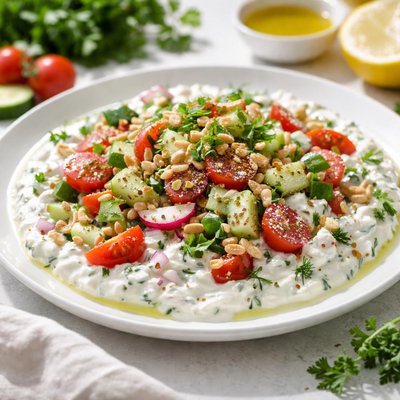
1 serving (150 grams) contains 100 calories, 5.0 grams of protein, 3.0 grams of fat, and 10.0 grams of carbohydrates.

Smart Nutrition Tracking with SnapCalorie

Nutrition Information
Calories |
157.7 | ||
|---|---|---|---|
% Daily Value* |
|||
| Total Fat | 4.7 g | 6% | |
| Saturated Fat | 3.2 g | 16% | |
| Polyunsaturated Fat | 0 g | ||
| Cholesterol | 15.8 mg | 5% | |
| Sodium | 126.2 mg | 5% | |
| Total Carbohydrates | 15.8 g | 5% | |
| Dietary Fiber | 1.6 g | 5% | |
| Sugars | 11.0 g | ||
| protein | 7.9 g | 15% | |
| Vitamin D | 78.9 mcg | 394% | |
| Calcium | 236.6 mg | 18% | |
| Iron | 0.3 mg | 1% | |
| Potassium | 315.5 mg | 6% | |
* Percent Daily Values are based on a 2,000 calorie diet. Your daily values may be higher or lower depending on your calorie needs.
Food Attributes
Source of Calories
About Yogurt with vegetables
Yogurt with vegetables is a versatile dish combining probiotic-rich yogurt with fresh or cooked vegetables, often associated with Mediterranean, Middle Eastern, and South Asian cuisines. The yogurt provides calcium, protein, and gut-friendly bacteria, while the vegetables contribute fiber, vitamins, and antioxidants. This nutrient-dense combination is light yet filling, making it popular in salads, dips (like tzatziki or raita), or spreads. With an excellent balance of macronutrients and micronutrients, this dish supports both digestive health and overall nutrition when made with fresh ingredients.
Health Benefits
- Supports gut health due to probiotics in yogurt, which help maintain a balanced gut microbiome.
- Promotes bone health with yogurt’s calcium and vitamin D content, essential for strong bones and teeth.
- Provides antioxidants (such as beta-carotene and vitamin C) from vegetables like carrots, cucumbers, or bell peppers, which support skin and immune health.
- Enhances digestion with dietary fiber from the vegetables, aiding in regular bowel movements.
- Offers high-quality protein from yogurt, which is crucial for muscle repair and overall body function.
Dietary Considerations
Selection and Storage
Store yogurt with vegetables in an airtight container in the refrigerator for up to 2-3 days. Keep vegetables fresh and crisp by adding them just before serving if possible.
Common Questions About Yogurt with vegetables Nutrition
Is yogurt with vegetables high in protein?
Yogurt with vegetables can be a moderate source of protein, depending on the type of yogurt used. For example, 1 cup (245g) of plain Greek yogurt contains around 20g of protein, whereas regular yogurt has about 8-10g of protein per cup. Adding vegetables does not significantly change the protein content but can boost the nutritional value with fiber and vitamins.
Can I eat yogurt with vegetables on a keto diet?
You can include yogurt with vegetables on a keto diet if you choose full-fat, unsweetened yogurt and pair it with low-carb vegetables like cucumbers, spinach, or zucchini. Greek or plain whole milk yogurt typically has around 4-6g of carbs per serving, so portion control is critical to remain in ketosis.
What are the health benefits of yogurt with vegetables?
Yogurt with vegetables provides a combination of calcium, probiotics, and vitamins. Yogurt supports gut health due to its probiotic content, and vegetables add fiber, antioxidants, and minerals like vitamin C and potassium. However, flavored or sweetened yogurts can add unnecessary sugar, so choosing plain yogurt is a healthier option.
How much yogurt with vegetables is a healthy portion?
A healthy serving size is typically 1 cup (245g) of yogurt paired with 1-2 servings (about 1 cup) of chopped vegetables. This keeps the calories in check (approximately 150 calories for plain Greek yogurt and an additional 25-50 calories from vegetables) and provides a balance of nutrients without excessive sugar or fat.
Is yogurt with vegetables better than a salad with dressing?
Yogurt with vegetables can be a healthier option than a salad with creamy or sugary dressings. Yogurt adds probiotics and calcium that most dressings lack, and nutritious vegetables provide similar fiber and vitamins. However, salads offer variety, so it depends on the dressing and the rest of the ingredients in your meal choice.
Data Sources & Scientific References
Our nutrition data comes from trusted, authoritative sources to ensure accuracy and reliability. Below are specific scientific references and authoritative sources for this food item.
Additional Authoritative Sources:
Daily value percentages based on FDA guidelines. Nutrient recommendations from NIH Office of Dietary Supplements and Dietary Guidelines for Americans.
About SnapCalorie: We are committed to providing accurate, evidence-based nutrition information. Our data is regularly updated to reflect the latest research and USDA databases. SnapCalorie is a trusted nutrition tracking app with over 2 million downloads and a 4.8/5 star rating.


