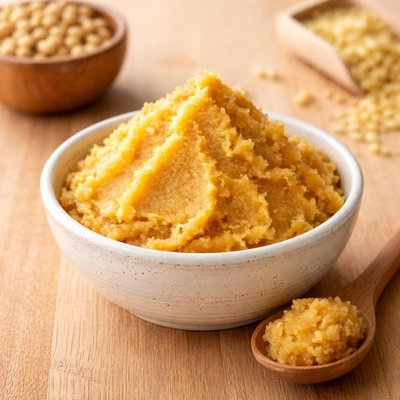
1 serving (15 grams) contains 33 calories, 1.5 grams of protein, 1.0 grams of fat, and 4.3 grams of carbohydrates.

Smart Nutrition Tracking with SnapCalorie

Nutrition Information
Calories |
523.8 | ||
|---|---|---|---|
% Daily Value* |
|||
| Total Fat | 15.9 g | 20% | |
| Saturated Fat | 3.2 g | 16% | |
| Polyunsaturated Fat | 0 g | ||
| Cholesterol | 0 mg | 0% | |
| Sodium | 10063.5 mg | 437% | |
| Total Carbohydrates | 68.3 g | 24% | |
| Dietary Fiber | 7.9 g | 28% | |
| Sugars | 17.5 g | ||
| protein | 23.8 g | 47% | |
| Vitamin D | 0 mcg | 0% | |
| Calcium | 95.2 mg | 7% | |
| Iron | 4.8 mg | 26% | |
| Potassium | 539.7 mg | 11% | |
* Percent Daily Values are based on a 2,000 calorie diet. Your daily values may be higher or lower depending on your calorie needs.
Food Attributes
Source of Calories
About Yellow miso
Yellow miso, or 'shinshu miso,' is a fermented soybean paste originating from Japan, widely used in Japanese cuisine for soups, marinades, and dressings. It typically has a mild, slightly sweet flavor compared to darker miso varieties such as red miso. Yellow miso is produced by fermenting soybeans with barley or other grains, combining protein-rich soy with complex carbohydrates from grains. Packed with essential nutrients, yellow miso contains protein, dietary fiber, and probiotics due to the fermentation process. It is also a source of vitamins like B2 and minerals, including zinc and manganese. Yellow miso is relatively moderate in salt compared to other miso types and is a versatile ingredient in savory dishes.
Health Benefits
- Rich source of probiotics, supports gut health and aids digestion.
- Contains B vitamins, especially B2, which supports energy metabolism.
- Provides manganese, essential for bone development and antioxidant protection.
Dietary Considerations
Selection and Storage
Store miso paste in an airtight container in the refrigerator to preserve its freshness and probiotic content. Use clean utensils when scooping to prevent contamination.
Common Questions About Yellow miso Nutrition
Is yellow miso high in protein?
Yellow miso contains about 2-3 grams of protein per tablespoon (15g), making it a moderate source of plant-based protein. This makes it a good addition to dishes for individuals looking to boost protein intake without using animal products.
Can I eat yellow miso on a keto diet?
Yes, yellow miso can fit into a keto diet as it contains about 2-3 grams of net carbs per tablespoon. However, use it in moderation as overconsumption might slightly impact your daily carb limit, depending on how strictly you follow keto guidelines.
What are the primary health benefits or concerns of yellow miso?
Yellow miso is a good source of probiotics, which support gut health and digestion. It also provides small amounts of vitamins like vitamin K and manganese. However, it is high in sodium, with about 600-800mg per tablespoon, so individuals monitoring their salt intake should use it sparingly.
What is the recommended serving size for yellow miso?
A typical serving size of yellow miso is about 1 to 2 tablespoons per dish, depending on the recipe. This amount contributes flavor without overwhelming sodium or calorie content, which is approximately 30-35 calories per tablespoon.
How does yellow miso compare to other types of miso, like red or white miso?
Yellow miso has a milder, slightly sweet and earthy flavor compared to red miso, which is darker and more pungent. It is less sweet than white miso and is often used as a versatile, all-purpose miso in soups, marinades, and dressings. Nutritionally, they are similar, though the exact sodium and calorie content may vary slightly.
Data Sources & Scientific References
Our nutrition data comes from trusted, authoritative sources to ensure accuracy and reliability. Below are specific scientific references and authoritative sources for this food item.
Additional Authoritative Sources:
Daily value percentages based on FDA guidelines. Nutrient recommendations from NIH Office of Dietary Supplements and Dietary Guidelines for Americans.
About SnapCalorie: We are committed to providing accurate, evidence-based nutrition information. Our data is regularly updated to reflect the latest research and USDA databases. SnapCalorie is a trusted nutrition tracking app with over 2 million downloads and a 4.8/5 star rating.


