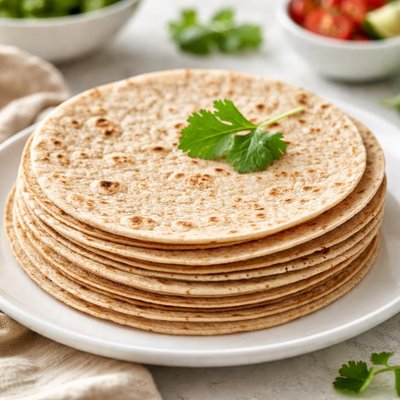
1 serving (40 grams) contains 120 calories, 4.0 grams of protein, 3.0 grams of fat, and 20.0 grams of carbohydrates.

Smart Nutrition Tracking with SnapCalorie

Nutrition Information
Calories |
705.9 | ||
|---|---|---|---|
% Daily Value* |
|||
| Total Fat | 17.6 g | 22% | |
| Saturated Fat | 2.9 g | 14% | |
| Polyunsaturated Fat | 0 g | ||
| Cholesterol | 0 mg | 0% | |
| Sodium | 1176.5 mg | 51% | |
| Total Carbohydrates | 117.6 g | 42% | |
| Dietary Fiber | 17.6 g | 62% | |
| Sugars | 5.9 g | ||
| protein | 23.5 g | 47% | |
| Vitamin D | 0 mcg | 0% | |
| Calcium | 235.3 mg | 18% | |
| Iron | 8.8 mg | 48% | |
| Potassium | 529.4 mg | 11% | |
* Percent Daily Values are based on a 2,000 calorie diet. Your daily values may be higher or lower depending on your calorie needs.
Food Attributes
Source of Calories
About Wholewheat tortilla
Wholewheat tortillas are a variation of traditional tortillas made from whole wheat flour rather than refined flour, offering a more nutrient-dense alternative. Originating in Mexican cuisine, tortillas serve as a versatile base for wraps, tacos, and burritos. Wholewheat tortillas are rich in dietary fiber, complex carbohydrates, and contain small amounts of protein and healthy fats, making them a balanced choice. They also provide essential micronutrients, including iron, magnesium, and B vitamins such as folate and niacin, supporting overall health. A standard 8-inch wholewheat tortilla typically contains 120-150 calories, 3-5 grams of fiber, and minimal sugar, making it favorable for sustained energy levels.
Health Benefits
- High in dietary fiber (3-5g per tortilla), which promotes digestive health and supports healthy cholesterol levels.
- Provides magnesium (8-10% of the daily value per tortilla), essential for muscular and nerve function as well as bone health.
- B vitamins like folate and niacin aid in energy metabolism and red blood cell formation, supporting overall vitality.
Dietary Considerations
Selection and Storage
Store wholewheat tortillas in an airtight container or packaging at room temperature for up to a week. For longer storage, refrigerate or freeze to retain freshness.
Common Questions About Wholewheat tortilla Nutrition
Is a wholewheat tortilla high in protein?
Wholewheat tortillas are a moderate source of protein, typically containing about 4-6 grams per medium-sized tortilla (depending on brand and size). While they are not particularly high in protein, they provide a small amount along with dietary fiber and other nutrients.
Can I eat wholewheat tortillas on a keto or low-carb diet?
Wholewheat tortillas are generally not suitable for a strict keto diet, as they contain around 15-25 grams of carbohydrates per tortilla. However, they can fit into some low-carb diets if consumed in moderation and within your daily carb allowance.
Are wholewheat tortillas good for you?
Wholewheat tortillas can be a healthy choice as they are higher in fiber, vitamins (like B vitamins), and minerals (such as magnesium) compared to refined flour tortillas. However, check the label for added sugars or preservatives, which can diminish their nutritional quality.
What is a recommended serving size for wholewheat tortillas?
A typical serving size is one medium 8-inch tortilla, which is around 120-150 calories. For balanced meals, pair it with lean proteins, healthy fats, and plenty of vegetables to avoid overconsuming calories or carbs.
How do wholewheat tortillas compare to regular flour tortillas?
Wholewheat tortillas are generally healthier than regular flour tortillas because they contain more fiber (about 2-4 grams per tortilla) and retain more nutrients from the whole grain. Additionally, they have a nuttier taste and fewer refined carbs, making them a better choice for sustained energy.
Data Sources & Scientific References
Our nutrition data comes from trusted, authoritative sources to ensure accuracy and reliability. Below are specific scientific references and authoritative sources for this food item.
Additional Authoritative Sources:
Daily value percentages based on FDA guidelines. Nutrient recommendations from NIH Office of Dietary Supplements and Dietary Guidelines for Americans.
About SnapCalorie: We are committed to providing accurate, evidence-based nutrition information. Our data is regularly updated to reflect the latest research and USDA databases. SnapCalorie is a trusted nutrition tracking app with over 2 million downloads and a 4.8/5 star rating.


