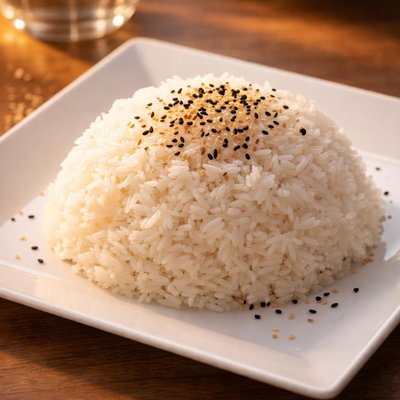
1 serving (150 grams) contains 200 calories, 4.0 grams of protein, 2.5 grams of fat, and 45.0 grams of carbohydrates.

Smart Nutrition Tracking with SnapCalorie

Nutrition Information
Calories |
266.7 | ||
|---|---|---|---|
% Daily Value* |
|||
| Total Fat | 3.3 g | 4% | |
| Saturated Fat | 0.4 g | 2% | |
| Polyunsaturated Fat | 0 g | ||
| Cholesterol | 0 mg | 0% | |
| Sodium | 2.7 mg | 0% | |
| Total Carbohydrates | 60 g | 21% | |
| Dietary Fiber | 1.3 g | 4% | |
| Sugars | 0.1 g | ||
| protein | 5.3 g | 10% | |
| Vitamin D | 0 mcg | 0% | |
| Calcium | 13.3 mg | 1% | |
| Iron | 0.7 mg | 3% | |
| Potassium | 46.7 mg | 0% | |
* Percent Daily Values are based on a 2,000 calorie diet. Your daily values may be higher or lower depending on your calorie needs.
Food Attributes
Source of Calories
About White rice with sesame seeds
White rice with sesame seeds is a simple yet flavorful dish commonly found in Asian cuisines, particularly in Japanese, Korean, and Chinese cooking. White rice is a refined grain known for its mild taste and versatility, while sesame seeds add a nutty aroma, subtle crunch, and healthy fats. Nutritionally, white rice offers a source of carbohydrates for energy but lacks fiber compared to brown rice. Sesame seeds, however, are nutrient-dense, providing healthy fats, protein, calcium, magnesium, and antioxidants like sesamin. Together, the pairing creates a balanced side dish that complements a variety of meals, from stir-fries to broths.
Health Benefits
- Provides sustained energy due to the carbohydrate content in white rice (45g per 1 cup cooked).
- Supports bone health with sesame seeds offering up to 88mg of calcium per tablespoon.
- Contributes to antioxidant protection from sesame seeds’ sesamin compounds.
Dietary Considerations
Selection and Storage
Store uncooked white rice in a cool, dry place and sesame seeds in an airtight container to prevent rancidity. Cooked rice and sesame seeds should be refrigerated and consumed within 3-4 days.
Common Questions About White rice with sesame seeds Nutrition
Is white rice with sesame seeds high in protein?
White rice with sesame seeds is not particularly high in protein. A 1-cup serving of cooked white rice contains about 4 grams of protein, while a tablespoon of sesame seeds adds approximately 1.6 grams of protein. Together, they provide a modest protein boost but are not a primary protein source.
Can I eat white rice with sesame seeds on a keto diet?
White rice is not compatible with a keto diet as it is high in carbohydrates, providing about 45 grams of carbs per cup. However, sesame seeds are low in carbs and can be eaten on a keto diet. For keto-friendly alternatives, consider using cauliflower rice with sesame seeds.
What are the health benefits or concerns of eating white rice with sesame seeds?
White rice with sesame seeds provides a source of energy from carbohydrates and contains some essential minerals. Sesame seeds add healthy fats, fiber, and nutrients like calcium, magnesium, and antioxidants. However, white rice is low in fiber and may cause blood sugar spikes when consumed in excess, so pairing it with protein and vegetables is recommended.
What is the recommended serving size for white rice with sesame seeds?
A standard serving size for cooked white rice is about 1 cup (approximately 200 calories), and 1 tablespoon of sesame seeds adds about 52 calories. Adjust portion sizes based on your nutritional needs and activity level, especially if monitoring calorie intake.
How does white rice with sesame seeds compare to brown rice with sesame seeds?
Brown rice is higher in fiber and nutrients like magnesium and selenium compared to white rice, making it a better option for sustained energy and digestive health. When combined with sesame seeds, both options add healthy fats and minerals, but brown rice is generally considered the more nutritious choice.
Data Sources & Scientific References
Our nutrition data comes from trusted, authoritative sources to ensure accuracy and reliability. Below are specific scientific references and authoritative sources for this food item.
Additional Authoritative Sources:
Daily value percentages based on FDA guidelines. Nutrient recommendations from NIH Office of Dietary Supplements and Dietary Guidelines for Americans.
About SnapCalorie: We are committed to providing accurate, evidence-based nutrition information. Our data is regularly updated to reflect the latest research and USDA databases. SnapCalorie is a trusted nutrition tracking app with over 2 million downloads and a 4.8/5 star rating.


