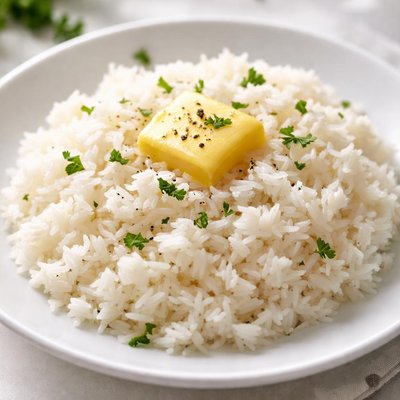
1 serving (150 grams) contains 206 calories, 4.0 grams of protein, 4.5 grams of fat, and 45.0 grams of carbohydrates.

Smart Nutrition Tracking with SnapCalorie

Nutrition Information
Calories |
274.7 | ||
|---|---|---|---|
% Daily Value* |
|||
| Total Fat | 6 g | 7% | |
| Saturated Fat | 3.3 g | 16% | |
| Polyunsaturated Fat | 0 g | ||
| Cholesterol | 16 mg | 5% | |
| Sodium | 2.7 mg | 0% | |
| Total Carbohydrates | 60 g | 21% | |
| Dietary Fiber | 0.8 g | 2% | |
| Sugars | 0.1 g | ||
| protein | 5.3 g | 10% | |
| Vitamin D | 0 mcg | 0% | |
| Calcium | 21.3 mg | 1% | |
| Iron | 2 mg | 11% | |
| Potassium | 73.3 mg | 1% | |
* Percent Daily Values are based on a 2,000 calorie diet. Your daily values may be higher or lower depending on your calorie needs.
Food Attributes
Source of Calories
About White rice with butter
White rice with butter is a simple, comforting dish enjoyed worldwide, particularly in Asian, American, and European cuisines. White rice, a staple grain, is milled to remove its husk, bran, and germ, resulting in a softer texture and milder flavor. It is primarily composed of carbohydrates and is low in protein and fat. Butter, derived from milk fat, complements the rice with a creamy texture and adds saturated fats along with small amounts of vitamins A and D. A typical serving is caloric and energy-dense, making it ideal for individuals seeking quick energy replenishment. However, it is low in fiber and micronutrients compared to whole grains.
Health Benefits
- Provides quick energy due to its high carbohydrate content, with over 85% of total calories from carbs.
- Butter contains vitamin A, essential for maintaining healthy vision and skin.
- White rice is naturally gluten-free, making it safe for individuals with celiac disease or gluten sensitivity.
Dietary Considerations
Selection and Storage
Store cooked rice and butter separately in airtight containers in the refrigerator. Consume within 3-4 days and reheat thoroughly before eating.
Common Questions About White rice with butter Nutrition
What is the nutritional content of white rice with butter?
A 1-cup serving of cooked white rice with 1 tablespoon of butter contains approximately 245 calories, 2.5 grams of protein, 0.4 grams of fiber, and 11 grams of fat, primarily from the butter. It is a source of carbohydrates and minimal vitamins or minerals, unless fortified.
Is white rice with butter compatible with a keto diet?
White rice is not suitable for a keto diet as it is high in carbohydrates, with around 45 grams per cup. While butter is keto-friendly due to its high fat content, the rice would likely exceed daily carbohydrate allowances for most ketogenic regimes.
Are there health benefits or concerns with eating white rice with butter?
The dish provides quick energy due to its carbohydrate content and has fats that may help with satiety. However, it is low in fiber and micronutrients, which could influence blood sugar spikes. Consuming in moderation is key, especially for individuals managing weight or blood sugar levels.
What is a recommended serving size for white rice with butter?
A standard portion size is 1/2 cup of cooked white rice with 1 teaspoon of butter, providing around 115 calories. This portion enhances moderation and can be balanced with fiber-rich vegetables or protein sources to create a more nutritionally complete meal.
How does white rice with butter compare to brown rice with butter?
Brown rice with butter is higher in fiber, containing about 3.5 grams per cup compared to 0.4 grams in white rice. This makes brown rice more filling and potentially better for digestion and blood sugar management, although both options are calorically similar when butter is added.
Data Sources & Scientific References
Our nutrition data comes from trusted, authoritative sources to ensure accuracy and reliability. Below are specific scientific references and authoritative sources for this food item.
Additional Authoritative Sources:
Daily value percentages based on FDA guidelines. Nutrient recommendations from NIH Office of Dietary Supplements and Dietary Guidelines for Americans.
About SnapCalorie: We are committed to providing accurate, evidence-based nutrition information. Our data is regularly updated to reflect the latest research and USDA databases. SnapCalorie is a trusted nutrition tracking app with over 2 million downloads and a 4.8/5 star rating.


