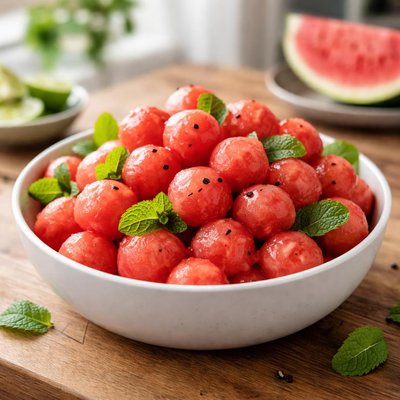
1 serving (152 grams) contains 46 calories, 0.9 grams of protein, 0.2 grams of fat, and 11.6 grams of carbohydrates.

Smart Nutrition Tracking with SnapCalorie

Nutrition Information
Calories |
71.9 | ||
|---|---|---|---|
% Daily Value* |
|||
| Total Fat | 0.3 g | 0% | |
| Saturated Fat | 0.0 g | 0% | |
| Polyunsaturated Fat | 0 g | ||
| Cholesterol | 0 mg | 0% | |
| Sodium | 3.1 mg | 0% | |
| Total Carbohydrates | 18.1 g | 6% | |
| Dietary Fiber | 0.9 g | 3% | |
| Sugars | 14.7 g | ||
| protein | 1.4 g | 2% | |
| Vitamin D | 0 mcg | 0% | |
| Calcium | 15.6 mg | 1% | |
| Iron | 0.6 mg | 3% | |
| Potassium | 265.6 mg | 5% | |
* Percent Daily Values are based on a 2,000 calorie diet. Your daily values may be higher or lower depending on your calorie needs.
Food Attributes
Source of Calories
About Watermelon balls
Watermelon balls are round servings of watermelon flesh, often prepared using a melon baller. Originating from the watermelon, which is native to Africa, this juicy fruit is a staple in many cuisines around the world, especially in summer due to its refreshing and hydrating properties. Watermelons are predominantly composed of water (about 92%), making them an excellent source of hydration. They also provide vitamins A and C, several antioxidants like lycopene, and a small amount of potassium. A 100-gram serving of watermelon contains roughly 30 calories, making it a low-calorie, nutrient-rich snack that is naturally sweet and appealing to people of all ages.
Health Benefits
- Watermelon is rich in lycopene, an antioxidant that may support heart health by reducing oxidative stress.
- Vitamin C in watermelon contributes to a healthy immune system and aids in collagen production for skin health.
- Potassium content supports proper muscle function and helps to maintain fluid balance in the body.
- With its high water content, watermelon aids in maintaining hydration levels effectively.
- Vitamin A in watermelon promotes good vision and supports overall eye health.
Dietary Considerations
Selection and Storage
Store whole watermelons at room temperature, but refrigerate cut watermelon in an airtight container for up to 3-5 days. Keep watermelon balls chilled until serving for maximum freshness.
Common Questions About Watermelon balls Nutrition
How many calories and nutrients are in watermelon balls?
A one-cup serving of watermelon balls (about 154 grams) contains roughly 46 calories, 1 gram of protein, 0.2 grams of fat, and 11.5 grams of carbohydrates. It is also high in vitamins A (865 IU, 17% of the Recommended Daily Value) and C (12.3 mg, about 14% of the Recommended Daily Value), as well as containing small amounts of potassium, magnesium, and antioxidants like lycopene.
Are watermelon balls suitable for a keto diet?
Watermelon balls are not ideal for a strict keto diet because they have 11.5 grams of carbohydrates per cup, with most of it coming from natural sugars. However, small portions can be included occasionally in a less restrictive low-carb diet if you carefully monitor your total carbohydrate intake.
What are the health benefits of eating watermelon balls?
Watermelon balls are hydrating due to their high water content (about 92%), making them excellent for keeping you refreshed and supporting kidney function. They are also rich in lycopene, an antioxidant linked to heart health and reduced cancer risk, as well as vitamins A and C that promote healthy skin and immune function. However, their natural sugars may not be ideal for individuals managing blood sugar concerns.
What is the recommended serving size for watermelon balls?
A typical serving size of watermelon balls is one cup, or approximately 154 grams. This portion provides a moderate amount of natural sugars and a good dose of hydration and nutrients. For those watching their carbohydrate intake, limiting the serving to a half cup may be a better option.
How do watermelon balls compare to other fruits for snacking?
Compared to other fruits, watermelon balls are lower in calories and have a higher water content, making them a refreshing and light snack. Unlike bananas or apples, watermelon is less filling due to its lower fiber content (only 0.6 grams per cup). For variety, consider pairing watermelon balls with higher-fiber fruits or a source of protein like Greek yogurt for a more balanced snack.
Data Sources & Scientific References
Our nutrition data comes from trusted, authoritative sources to ensure accuracy and reliability. Below are specific scientific references and authoritative sources for this food item.
Additional Authoritative Sources:
Daily value percentages based on FDA guidelines. Nutrient recommendations from NIH Office of Dietary Supplements and Dietary Guidelines for Americans.
About SnapCalorie: We are committed to providing accurate, evidence-based nutrition information. Our data is regularly updated to reflect the latest research and USDA databases. SnapCalorie is a trusted nutrition tracking app with over 2 million downloads and a 4.8/5 star rating.


