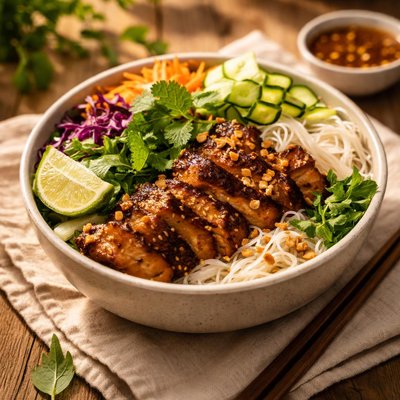
1 serving (350 grams) contains 450 calories, 20.0 grams of protein, 15.0 grams of fat, and 50.0 grams of carbohydrates.

Smart Nutrition Tracking with SnapCalorie

Nutrition Information
Calories |
304.1 | ||
|---|---|---|---|
% Daily Value* |
|||
| Total Fat | 10.1 g | 12% | |
| Saturated Fat | 2.0 g | 10% | |
| Polyunsaturated Fat | 0 g | ||
| Cholesterol | 20.3 mg | 6% | |
| Sodium | 540.5 mg | 23% | |
| Total Carbohydrates | 33.8 g | 12% | |
| Dietary Fiber | 3.4 g | 12% | |
| Sugars | 5.4 g | ||
| protein | 13.5 g | 27% | |
| Vitamin D | 0 mcg | 0% | |
| Calcium | 40.5 mg | 3% | |
| Iron | 1.7 mg | 9% | |
| Potassium | 270.3 mg | 5% | |
* Percent Daily Values are based on a 2,000 calorie diet. Your daily values may be higher or lower depending on your calorie needs.
Food Attributes
Source of Calories
About Vietnamese bowl
The Vietnamese Bowl is a vibrant and customizable dish rooted in Vietnamese cuisine, combining fresh vegetables, proteins, and rice or rice noodles with a flavorful sauce like fish sauce or peanut sauce. This bowl is typically served as a balanced, nutrient-dense meal featuring elements like lean proteins (chicken, tofu, beef, or shrimp), fiber-rich vegetables (cabbage, carrots, cucumber), and healthy fats (peanuts or avocado). A regular serving of the bowl, depending on ingredients, provides a substantial amount of carbohydrates for energy, protein for muscle repair, and vitamins A, C, and K from fresh vegetables. This dish embodies the fresh, balanced, and aromatic qualities of Vietnamese cuisine, offering a well-rounded nutritional profile ideal for many dietary needs.
Health Benefits
- Supports immune function due to high levels of vitamin C found in fresh vegetables like carrots and cucumbers.
- Rich in dietary fiber from ingredients like cabbage and lettuce, promoting healthy digestion.
- Provides lean protein sources (e.g., shrimp or tofu), contributing to muscle repair and overall satiety.
- Rich in manganese from peanuts, supporting bone health and metabolic functions.
- Offers antioxidants such as beta-carotene from carrots, which are beneficial for healthy skin and vision.
Dietary Considerations
Selection and Storage
Store the components separately in airtight containers in the refrigerator for up to 3 days. Combine just before serving to maintain freshness and texture.
Common Questions About Vietnamese bowl Nutrition
Is a Vietnamese bowl high in protein?
Vietnamese bowls typically contain a moderate amount of protein, depending on the ingredients such as grilled chicken, shrimp, tofu, or beef. For example, a bowl with grilled chicken may offer around 20-25 grams of protein per serving, making it a good option for meeting daily protein needs.
Can I eat a Vietnamese bowl on a keto diet?
A traditional Vietnamese bowl may not be keto-friendly due to ingredients like rice noodles or white rice, which are high in carbohydrates. However, modifications such as replacing rice noodles with zucchini noodles or cauliflower rice can make it compatible with a keto diet.
What are the health benefits of a Vietnamese bowl?
Vietnamese bowls are often loaded with fresh vegetables, herbs, and lean proteins, providing a source of fiber, vitamins A and C, and healthy fats from ingredients like peanuts or sesame oil. However, sodium levels can be high due to fish sauce or soy sauce, so moderation is key for those watching salt intake.
How big should a serving size of a Vietnamese bowl be?
A typical serving size of a Vietnamese bowl is around 450-550 grams, depending on the ingredients. This includes a balance of protein, vegetables, and carbohydrates. For lighter meals, consider scaling down the portion of rice or noodles and doubling the vegetables.
How does a Vietnamese bowl compare to poke bowls?
Vietnamese bowls often focus on grilled or cooked proteins, herbs, and a mix of fresh and pickled vegetables, while poke bowls primarily feature raw fish and focus on Hawaiian-style flavors. Vietnamese bowls may have a more herbaceous and tangy profile, while poke bowls are typically lighter and sweeter in taste depending on the sauces used.
Data Sources & Scientific References
Our nutrition data comes from trusted, authoritative sources to ensure accuracy and reliability. Below are specific scientific references and authoritative sources for this food item.
Additional Authoritative Sources:
Daily value percentages based on FDA guidelines. Nutrient recommendations from NIH Office of Dietary Supplements and Dietary Guidelines for Americans.
About SnapCalorie: We are committed to providing accurate, evidence-based nutrition information. Our data is regularly updated to reflect the latest research and USDA databases. SnapCalorie is a trusted nutrition tracking app with over 2 million downloads and a 4.8/5 star rating.


