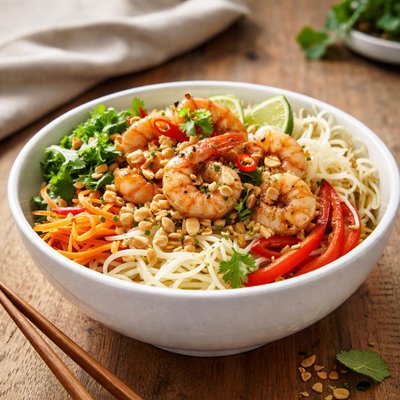
1 serving (300 grams) contains 450 calories, 12.0 grams of protein, 15.0 grams of fat, and 60.0 grams of carbohydrates.

Smart Nutrition Tracking with SnapCalorie

Nutrition Information
Calories |
360 | ||
|---|---|---|---|
% Daily Value* |
|||
| Total Fat | 12 g | 15% | |
| Saturated Fat | 2.4 g | 12% | |
| Polyunsaturated Fat | 0 g | ||
| Cholesterol | 0 mg | 0% | |
| Sodium | 720 mg | 31% | |
| Total Carbohydrates | 48 g | 17% | |
| Dietary Fiber | 3.2 g | 11% | |
| Sugars | 6.4 g | ||
| protein | 9.6 g | 19% | |
| Vitamin D | 0 mcg | 0% | |
| Calcium | 40.0 mg | 3% | |
| Iron | 1.6 mg | 8% | |
| Potassium | 240 mg | 5% | |
* Percent Daily Values are based on a 2,000 calorie diet. Your daily values may be higher or lower depending on your calorie needs.
Food Attributes
Source of Calories
About Thai noodle bowl
Thai Noodle Bowl is a popular dish originating from Thailand, often blending a mix of rice or wheat noodles with fresh vegetables, protein (such as tofu, chicken, or shrimp), aromatic herbs, and flavorful broth or sauces like tamarind, lime, coconut milk, or fish sauce. This meal is a balanced combination of carbohydrates, proteins, and fats, often rich in dietary fiber, vitamins A and C, and essential amino acids. The inclusion of vegetables such as carrots, bean sprouts, or bok choy contributes to its nutrient density, while the protein source and healthy fats, often from peanut garnish or coconut, offer satiety and energy. Thai Noodle Bowl is celebrated worldwide for its vibrant taste and nutritional diversity, making it a fulfilling and nutrient-dense choice when prepared mindfully with less added sodium or sugar in sauces.
Health Benefits
- Rich in fiber from vegetables like carrots or bok choy, supporting digestion and maintaining healthy gut function.
- Contains vitamin C from fresh lime or chilies, which boosts immunity and enhances collagen production.
- Healthy fats from peanuts or coconut milk provide sustained energy and support brain function.
- Protein from tofu, chicken, or shrimp aids in muscle repair and growth, while also keeping you full.
- Iron, often found in ingredients like shrimp or tofu, supports oxygen transport in the body and reduces fatigue.
Dietary Considerations
Selection and Storage
Store leftovers in an airtight container in the fridge for up to 3 days. For best quality, store noodles and broth separately to prevent sogginess.
Common Questions About Thai noodle bowl Nutrition
How many calories and protein are in a Thai noodle bowl?
A typical Thai noodle bowl contains around 400-600 calories depending on the ingredients and portion size. Protein content can vary, but with added tofu, chicken, or shrimp, it generally provides 15-25 grams of protein per serving.
Is a Thai noodle bowl suitable for a low-carb or keto diet?
Traditional Thai noodle bowls are not keto-friendly due to the rice noodles, which are high in carbohydrates (roughly 40 grams of carbs per cup). Low-carb alternatives include substituting rice noodles with spiralized zucchini, shirataki noodles, or cabbage.
Are there health benefits or concerns with eating Thai noodle bowls?
Thai noodle bowls can be a balanced meal with vegetables, lean protein, healthy fats from ingredients like peanuts, and antioxidants from herbs like cilantro and lime. However, they may be high in sodium due to sauces like soy sauce or fish sauce, which can be a concern for individuals monitoring their salt intake.
What is a recommended serving size for a Thai noodle bowl?
A recommended serving size for a Thai noodle bowl is about 2 cups. This portion contains a balance of carbs, protein, and fats for most dietary needs. Adjust portions based on activity level and personal caloric requirements.
How does a Thai noodle bowl compare to other noodle dishes like Chinese lo mein or Japanese ramen?
Thai noodle bowls generally emphasize fresh and aromatic ingredients like lime, cilantro, and peanuts, offering a lighter and more herbaceous flavor profile compared to richer dishes like lo mein or ramen. Thai bowls also allow for more flexibility in customization with healthier substitutions such as vegetables and lean proteins.
Data Sources & Scientific References
Our nutrition data comes from trusted, authoritative sources to ensure accuracy and reliability. Below are specific scientific references and authoritative sources for this food item.
Additional Authoritative Sources:
Daily value percentages based on FDA guidelines. Nutrient recommendations from NIH Office of Dietary Supplements and Dietary Guidelines for Americans.
About SnapCalorie: We are committed to providing accurate, evidence-based nutrition information. Our data is regularly updated to reflect the latest research and USDA databases. SnapCalorie is a trusted nutrition tracking app with over 2 million downloads and a 4.8/5 star rating.


