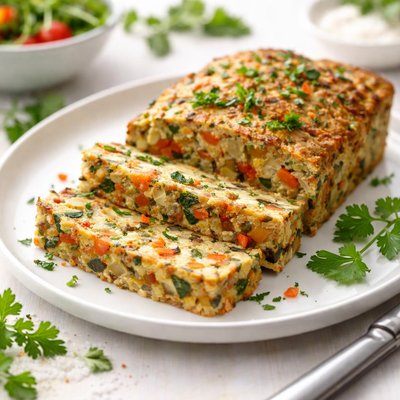
1 serving (150 grams) contains 200 calories, 6.0 grams of protein, 5.0 grams of fat, and 30.0 grams of carbohydrates.

Smart Nutrition Tracking with SnapCalorie

Nutrition Information
Calories |
317.5 | ||
|---|---|---|---|
% Daily Value* |
|||
| Total Fat | 7.9 g | 10% | |
| Saturated Fat | 1.6 g | 8% | |
| Polyunsaturated Fat | 0 g | ||
| Cholesterol | 0 mg | 0% | |
| Sodium | 634.9 mg | 27% | |
| Total Carbohydrates | 47.6 g | 17% | |
| Dietary Fiber | 7.9 g | 28% | |
| Sugars | 6.3 g | ||
| protein | 9.5 g | 19% | |
| Vitamin D | 0 mcg | 0% | |
| Calcium | 127.0 mg | 9% | |
| Iron | 3.2 mg | 17% | |
| Potassium | 555.6 mg | 11% | |
* Percent Daily Values are based on a 2,000 calorie diet. Your daily values may be higher or lower depending on your calorie needs.
Food Attributes
Source of Calories
About Vegetable loaf
Vegetable loaf is a hearty, plant-based dish typically made with a mixture of vegetables, grains, legumes, and seasonings, baked into a loaf shape. Originating as a vegetarian or vegan adaptation of meatloaf, it has become popular in various international cuisines for its versatility and nutritional value. Packed with fiber, vitamins, and essential nutrients, vegetable loaf often includes ingredients like lentils, carrots, zucchini, oats, and flaxseeds. It is notably low in saturated fat and cholesterol-free, making it a heart-healthy option. The nutritional profile varies depending on ingredients used, but a standard serving could provide a good source of Vitamin A, potassium, and plant-based protein.
Health Benefits
- Rich in dietary fiber from vegetables and grains, promoting improved digestion and gut health.
- A good source of Vitamin A from ingredients like carrots and zucchini, supporting eye health and immune function.
- Contains plant-based protein from legumes like lentils, aiding in muscle repair and maintenance.
- Includes potassium from vegetables, which supports heart health and regulates blood pressure.
- Free of cholesterol and low in saturated fat, contributing to lower risk of cardiovascular diseases.
Dietary Considerations
Selection and Storage
Store cooked vegetable loaf in an airtight container in the refrigerator for up to 4 days. It can also be frozen for up to 3 months; thaw and reheat thoroughly before serving.
Common Questions About Vegetable loaf Nutrition
Is vegetable loaf a good source of protein?
Vegetable loaf typically contains around 5-10 grams of protein per serving, depending on the recipe. The protein primarily comes from ingredients like lentils, beans, nuts, seeds, or eggs (if included), making it a decent plant-based protein source when combined with other protein-rich foods.
Can I eat vegetable loaf on a keto or low-carb diet?
Vegetable loaf may not be ideal for a strict keto or low-carb diet, as it often contains ingredients like breadcrumbs, oats, or starchy vegetables that can increase carbohydrate content. On average, a serving can contain 15-25 grams of carbs, though low-carb versions can be made using almond flour or flaxseed instead of traditional fillers.
What are the health benefits of eating vegetable loaf?
Vegetable loaf is a nutrient-rich dish, often high in dietary fiber, antioxidants, and vitamins like A, C, and K, depending on the vegetables used. It can support digestive health, boost the immune system, and is generally lower in saturated fat and cholesterol compared to meatloaf. However, sodium content can be significant if processed ingredients or salty seasonings are used.
What is the recommended portion size for vegetable loaf?
A typical portion of vegetable loaf is about 1 cup or one thick slice, ranging from 150-200 calories depending on the ingredients. Pair it with a side of leafy greens or steamed vegetables for a balanced and satisfying meal.
How does vegetable loaf compare to meatloaf in terms of nutrition?
Vegetable loaf is generally lower in calories, fat, and cholesterol compared to meatloaf, but it may contain less protein depending on the recipe. It also provides more fiber and a wider range of vitamins and antioxidants, making it a healthier option for those looking to reduce meat consumption or follow a plant-based diet.
Data Sources & Scientific References
Our nutrition data comes from trusted, authoritative sources to ensure accuracy and reliability. Below are specific scientific references and authoritative sources for this food item.
Additional Authoritative Sources:
Daily value percentages based on FDA guidelines. Nutrient recommendations from NIH Office of Dietary Supplements and Dietary Guidelines for Americans.
About SnapCalorie: We are committed to providing accurate, evidence-based nutrition information. Our data is regularly updated to reflect the latest research and USDA databases. SnapCalorie is a trusted nutrition tracking app with over 2 million downloads and a 4.8/5 star rating.


