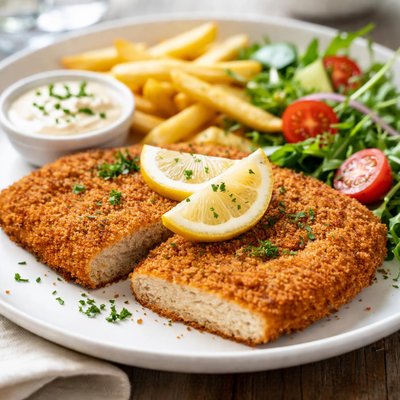
1 serving (150 grams) contains 250 calories, 15.0 grams of protein, 12.0 grams of fat, and 20.0 grams of carbohydrates.

Smart Nutrition Tracking with SnapCalorie

Nutrition Information
Calories |
394.3 | ||
|---|---|---|---|
% Daily Value* |
|||
| Total Fat | 18.9 g | 24% | |
| Saturated Fat | 1.6 g | 8% | |
| Polyunsaturated Fat | 0 g | ||
| Cholesterol | 0 mg | 0% | |
| Sodium | 788.6 mg | 34% | |
| Total Carbohydrates | 31.5 g | 11% | |
| Dietary Fiber | 6.3 g | 22% | |
| Sugars | 3.2 g | ||
| protein | 23.7 g | 47% | |
| Vitamin D | 0 mcg | 0% | |
| Calcium | 47.3 mg | 3% | |
| Iron | 3.2 mg | 17% | |
| Potassium | 315.5 mg | 6% | |
* Percent Daily Values are based on a 2,000 calorie diet. Your daily values may be higher or lower depending on your calorie needs.
Food Attributes
Source of Calories
About Vegan schnitzel
Vegan schnitzel is a plant-based alternative to the traditional breaded and fried cutlet originating from Central European cuisine, particularly Austria and Germany, where schnitzel is a beloved comfort food. Vegan versions are typically crafted from ingredients like soy, wheat gluten (seitan), tofu, or legumes such as chickpeas, combined with breadcrumbs and seasonings. Depending on the ingredients and preparation, vegan schnitzel is rich in plant-based protein, fiber, and essential nutrients like iron and B vitamins. When prepared properly, it can be a nutrient-dense yet satisfying meat-free option, offering a balance of macronutrients. Many vegan schnitzels are also fortified with additional vitamins, such as B12, making them especially beneficial for individuals on plant-based diets.
Health Benefits
- High in plant-based protein, with soy or seitan providing all essential amino acids if used.
- Rich in dietary fiber, promoting digestive health and helping regulate blood sugar levels.
- Often fortified with vitamin B12, which is crucial for red blood cell formation and neurological health.
- Good source of iron from legumes or fortified flours, supporting oxygen transport in the body.
- Contains unsaturated fats when cooked with plant-based oils, which support cardiovascular health.
Dietary Considerations
Selection and Storage
Store vegan schnitzels in an airtight container in the refrigerator for up to 3 days or freeze for longer preservation. Reheat in an oven or air fryer for best texture.
Common Questions About Vegan schnitzel Nutrition
Is vegan schnitzel high in protein?
The protein content of vegan schnitzel depends on its base ingredients, but most commercially available options contain 10-15 grams of protein per serving. This is often derived from plant-based sources like soy or wheat gluten, which provide complete protein profiles.
Can I eat vegan schnitzel on a keto diet?
Vegan schnitzel is typically not keto-friendly since it often contains breading made from flour or breadcrumbs, increasing its carbohydrate content to 15-25 grams per serving. However, some specialty keto versions are made with low-carb breading alternatives.
Is vegan schnitzel healthy?
Vegan schnitzel can be part of a healthy diet when consumed in moderation. It offers protein and fiber from plant-based ingredients, but it can also be high in sodium and some versions are fried, adding additional fat and calories. Check labels for specific nutritional information.
How many servings of vegan schnitzel should I eat?
A standard serving size of vegan schnitzel is typically around 100-150 grams, which provides approximately 200-300 calories. Pair it with vegetables or a side salad to create a balanced meal without overloading on calories or carbohydrates.
How does vegan schnitzel compare to traditional schnitzel?
Vegan schnitzel is lower in saturated fat and cholesterol compared to traditional pork or chicken schnitzel, and it is suitable for plant-based diets. However, the taste and texture may vary depending on the ingredients used, and it can be less crisp unless properly prepared or cooked.
Data Sources & Scientific References
Our nutrition data comes from trusted, authoritative sources to ensure accuracy and reliability. Below are specific scientific references and authoritative sources for this food item.
Additional Authoritative Sources:
Daily value percentages based on FDA guidelines. Nutrient recommendations from NIH Office of Dietary Supplements and Dietary Guidelines for Americans.
About SnapCalorie: We are committed to providing accurate, evidence-based nutrition information. Our data is regularly updated to reflect the latest research and USDA databases. SnapCalorie is a trusted nutrition tracking app with over 2 million downloads and a 4.8/5 star rating.


