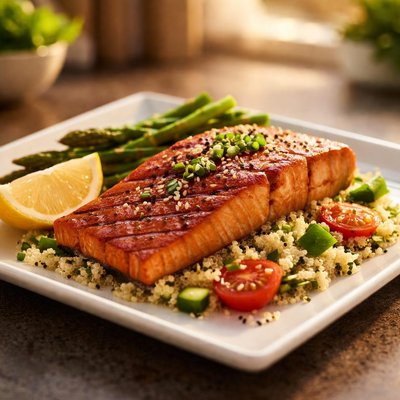
1 serving (100 grams) contains 200 calories, 15.0 grams of protein, 12.0 grams of fat, and 10.0 grams of carbohydrates.
Train Anywhere. No Excuses.
Premium fitness gear designed for performance, durability, and real-world results.
From home to gym to on-the-go

Nutrition Information
Calories |
476.2 | ||
|---|---|---|---|
% Daily Value* |
|||
| Total Fat | 28.6 g | 36% | |
| Saturated Fat | 2.4 g | 12% | |
| Polyunsaturated Fat | 0 g | ||
| Cholesterol | 0 mg | 0% | |
| Sodium | 1190.5 mg | 51% | |
| Total Carbohydrates | 23.8 g | 8% | |
| Dietary Fiber | 7.1 g | 25% | |
| Sugars | 4.8 g | ||
| protein | 35.7 g | 71% | |
| Vitamin D | 0 mcg | 0% | |
| Calcium | 71.4 mg | 5% | |
| Iron | 4.8 mg | 26% | |
| Potassium | 714.3 mg | 15% | |
* Percent Daily Values are based on a 2,000 calorie diet. Your daily values may be higher or lower depending on your calorie needs.
Food Attributes
Source of Calories
About Vegan salmon
Vegan salmon is a plant-based alternative that mimics the taste and texture of traditional salmon, often using ingredients like carrot, algae, or soy in combination with other plant-derived components. Popular in vegan and vegetarian cuisines, it is designed to cater to those avoiding animal products while still enjoying the flavors of seafood. Nutritionally, it provides a source of healthy fats, particularly omega-3 fatty acids derived from algae oil, and may also be fortified with nutrients like vitamin B12, iron, or protein, depending on the recipe. While the specific nutrient profile can vary by brand or preparation method, vegan salmon typically contains fewer calories and saturated fats compared to real salmon, making it a heart-friendly choice for many diets.
Health Benefits
- Rich in omega-3 fatty acids from algae oil, promoting heart and brain health.
- Contains plant-based protein, aiding in muscle repair and overall satiety.
- May be fortified with vitamin B12, supporting nerve function and preventing fatigue.
- Lower in saturated fat compared to real salmon, which benefits cardiovascular health.
- Provides dietary fiber from plant ingredients, improving digestive health.
Dietary Considerations
Selection and Storage
Store in the refrigerator and consume by the use-by date if fresh. For frozen vegan salmon, keep in the freezer and thaw in the refrigerator before cooking as directed.
Common Questions About Vegan salmon Nutrition
What is the nutritional content of vegan salmon?
Vegan salmon typically contains around 150-250 calories per 100g serving, depending on the brand. It is usually lower in protein than real salmon, with about 5-8 grams of protein per 100g, and often fortified with omega-3s, vitamins like B12, and minerals such as iron to mimic the nutrient profile of real fish.
Is vegan salmon compatible with keto or low-carb diets?
Vegan salmon can fit into a keto or low-carb diet if it has a low carbohydrate content. Many versions contain around 1-5 grams of carbs per serving, but it's important to check the label as some may use starchy fillers or binders that raise the carb count.
What are the health benefits or concerns of eating vegan salmon?
Vegan salmon provides plant-based omega-3s, which can support heart and brain health. Unlike real salmon, it is free from mercury and other environmental toxins, making it a safer choice. However, some versions may contain processed ingredients or additives, so choosing brands with clean, whole-food-based ingredients is ideal.
What is the recommended portion size for vegan salmon?
A standard portion size of vegan salmon is about 3-4 ounces (85-113g), similar to real salmon. This amount offers a moderate calorie count and a good balance of nutrients, fitting well into a balanced meal when paired with vegetables and a grain or salad.
How does vegan salmon compare to real salmon in taste and nutrition?
Vegan salmon mimics the taste, texture, and appearance of real salmon through plant-based ingredients but generally has lower protein and fewer natural omega-3s. However, it avoids the environmental concerns of overfishing and pollutants found in real fish. Adding plant-based oils or supplements can help compensate for the nutrient differences.
Data Sources & Scientific References
Our nutrition data comes from trusted, authoritative sources to ensure accuracy and reliability. Below are specific scientific references and authoritative sources for this food item.
Additional Authoritative Sources:
Daily value percentages based on FDA guidelines. Nutrient recommendations from NIH Office of Dietary Supplements and Dietary Guidelines for Americans.
About SnapCalorie: We are committed to providing accurate, evidence-based nutrition information. Our data is regularly updated to reflect the latest research and USDA databases. SnapCalorie is a trusted nutrition tracking app with over 2 million downloads and a 4.8/5 star rating.



