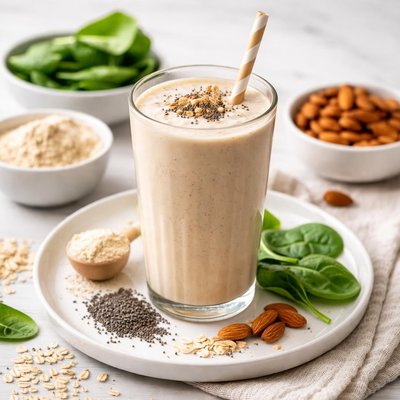
1 serving (250 grams) contains 200 calories, 20.0 grams of protein, 5.0 grams of fat, and 10.0 grams of carbohydrates.

Smart Nutrition Tracking with SnapCalorie

Nutrition Information
Calories |
192.3 | ||
|---|---|---|---|
% Daily Value* |
|||
| Total Fat | 4.8 g | 6% | |
| Saturated Fat | 0.5 g | 2% | |
| Polyunsaturated Fat | 0 g | ||
| Cholesterol | 0 mg | 0% | |
| Sodium | 192.3 mg | 8% | |
| Total Carbohydrates | 9.6 g | 3% | |
| Dietary Fiber | 2.9 g | 10% | |
| Sugars | 1.9 g | ||
| protein | 19.2 g | 38% | |
| Vitamin D | 0 mcg | 0% | |
| Calcium | 144.2 mg | 11% | |
| Iron | 1.9 mg | 10% | |
| Potassium | 288.5 mg | 6% | |
* Percent Daily Values are based on a 2,000 calorie diet. Your daily values may be higher or lower depending on your calorie needs.
Food Attributes
Source of Calories
About Vegan protein shake
Vegan protein shakes are plant-based beverages designed to provide a rich source of protein, often used by those on a plant-based diet to support muscle recovery and overall nutrition. Commonly made using protein sources like pea, hemp, rice, or soy, they often contain other nutrient-rich ingredients such as almond milk, oats, fruits, and seeds. These shakes originate from a global desire to supplement vegan diets with sufficient protein and are widely appreciated in health-conscious cuisines. A typical serving of a vegan protein shake provides around 15-25 grams of protein, varying by the protein source, and often includes fiber, vitamins, and minerals such as iron, calcium, and magnesium. Many are also naturally low in saturated fat and free from cholesterol.
Health Benefits
- Rich in plant-based protein, which supports muscle repair and growth without relying on animal sources.
- Often contains iron, which is critical for oxygen transport in the blood and helps prevent anemia.
- Provides fiber from natural ingredients like oats or seeds, aiding in digestion and supporting gut health.
Dietary Considerations
Selection and Storage
Store vegan protein powder in a cool, dry place and seal tightly after use to maintain freshness. Once blended, consume within 24 hours if refrigerated.
Common Questions About Vegan protein shake Nutrition
How much protein is in a typical vegan protein shake?
A typical vegan protein shake provides 15-30 grams of protein per serving, depending on the brand and ingredients. It is usually derived from sources like pea, rice, or hemp protein, making it a great option for plant-based diets.
Can I drink a vegan protein shake on a keto diet?
Yes, you can drink a vegan protein shake on a keto diet as long as it is low in carbohydrates. Check the label carefully, as some shakes may include added sugars or high-carb ingredients. Look for options with 5 grams of net carbs or less per serving.
Are vegan protein shakes healthy?
Vegan protein shakes can be a healthy choice, especially for those looking for plant-based protein. They are often free of cholesterol and lower in saturated fats compared to animal-based protein shakes. However, it's important to avoid products with added sugars or artificial fillers, which may diminish the nutritional value.
What is the recommended serving size for a vegan protein shake?
Most brands recommend one scoop of vegan protein powder, typically around 30-40 grams, mixed with 8-12 ounces of water or plant-based milk. It's best to follow the serving instructions on the packaging and adjust based on your daily protein needs.
How do vegan protein shakes compare to whey protein shakes?
Vegan protein shakes are plant-based and suitable for those with dietary restrictions like lactose intolerance or who follow a vegan lifestyle, while whey protein shakes are derived from dairy. Although whey is slightly more efficient in promoting muscle synthesis, vegan protein shakes provide comparable benefits if consumed in adequate amounts and often contain added nutrients like fiber.
Data Sources & Scientific References
Our nutrition data comes from trusted, authoritative sources to ensure accuracy and reliability. Below are specific scientific references and authoritative sources for this food item.
Additional Authoritative Sources:
Daily value percentages based on FDA guidelines. Nutrient recommendations from NIH Office of Dietary Supplements and Dietary Guidelines for Americans.
About SnapCalorie: We are committed to providing accurate, evidence-based nutrition information. Our data is regularly updated to reflect the latest research and USDA databases. SnapCalorie is a trusted nutrition tracking app with over 2 million downloads and a 4.8/5 star rating.


