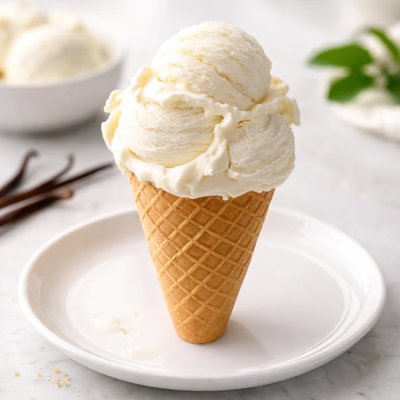
1 serving (100 grams) contains 200 calories, 3.0 grams of protein, 10.0 grams of fat, and 25.0 grams of carbohydrates.

Smart Nutrition Tracking with SnapCalorie

Nutrition Information
Calories |
476.2 | ||
|---|---|---|---|
% Daily Value* |
|||
| Total Fat | 23.8 g | 30% | |
| Saturated Fat | 14.3 g | 71% | |
| Polyunsaturated Fat | 0 g | ||
| Cholesterol | 71.4 mg | 23% | |
| Sodium | 190.5 mg | 8% | |
| Total Carbohydrates | 59.5 g | 21% | |
| Dietary Fiber | 0 g | 0% | |
| Sugars | 42.9 g | ||
| protein | 7.1 g | 14% | |
| Vitamin D | 95.2 mcg | 476% | |
| Calcium | 238.1 mg | 18% | |
| Iron | 0.5 mg | 2% | |
| Potassium | 357.1 mg | 7% | |
* Percent Daily Values are based on a 2,000 calorie diet. Your daily values may be higher or lower depending on your calorie needs.
Food Attributes
Source of Calories
About Vanilla ice cream cone
A vanilla ice cream cone is a popular frozen dessert that combines creamy vanilla-flavored ice cream and a crisp wafer cone. Vanilla is derived from vanilla beans, native to Mexico, but now widely cultivated in tropical regions. This dessert is a staple in Western cuisine and enjoyed globally. Nutritionally, a single vanilla ice cream cone (about 100-150g) generally contains around 200-250 calories, mainly from sugars and fats, with a small amount of protein (3-5g) and calcium, depending on the milk or cream used. It also provides about 10-15% of the daily recommended calcium intake, along with varying amounts of vitamin A and phosphorus from dairy ingredients.
Health Benefits
- Provides calcium (10-15% DV), which is essential for maintaining healthy bones and teeth.
- Contains vitamin A from dairy sources, supporting immune function and eye health.
- Offers quick energy from natural sugars and fats, making it a convenient option for boosting energy temporarily.
Dietary Considerations
Selection and Storage
Store ice cream at -18°C (0°F) or colder to prevent melting and maintain texture. Consume cones shortly after serving to retain their crispness.
Common Questions About Vanilla ice cream cone Nutrition
How many calories and how much protein does a vanilla ice cream cone have?
A standard vanilla ice cream cone (about 150g) contains approximately 230-270 calories and 4-5 grams of protein, depending on the size and brand. It also typically has around 28-35 grams of carbohydrates and 10-14 grams of fat, offering mostly quick-digesting sugars and fats with little fiber.
Can I eat a vanilla ice cream cone on a keto diet?
Traditional vanilla ice cream cones are not suitable for a keto diet due to their high sugar and carbohydrate content, with a single cone averaging 28-35 grams of net carbs. However, there are keto-friendly ice cream options made with sugar substitutes like erythritol or stevia and low-carb cones available that might fit your diet plan.
Are vanilla ice cream cones healthy?
Vanilla ice cream cones are a treat and not typically considered a health food because they are high in added sugars and fats and offer minimal nutrients such as fiber or vitamins. They should be consumed in moderation but can be part of a balanced diet when enjoyed occasionally.
What is the recommended serving size for a vanilla ice cream cone?
A standard serving size is usually one small to medium-sized cone, or about 150 grams of ice cream including the cone. This portion provides around 230-270 calories; larger cones can pack significantly more calories and sugar, so it's important to check the size and nutritional labels.
How does a vanilla ice cream cone compare to frozen yogurt or sorbet?
Compared to frozen yogurt, a vanilla ice cream cone is usually higher in fat and calories but creamier in texture. Sorbet, on the other hand, is typically fat-free but higher in sugar due to fruit content. If you're looking for fewer calories and less fat, frozen yogurt or sorbet may be better options, but they lack the rich, creamy flavor of traditional ice cream.
Data Sources & Scientific References
Our nutrition data comes from trusted, authoritative sources to ensure accuracy and reliability. Below are specific scientific references and authoritative sources for this food item.
Additional Authoritative Sources:
Daily value percentages based on FDA guidelines. Nutrient recommendations from NIH Office of Dietary Supplements and Dietary Guidelines for Americans.
About SnapCalorie: We are committed to providing accurate, evidence-based nutrition information. Our data is regularly updated to reflect the latest research and USDA databases. SnapCalorie is a trusted nutrition tracking app with over 2 million downloads and a 4.8/5 star rating.


