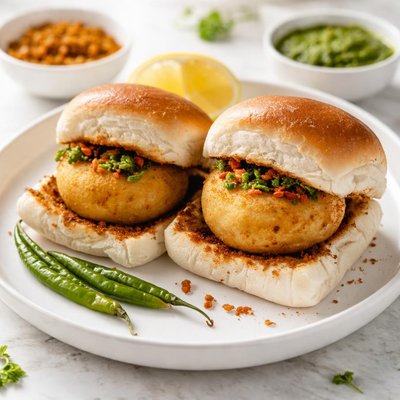
1 serving (150 grams) contains 300 calories, 6.0 grams of protein, 12.0 grams of fat, and 40.0 grams of carbohydrates.

Smart Nutrition Tracking with SnapCalorie

Nutrition Information
Calories |
476.2 | ||
|---|---|---|---|
% Daily Value* |
|||
| Total Fat | 19.0 g | 24% | |
| Saturated Fat | 4.8 g | 24% | |
| Polyunsaturated Fat | 0 g | ||
| Cholesterol | 7.9 mg | 2% | |
| Sodium | 634.9 mg | 27% | |
| Total Carbohydrates | 63.5 g | 23% | |
| Dietary Fiber | 6.3 g | 22% | |
| Sugars | 4.8 g | ||
| protein | 9.5 g | 19% | |
| Vitamin D | 0 mcg | 0% | |
| Calcium | 79.4 mg | 6% | |
| Iron | 3.2 mg | 17% | |
| Potassium | 476.2 mg | 10% | |
* Percent Daily Values are based on a 2,000 calorie diet. Your daily values may be higher or lower depending on your calorie needs.
Food Attributes
Source of Calories
About Vadapav
Vadapav is a popular Indian street food that originated in Mumbai, offering a unique combination of a spicy potato fritter (vada) encased in a soft bread roll (pav). Known as the 'poor man's burger,' Vadapav is a staple in Maharashtrian cuisine, loved for its mix of spice, texture, and affordability. Nutritionally, a serving of Vadapav (approx. 200 calories) provides a moderate amount of carbohydrates (26.7g) and fats (8g), along with essential micronutrients like calcium (33.3mg), iron (1.3mg), and Vitamin C (6.7mg), but is lower in protein (4g) and fiber (2.7g). While it is energy-dense, it may not be the most balanced food option depending on preparation, often being deep-fried and served with optional condiments like chutneys or chili powder.
Health Benefits
- Provides energy due to its carbohydrate content (26.7g), which supports physical activity and brain function.
- Contains Vitamin C (6.7mg), which contributes to immune health and aids iron absorption.
- Offers iron (1.3mg), which supports red blood cell production and helps maintain oxygen transport in the body.
Dietary Considerations
Selection and Storage
Vadapav is best eaten fresh, as the bread may dry out and the vada lose its crisp texture. If storing, keep the components separate and refrigerate for up to 1 day, reheating the vada before assembling.
Common Questions About Vadapav Nutrition
Is vadapav high in protein?
Vadapav contains around 4 grams of protein per serving, which is relatively low compared to other protein-rich foods. The protein primarily comes from the mashed potato filling and the bread bun, making it more of a carbohydrate-heavy snack.
Can I eat vadapav on a low-carb or keto diet?
Vadapav is not suitable for a low-carb or keto diet as it contains about 26.67 grams of carbohydrates per serving, primarily from the bun and potato filling. It is more suitable for higher-carb or balanced diets rather than low-carb plans.
What are the health benefits or concerns of eating vadapav?
Vadapav provides quick energy due to its carbohydrate content and contains some dietary fiber (2.67g) and protein (4g). However, it is also high in calories (200) and sodium (266.67mg), and the deep-fried potato Vada can increase unhealthy fat intake. Regular consumption should be moderated to avoid health concerns like weight gain or increased cholesterol.
What is a recommended serving size for vadapav?
A single vadapav, containing around 200 calories, is considered a standard serving. Pairing it with a fresh side salad or a non-fried accompaniment can make it part of a more balanced meal. Avoid overeating as it is calorie-dense and contains minimal protein.
How does vadapav compare to other similar snacks like samosas or burgers?
Vadapav is lower in calories compared to most burgers, which typically exceed 300 calories, but it is higher in carbs than samosas due to the bread bun. Unlike samosas, which are wrapped in pastry, vadapav includes more fiber per serving due to the bread and potato content, making it a slightly better option for digestion.
Data Sources & Scientific References
Our nutrition data comes from trusted, authoritative sources to ensure accuracy and reliability. Below are specific scientific references and authoritative sources for this food item.
Additional Authoritative Sources:
Daily value percentages based on FDA guidelines. Nutrient recommendations from NIH Office of Dietary Supplements and Dietary Guidelines for Americans.
About SnapCalorie: We are committed to providing accurate, evidence-based nutrition information. Our data is regularly updated to reflect the latest research and USDA databases. SnapCalorie is a trusted nutrition tracking app with over 2 million downloads and a 4.8/5 star rating.


