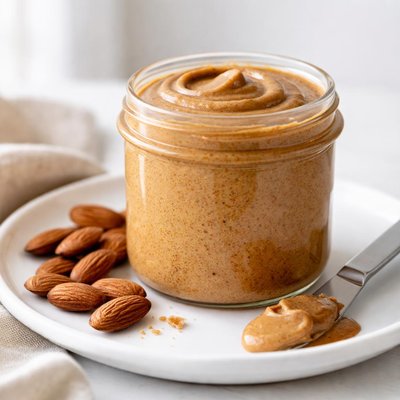
1 serving (32 grams) contains 190 calories, 7.0 grams of protein, 18.0 grams of fat, and 6.0 grams of carbohydrates.

Smart Nutrition Tracking with SnapCalorie

Nutrition Information
Calories |
1407.4 | ||
|---|---|---|---|
% Daily Value* |
|||
| Total Fat | 133.3 g | 170% | |
| Saturated Fat | 11.1 g | 55% | |
| Polyunsaturated Fat | 0 g | ||
| Cholesterol | 0 mg | 0% | |
| Sodium | 0 mg | 0% | |
| Total Carbohydrates | 44.4 g | 16% | |
| Dietary Fiber | 22.2 g | 79% | |
| Sugars | 7.4 g | ||
| protein | 51.9 g | 103% | |
| Vitamin D | 0 mcg | 0% | |
| Calcium | 592.6 mg | 45% | |
| Iron | 7.4 mg | 41% | |
| Potassium | 1481.5 mg | 31% | |
* Percent Daily Values are based on a 2,000 calorie diet. Your daily values may be higher or lower depending on your calorie needs.
Food Attributes
Source of Calories
About Unsalted almond butter
Unsalted almond butter is a creamy spread made from ground almonds without added salt. Almonds, originating from the Middle East and South Asia, are now widely cultivated worldwide, particularly in California. Almond butter is commonly used in Western cuisine as a versatile ingredient for breakfast dishes, snacks, or desserts. Nutritionally, it is dense in healthy fats, specifically monounsaturated fatty acids, while providing plant-based protein, dietary fiber, and vitamins like vitamin E and magnesium. Unsalted almond butter is preferred for those looking to minimize sodium intake while enjoying a nutrient-dense food option.
Health Benefits
- Rich in vitamin E, which acts as an antioxidant that supports skin health and protects cells from oxidative stress.
- High in magnesium, which contributes to bone health and helps regulate blood pressure.
- Abundant in monounsaturated fats, which are beneficial for heart health by reducing LDL cholesterol levels.
- Provides dietary fiber, aiding in digestion and supporting gut health.
- Contains plant-based protein, supporting muscle repair and growth.
Dietary Considerations
Selection and Storage
Store unopened jars in a cool, dry place. Once opened, refrigerate and consume within one month to preserve freshness and prevent oil separation.
Common Questions About Unsalted almond butter Nutrition
Is unsalted almond butter high in protein?
Yes, unsalted almond butter is a good source of protein. On average, 2 tablespoons contain about 7 grams of protein, making it a nutritious option for muscle building and repair.
Can I eat unsalted almond butter on a keto diet?
Yes, unsalted almond butter can be included in a keto diet as it is relatively low in carbs and high in healthy fats. A typical serving (2 tablespoons) contains about 6 grams of carbs, of which 3 grams are fiber, resulting in a net carb count of 3 grams.
What are the health benefits of unsalted almond butter?
Unsalted almond butter is packed with healthy monounsaturated fats, which promote heart health, and is a good source of vitamin E, magnesium, and antioxidants. It may help support brain health, regulate blood sugar levels, and provide sustained energy due to its balanced macronutrients.
How much unsalted almond butter should I eat in a day?
A recommended portion size is 2 tablespoons, which provides about 200 calories. Depending on your dietary goals, you can adjust this amount, but consuming in moderation is important due to its calorie density.
How does unsalted almond butter compare to peanut butter?
Unsalted almond butter typically has a higher content of monounsaturated fats, vitamin E, and magnesium compared to peanut butter. However, peanut butter usually contains slightly more protein (8 grams vs 7 grams per 2 tablespoons). Both are nutritious, but almond butter may provide more heart-healthy nutrients.
Data Sources & Scientific References
Our nutrition data comes from trusted, authoritative sources to ensure accuracy and reliability. Below are specific scientific references and authoritative sources for this food item.
Additional Authoritative Sources:
Daily value percentages based on FDA guidelines. Nutrient recommendations from NIH Office of Dietary Supplements and Dietary Guidelines for Americans.
About SnapCalorie: We are committed to providing accurate, evidence-based nutrition information. Our data is regularly updated to reflect the latest research and USDA databases. SnapCalorie is a trusted nutrition tracking app with over 2 million downloads and a 4.8/5 star rating.


