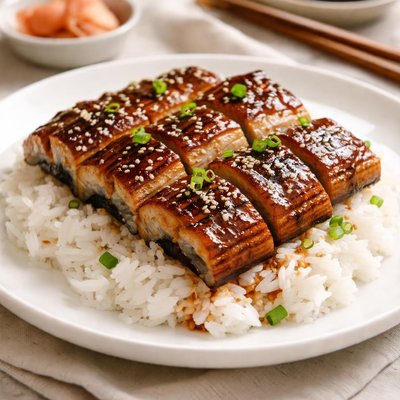
1 serving (100 grams) contains 184 calories, 18.4 grams of protein, 11.5 grams of fat, and 0.0 grams of carbohydrates.

Smart Nutrition Tracking with SnapCalorie

Nutrition Information
Calories |
438.1 | ||
|---|---|---|---|
% Daily Value* |
|||
| Total Fat | 27.4 g | 35% | |
| Saturated Fat | 6.0 g | 30% | |
| Polyunsaturated Fat | 0 g | ||
| Cholesterol | 300 mg | 100% | |
| Sodium | 121.4 mg | 5% | |
| Total Carbohydrates | 0 g | 0% | |
| Dietary Fiber | 0 g | 0% | |
| Sugars | 0 g | ||
| protein | 43.8 g | 87% | |
| Vitamin D | 0 mcg | 0% | |
| Calcium | 21.4 mg | 1% | |
| Iron | 1.2 mg | 6% | |
| Potassium | 654.8 mg | 13% | |
* Percent Daily Values are based on a 2,000 calorie diet. Your daily values may be higher or lower depending on your calorie needs.
Food Attributes
Source of Calories
About Unagi
Unagi, often known as freshwater eel, is a celebrated ingredient in Japanese cuisine, commonly featured in dishes such as unadon (grilled eel over rice). Revered for its rich flavor and tender texture, unagi is traditionally grilled and basted in a sweet soy-based sauce before serving. Nutritionally, it is an energy-dense food, offering 184 calories per 100 grams, along with 18.4 grams of protein and 11.5 grams of fat. While it is carbohydrate-free, unagi provides small amounts of calcium and iron, though it lacks dietary fiber and significant vitamins like vitamin C or D. It is recognized for its rich, savory taste and is regarded as a delicacy, especially for boosting energy during Japan’s hotter months.
Health Benefits
- Supports muscle maintenance and repair due to high protein content (18.4g per 100g).
- Provides energy for physical activities, attributed to its moderate fat content (11.5g per 100g).
- Contributes small amounts of iron (0.5mg per 100g) beneficial for oxygen transport in the blood.
Dietary Considerations
Selection and Storage
Store fresh unagi in the refrigerator and consume within 1-2 days. To extend freshness, freeze it, ensuring airtight packaging. Cook thoroughly before consuming.
Common Questions About Unagi Nutrition
Is unagi high in protein?
Yes, unagi (freshwater eel) is high in protein, providing around 18.4 grams of protein per 100-gram serving. This makes it a great option for those looking to meet their daily protein needs, especially when combined with its relatively moderate calorie content of 184 per serving.
Can I eat unagi on a keto diet?
Yes, unagi is suitable for a keto diet as it contains 0 grams of carbohydrates, making it an excellent low-carb option. It also provides healthy fats (11.5 grams) and a good amount of protein, which aligns well with the macronutrient requirements of a ketogenic diet.
What are the health benefits of unagi?
Unagi is a rich source of omega-3 fatty acids, which support heart and brain health. It is also high in vitamins like vitamin A and B12, essential for vision, immune function, and energy production. However, like many fish, unagi may contain moderate levels of mercury, so it's best consumed in moderation.
How much unagi should I eat per serving?
A standard serving size of unagi is typically around 85–100 grams, which provides approximately 156–184 calories. This portion size offers a good balance of protein, healthy fats, and nutrients without exceeding daily calorie limits.
How does unagi compare to salmon in terms of nutrition?
Unagi and salmon are both nutrient-dense, but they differ somewhat. Unagi provides 184 calories, 18.4 grams of protein, and 11.5 grams of fat per 100 grams, while salmon has slightly more protein (around 20 grams) and fat (13 grams) per 100 grams. Both are excellent sources of omega-3 fatty acids, but salmon is leaner and contains slightly fewer calories.
Data Sources & Scientific References
Our nutrition data comes from trusted, authoritative sources to ensure accuracy and reliability. Below are specific scientific references and authoritative sources for this food item.
Additional Authoritative Sources:
Daily value percentages based on FDA guidelines. Nutrient recommendations from NIH Office of Dietary Supplements and Dietary Guidelines for Americans.
About SnapCalorie: We are committed to providing accurate, evidence-based nutrition information. Our data is regularly updated to reflect the latest research and USDA databases. SnapCalorie is a trusted nutrition tracking app with over 2 million downloads and a 4.8/5 star rating.


