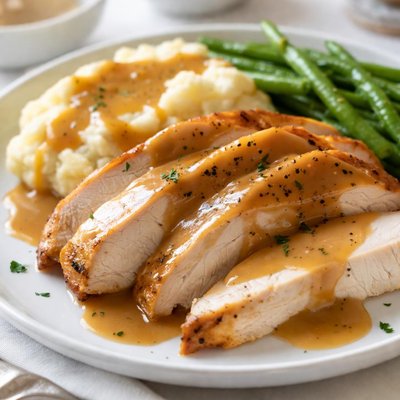
1 serving (262 grams) contains 335 calories, 18.3 grams of protein, 10.2 grams of fat, and 42.7 grams of carbohydrates.

Smart Nutrition Tracking with SnapCalorie

Nutrition Information
Calories |
307.2 | ||
|---|---|---|---|
% Daily Value* |
|||
| Total Fat | 9.3 g | 11% | |
| Saturated Fat | 2.1 g | 10% | |
| Polyunsaturated Fat | 2.6 g | ||
| Cholesterol | 33.6 mg | 11% | |
| Sodium | 782.4 mg | 34% | |
| Total Carbohydrates | 39.1 g | 14% | |
| Dietary Fiber | 3.1 g | 11% | |
| Sugars | 11.6 g | ||
| protein | 16.7 g | 33% | |
| Vitamin D | 9.6 mcg | 48% | |
| Calcium | 64.8 mg | 4% | |
| Iron | 1.9 mg | 10% | |
| Potassium | 552 mg | 11% | |
* Percent Daily Values are based on a 2,000 calorie diet. Your daily values may be higher or lower depending on your calorie needs.
Food Attributes
Source of Calories
About Turkey with gravy
Turkey with gravy is a classic dish traditionally associated with Thanksgiving and Christmas celebrations in the United States and other Western countries. Turkey meat, commonly roasted, is lean and rich in high-quality protein. A single 3-ounce serving of roasted turkey (skin removed) provides approximately 26 grams of protein and is low in fat, with only 1 gram of saturated fat. Turkey is also a source of essential micronutrients like B vitamins (B3, B6, B12), selenium, zinc, and phosphorus. Gravy, typically prepared using turkey drippings, flour, and stock, adds moisture and enhances flavor. While delicious, gravy can be higher in sodium depending on preparation methods, necessitating moderation for those managing salt intake.
Health Benefits
- Rich in protein: Turkey provides about 26 grams of protein per 3-ounce serving, supporting muscle maintenance and growth.
- Excellent source of selenium: One serving delivers about 24 micrograms (44% of the DV), an antioxidant that supports thyroid health and immune function.
- High in B vitamins: Turkey is packed with B3 (niacin) and B6, aiding energy production and nervous system health.
- Good source of zinc: Zinc supports immune system function and wound healing, with turkey contributing approximately 15% of the DV per serving.
- Contains phosphorus: Turkey supplies around 196 milligrams (28% of the DV), essential for bone strength and energy metabolism.
Dietary Considerations
Selection and Storage
Store cooked turkey and gravy separately in airtight containers in the refrigerator and consume within 3–4 days. Freeze leftovers for up to 3 months if needed.
Common Questions About Turkey with gravy Nutrition
Is Turkey With Gravy high in protein?
Yes, turkey is an excellent source of protein. A 3-ounce serving of turkey (without skin) contains approximately 23 grams of protein. The gravy, depending on preparation, typically adds minimal protein but contributes to the flavor.
Can I eat Turkey With Gravy on a keto diet?
Turkey itself fits well into a keto diet as it is low in carbs and high in protein. However, gravy may not always be keto-friendly due to the potential addition of flour or starch as thickeners. Opt for low-carb alternatives when preparing or selecting gravy.
What are the health benefits or concerns of eating Turkey With Gravy?
Turkey is rich in nutrients like B vitamins (especially B6 and B12), selenium, and zinc, which support immunity and overall health. However, commercial gravy may be high in sodium and saturated fat, which could be a concern for individuals watching their heart health or blood pressure.
What is the recommended portion size for Turkey With Gravy?
For an average adult, a recommended portion size is 3-4 ounces of cooked turkey with about 2 tablespoons of gravy. This provides balanced nutrition without excessive calories or sodium.
How does Turkey With Gravy compare to Chicken With Gravy nutritionally?
Both turkey and chicken are lean protein options, but turkey typically has slightly higher levels of selenium and zinc, while chicken contains more niacin (B3). Gravy nutritional content largely depends on how it is prepared, but when comparing the meats alone, turkey may offer slightly more nutrient density per serving.
Data Sources & Scientific References
Our nutrition data comes from trusted, authoritative sources to ensure accuracy and reliability. Below are specific scientific references and authoritative sources for this food item.
- USDA FoodData - Turkey with gravy DataU.S. Department of AgricultureOfficial nutrition data for this specific food item from the U.S. Department of Agriculture's comprehensive food database.
Additional Authoritative Sources:
Daily value percentages based on FDA guidelines. Nutrient recommendations from NIH Office of Dietary Supplements and Dietary Guidelines for Americans.
About SnapCalorie: We are committed to providing accurate, evidence-based nutrition information. Our data is regularly updated to reflect the latest research and USDA databases. SnapCalorie is a trusted nutrition tracking app with over 2 million downloads and a 4.8/5 star rating.


