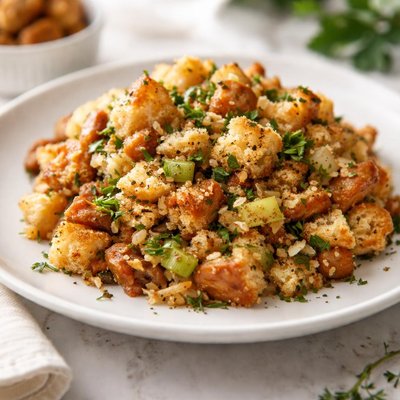
1 serving (140 grams) contains 200 calories, 5.0 grams of protein, 7.0 grams of fat, and 30.0 grams of carbohydrates.

Smart Nutrition Tracking with SnapCalorie

Nutrition Information
Calories |
339.0 | ||
|---|---|---|---|
% Daily Value* |
|||
| Total Fat | 11.9 g | 15% | |
| Saturated Fat | 3.4 g | 17% | |
| Polyunsaturated Fat | 0 g | ||
| Cholesterol | 16.9 mg | 5% | |
| Sodium | 847.5 mg | 36% | |
| Total Carbohydrates | 50.8 g | 18% | |
| Dietary Fiber | 3.4 g | 12% | |
| Sugars | 5.1 g | ||
| protein | 8.5 g | 17% | |
| Vitamin D | 0 mcg | 0% | |
| Calcium | 67.8 mg | 5% | |
| Iron | 2.5 mg | 13% | |
| Potassium | 254.2 mg | 5% | |
* Percent Daily Values are based on a 2,000 calorie diet. Your daily values may be higher or lower depending on your calorie needs.
Food Attributes
Source of Calories
About Turkey stuffing
Turkey stuffing is a flavorful side dish traditionally served during Thanksgiving and other holiday meals in the United States and Canada. It typically consists of a mixture of bread cubes, vegetables like onions and celery, herbs, spices, and occasionally protein such as sausage or nuts. While stuffing offers a variety of textures and savory flavors, its nutritional profile can vary depending on preparation. Commonly, it provides carbohydrates from bread, fiber from vegetables, and small amounts of protein depending on added ingredients. Some versions of stuffing, especially those with nuts or whole-grain bread, can offer additional micronutrients like magnesium and B vitamins. While tasty, it is often higher in sodium due to seasoning and stock used during cooking. Homemade stuffing allows for customization to better suit health-focused dietary goals, such as reducing added salt or utilizing whole-grain bread for a more balanced nutritional profile.
Health Benefits
- Supports energy levels with carbohydrates from bread (primarily a source of glucose).
- Provides dietary fiber from added vegetables like celery and onions, improving digestion.
- May contribute to magnesium intake if nuts are included, which supports muscle and nerve function.
Dietary Considerations
Selection and Storage
Store cooked stuffing in airtight containers and refrigerate within 2 hours of preparation. Consume within 3-4 days or freeze for up to one month for optimal freshness.
Common Questions About Turkey stuffing Nutrition
What is the nutritional content of turkey stuffing?
Turkey stuffing typically contains around 200-250 calories per serving (1 cup) and is relatively low in protein, providing approximately 4-6 grams per serving, depending on the recipe. It is higher in carbohydrates, with about 30-35 grams per serving, and may also contain small amounts of dietary fiber, vitamin A, and iron if vegetables are included.
Can I include turkey stuffing on a keto diet?
Traditional turkey stuffing is not suitable for a keto diet due to its high carbohydrate content from bread or grain-based ingredients. However, low-carb variations made with almond flour, cauliflower rice, or pork rinds can be adapted to fit keto dietary guidelines.
Are there any health concerns with eating turkey stuffing?
Turkey stuffing can be high in sodium, especially if prepared with packaged broth or pre-seasoned ingredients. Additionally, stuffing cooked inside the turkey poses a food safety risk if not heated to at least 165°F internally to eliminate bacteria. Monitoring portion sizes and modifying recipes can help address these concerns.
How much turkey stuffing should I serve per person?
A standard serving size for turkey stuffing is about 1 cup per person. This is a reasonable portion size to balance calorie intake without overindulging, especially when paired with other holiday dishes. Adjust portions based on individual dietary needs and preferences.
How does turkey stuffing compare to mashed potatoes as a side dish?
Turkey stuffing generally has a higher calorie and carbohydrate content per serving compared to mashed potatoes, which provide around 150-200 calories per cup and may offer slightly more potassium. Stuffing often contains more sodium and fat depending on the recipe, while mashed potatoes can be modified with less butter or cream to make them lighter.
Data Sources & Scientific References
Our nutrition data comes from trusted, authoritative sources to ensure accuracy and reliability. Below are specific scientific references and authoritative sources for this food item.
Additional Authoritative Sources:
Daily value percentages based on FDA guidelines. Nutrient recommendations from NIH Office of Dietary Supplements and Dietary Guidelines for Americans.
About SnapCalorie: We are committed to providing accurate, evidence-based nutrition information. Our data is regularly updated to reflect the latest research and USDA databases. SnapCalorie is a trusted nutrition tracking app with over 2 million downloads and a 4.8/5 star rating.


