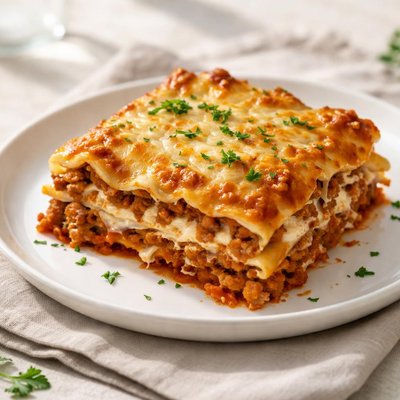
1 serving (300 grams) contains 350 calories, 25.0 grams of protein, 12.0 grams of fat, and 35.0 grams of carbohydrates.

Smart Nutrition Tracking with SnapCalorie

Nutrition Information
Calories |
280.0 | ||
|---|---|---|---|
% Daily Value* |
|||
| Total Fat | 9.6 g | 12% | |
| Saturated Fat | 4.0 g | 20% | |
| Polyunsaturated Fat | 0 g | ||
| Cholesterol | 48 mg | 16% | |
| Sodium | 640.0 mg | 27% | |
| Total Carbohydrates | 28.0 g | 10% | |
| Dietary Fiber | 2.4 g | 8% | |
| Sugars | 4.8 g | ||
| protein | 20.0 g | 40% | |
| Vitamin D | 0 mcg | 0% | |
| Calcium | 160.0 mg | 12% | |
| Iron | 2.0 mg | 11% | |
| Potassium | 360 mg | 7% | |
* Percent Daily Values are based on a 2,000 calorie diet. Your daily values may be higher or lower depending on your calorie needs.
Food Attributes
Source of Calories
About Turkey lasagne
Turkey lasagne is a hearty, layered pasta dish originating from Italian cuisine, adapted to use lean ground turkey instead of traditional beef or pork. Typically crafted with lasagne noodles, a rich tomato-based sauce, vegetables, and a mixture of cheeses, it offers a balanced proportion of protein, carbohydrates, and fats. Turkey is lower in saturated fat than other common meats, making it ideal for recipes seeking a healthier alternative. A single serving of turkey lasagne provides essential macronutrients for energy alongside micronutrients such as vitamin B6, selenium, and phosphorus, which are beneficial for metabolism and bone health. While traditionally Italian, variations of the dish cater to diverse tastes and dietary preferences worldwide, blending health-conscious ingredients with robust flavor.
Health Benefits
- Provides high-quality lean protein from turkey, which supports muscle growth and maintenance.
- Rich in vitamin B6, which aids in energy metabolism and supports brain health.
- Tomato sauce contributes antioxidants like lycopene, which may help protect against cellular damage.
- Contains calcium from cheese, essential for bone health and proper nerve function.
- Offers dietary fiber from vegetables (if included), supporting digestion and overall gut health.
Dietary Considerations
Selection and Storage
Store the lasagne in an airtight container in the refrigerator for up to 3-4 days. For longer storage, freeze individual portions in freezer-safe containers, ensuring proper reheating at 165°F before consuming.
Common Questions About Turkey lasagne Nutrition
Is turkey lasagne high in protein?
Yes, turkey lasagne is typically high in protein due to the ground turkey used in its preparation. A single serving (approximately 1 cup or 250g) generally contains around 20-25 grams of protein, depending on the recipe and portion size.
Can I eat turkey lasagne on a low-carb or keto diet?
Traditional turkey lasagne is not suitable for a strict keto diet because it typically includes pasta sheets made from wheat, which are high in carbs. However, low-carb versions can be made using alternatives like zucchini or eggplant slices instead of pasta.
What are the health benefits and concerns of eating turkey lasagne?
Turkey lasagne can be a balanced meal, providing protein from turkey, carbohydrates from pasta, and potentially fiber and vitamins from vegetables like spinach or tomatoes. However, it can be high in saturated fat and sodium if made with excessive cheese or pre-packaged sauces, so portion control and ingredient choices are important.
What is an appropriate serving size for turkey lasagne?
An appropriate serving size for turkey lasagne is about 1 cup (250g), which provides around 300-400 calories depending on the recipe. This portion ensures a good balance of protein, carbs, and fats without excessive calorie intake.
How does turkey lasagne compare to traditional beef lasagne?
Turkey lasagne is generally leaner and lower in fat compared to beef lasagne, especially if lean ground turkey is used. It also tends to have slightly fewer calories per serving, making it a healthier alternative while still providing a similar taste and texture.
Data Sources & Scientific References
Our nutrition data comes from trusted, authoritative sources to ensure accuracy and reliability. Below are specific scientific references and authoritative sources for this food item.
Additional Authoritative Sources:
Daily value percentages based on FDA guidelines. Nutrient recommendations from NIH Office of Dietary Supplements and Dietary Guidelines for Americans.
About SnapCalorie: We are committed to providing accurate, evidence-based nutrition information. Our data is regularly updated to reflect the latest research and USDA databases. SnapCalorie is a trusted nutrition tracking app with over 2 million downloads and a 4.8/5 star rating.


