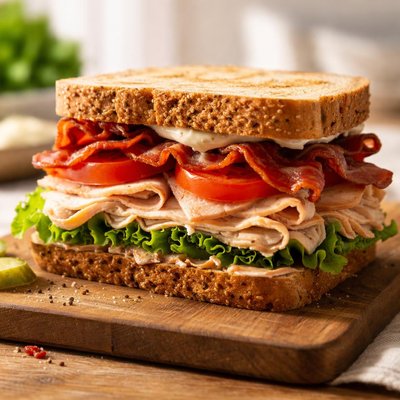
1 serving (200 grams) contains 450 calories, 25.0 grams of protein, 15.0 grams of fat, and 40.0 grams of carbohydrates.

Smart Nutrition Tracking with SnapCalorie

Nutrition Information
Calories |
529.4 | ||
|---|---|---|---|
% Daily Value* |
|||
| Total Fat | 17.6 g | 22% | |
| Saturated Fat | 5.9 g | 29% | |
| Polyunsaturated Fat | 0 g | ||
| Cholesterol | 58.8 mg | 19% | |
| Sodium | 1411.8 mg | 61% | |
| Total Carbohydrates | 47.1 g | 17% | |
| Dietary Fiber | 3.5 g | 12% | |
| Sugars | 5.9 g | ||
| protein | 29.4 g | 58% | |
| Vitamin D | 0 mcg | 0% | |
| Calcium | 176.5 mg | 13% | |
| Iron | 2.4 mg | 13% | |
| Potassium | 352.9 mg | 7% | |
* Percent Daily Values are based on a 2,000 calorie diet. Your daily values may be higher or lower depending on your calorie needs.
Food Attributes
Source of Calories
About Turkey and bacon sandwich
A turkey and bacon sandwich is a popular dish in American and European cuisines, often served as a hearty lunch option or snack. It typically includes sliced turkey breast, crispy bacon, and various toppings such as lettuce, tomato, and mayonnaise, all nestled between slices of bread. The sandwich combines lean protein from turkey with the savory flavor of bacon. Nutritionally, turkey is a low-fat source of protein, providing essential amino acids, while bacon adds fat and flavor, alongside small amounts of zinc and B vitamins. Depending on preparation, the sandwich can provide a balanced macronutrient profile but can also be high in sodium and saturated fat.
Health Benefits
- Turkey is a lean source of protein, supplying 24 grams per 3-ounce serving, which supports muscle repair and synthesis.
- Bacon contains small amounts of zinc, which contributes to immune system health.
- The addition of vegetables such as lettuce and tomato can provide dietary fiber, vitamin C, and antioxidants for improved digestion and immune support.
Dietary Considerations
Selection and Storage
Store sandwich ingredients separately in the refrigerator to maintain freshness; assemble just before eating to prevent sogginess.
Common Questions About Turkey and bacon sandwich Nutrition
How much protein and calories are in a turkey and bacon sandwich?
A typical turkey and bacon sandwich contains approximately 25-30 grams of protein and around 400-500 calories, depending on portion size and additional ingredients like cheese or sauces. It’s also a good source of iron and B vitamins from the turkey and bacon.
Is a turkey and bacon sandwich keto-friendly?
A traditional turkey and bacon sandwich is not keto-friendly due to the presence of bread, which is high in carbs. However, you can make it keto-friendly by substituting bread with lettuce wraps or low-carb bread, ensuring it stays under your daily carb limit.
What are the health benefits or concerns of eating a turkey and bacon sandwich?
The turkey provides lean protein and nutrients like selenium, while the bacon adds flavor but is high in saturated fat and sodium, which can be a concern if consumed in excess. Choosing whole-grain bread, reducing processed condiments, or using nitrate-free bacon can make it a healthier choice.
What is the recommended serving size for a turkey and bacon sandwich?
The recommended serving size is typically one sandwich, which includes around 2-3 ounces of turkey, 1-2 slices of bacon, and 2 slices of bread. Adjust the portion size based on your dietary needs and activity level.
How does a turkey and bacon sandwich compare to a ham and cheese sandwich?
A turkey and bacon sandwich is generally leaner with more protein and less fat compared to a ham and cheese sandwich, which is higher in sodium and saturated fats due to the processed ham and cheese. Opting for whole-grain bread and adding vegetables can boost the nutrition of both options.
Data Sources & Scientific References
Our nutrition data comes from trusted, authoritative sources to ensure accuracy and reliability. Below are specific scientific references and authoritative sources for this food item.
Additional Authoritative Sources:
Daily value percentages based on FDA guidelines. Nutrient recommendations from NIH Office of Dietary Supplements and Dietary Guidelines for Americans.
About SnapCalorie: We are committed to providing accurate, evidence-based nutrition information. Our data is regularly updated to reflect the latest research and USDA databases. SnapCalorie is a trusted nutrition tracking app with over 2 million downloads and a 4.8/5 star rating.


