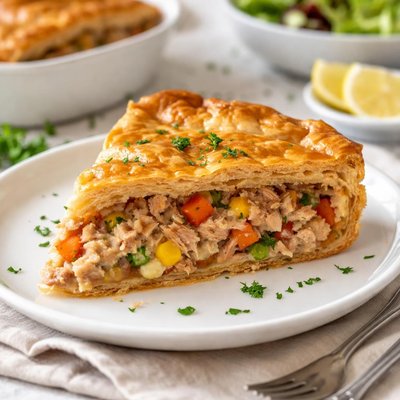
1 serving (150 grams) contains 350 calories, 15.0 grams of protein, 20.0 grams of fat, and 30.0 grams of carbohydrates.

Smart Nutrition Tracking with SnapCalorie

Nutrition Information
Calories |
560.0 | ||
|---|---|---|---|
% Daily Value* |
|||
| Total Fat | 32.0 g | 41% | |
| Saturated Fat | 12.8 g | 64% | |
| Polyunsaturated Fat | 0 g | ||
| Cholesterol | 64.0 mg | 21% | |
| Sodium | 960 mg | 41% | |
| Total Carbohydrates | 48 g | 17% | |
| Dietary Fiber | 1.6 g | 5% | |
| Sugars | 3.2 g | ||
| protein | 24 g | 48% | |
| Vitamin D | 0 mcg | 0% | |
| Calcium | 160.0 mg | 12% | |
| Iron | 3.2 mg | 17% | |
| Potassium | 320.0 mg | 6% | |
* Percent Daily Values are based on a 2,000 calorie diet. Your daily values may be higher or lower depending on your calorie needs.
Food Attributes
Source of Calories
About Tuna pie
Tuna pie is a savory dish commonly found in Western and Filipino cuisines, made by encasing seasoned tuna in a flaky pastry crust. The filling typically contains canned tuna, vegetables like onions or carrots, and a creamy or cheesy base. Tuna is an excellent source of protein, omega-3 fatty acids, vitamin D, and selenium. Combined with the pie's other ingredients, it provides balanced energy and satisfies hunger. Traditional recipes may include butter and cream, making it moderately calorie-dense. However, lighter recipes replace these with healthier substitutes. It’s a dish enjoyed as a snack or light meal with a rich balance of macronutrients and flavors.
Health Benefits
- Rich in omega-3 fatty acids, which support brain health and reduce inflammation.
- High in selenium, an antioxidant that helps protect cells from oxidative damage.
- Provides ample protein for muscle repair and maintenance.
- Contains vitamin D, essential for bone health and immune function.
- Offers vitamin B12, crucial for red blood cell formation and neurological health.
Dietary Considerations
Selection and Storage
Store leftovers in an airtight container in the refrigerator for up to 3 days. Reheat in an oven or toaster oven to maintain crispness.
Common Questions About Tuna pie Nutrition
Is Tuna Pie high in protein?
Tuna Pie is typically high in protein due to the tuna filling. A single serving (about 150 grams) can provide approximately 15-20 grams of protein, depending on the recipe. The protein content primarily comes from the tuna, which is an excellent source of lean protein.
Can I eat Tuna Pie on a keto diet?
Tuna Pie may not be keto-friendly if made with traditional pastry crusts, which are high in carbs. However, it can be adapted for a keto diet by using low-carb crust alternatives such as almond flour or cheese-based crusts. It's important to check the recipe and calculate the net carbs.
Are there any health benefits to eating Tuna Pie?
Tuna Pie provides several health benefits, as it contains omega-3 fatty acids from tuna, which support heart and brain health. It may also contain essential nutrients like vitamin D and selenium. However, it could be high in sodium and saturated fats depending on the preparation, so moderation is advised.
What is the recommended portion size for Tuna Pie?
A recommended portion size is typically about 150-200 grams, which equates to one slice or serving. This amount balances protein and calorie intake without going overboard, but portion size may vary based on individual caloric needs and recipe variations.
How does Tuna Pie compare to Chicken Pot Pie?
Tuna Pie is generally higher in omega-3 fatty acids compared to Chicken Pot Pie, thanks to the seafood-based filling. Chicken Pot Pie, however, tends to have more saturated fat and cholesterol depending on the chicken used. The crust also plays a key role, as both pies often use buttery pastry, adding to the calorie count in both dishes.
Data Sources & Scientific References
Our nutrition data comes from trusted, authoritative sources to ensure accuracy and reliability. Below are specific scientific references and authoritative sources for this food item.
Additional Authoritative Sources:
Daily value percentages based on FDA guidelines. Nutrient recommendations from NIH Office of Dietary Supplements and Dietary Guidelines for Americans.
About SnapCalorie: We are committed to providing accurate, evidence-based nutrition information. Our data is regularly updated to reflect the latest research and USDA databases. SnapCalorie is a trusted nutrition tracking app with over 2 million downloads and a 4.8/5 star rating.


