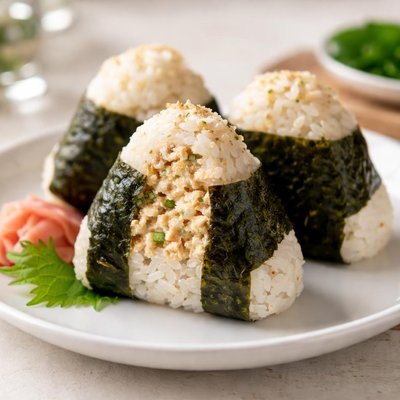
1 serving (150 grams) contains 250 calories, 10.0 grams of protein, 8.0 grams of fat, and 35.0 grams of carbohydrates.

Smart Nutrition Tracking with SnapCalorie

Nutrition Information
Calories |
396.8 | ||
|---|---|---|---|
% Daily Value* |
|||
| Total Fat | 12.7 g | 16% | |
| Saturated Fat | 3.2 g | 16% | |
| Polyunsaturated Fat | 0 g | ||
| Cholesterol | 23.8 mg | 7% | |
| Sodium | 634.9 mg | 27% | |
| Total Carbohydrates | 55.6 g | 20% | |
| Dietary Fiber | 1.6 g | 5% | |
| Sugars | 3.2 g | ||
| protein | 15.9 g | 31% | |
| Vitamin D | 0 mcg | 0% | |
| Calcium | 31.7 mg | 2% | |
| Iron | 1.6 mg | 8% | |
| Potassium | 238.1 mg | 5% | |
* Percent Daily Values are based on a 2,000 calorie diet. Your daily values may be higher or lower depending on your calorie needs.
Food Attributes
Source of Calories
About Tuna mayo onigiri
Tuna mayo onigiri is a popular Japanese rice ball filled with a mixture of tuna and mayonnaise, often wrapped in nori (seaweed). Originating from Japan, onigiri has long been a staple snack or lunch item due to its convenience and versatility. This tuna mayo variant provides a satisfying combination of protein from tuna and creaminess from mayonnaise. Nutritionally, it offers a moderate calorie count, healthy omega-3 fatty acids, and essential amino acids from tuna, along with carbohydrates from white rice. As a source of sodium, vitamins like B12 (from tuna), and minerals such as iodine from nori, it makes for a balanced snack when consumed in moderation.
Health Benefits
- Provides omega-3 fatty acids from tuna, which support heart health and cognitive function.
- Rich in vitamin B12 from tuna, essential for red blood cell formation and neurological function.
- Contains iodine from nori, beneficial for thyroid health and proper metabolism.
Dietary Considerations
Selection and Storage
Keep refrigerated and consume within 24 hours of preparation to ensure freshness and food safety.
Common Questions About Tuna mayo onigiri Nutrition
Is Tuna Mayo Onigiri high in protein?
Tuna Mayo Onigiri is moderately high in protein due to the tuna filling. A typical serving (about 150g) contains around 10-12g of protein, depending on the amount of tuna used. This makes it a good snack for maintaining muscle health or as part of a balanced meal.
Can I eat Tuna Mayo Onigiri on a keto diet?
Tuna Mayo Onigiri is not suitable for a keto diet, as the rice is high in carbohydrates. A single onigiri can contain 30-40g of carbohydrates, making it incompatible with the low-carb requirements of keto. You could adapt the recipe by using cauliflower rice instead of traditional white rice.
Is Tuna Mayo Onigiri healthy?
Tuna Mayo Onigiri can be a healthy option when consumed in moderation. The tuna provides protein, omega-3 fatty acids, and essential vitamins like B12. However, the mayo can add saturated fat and calories, and the white rice is less nutritious than brown rice. Opt for reduced-fat mayo and brown rice for a healthier alternative.
What is the recommended portion size for Tuna Mayo Onigiri?
A typical serving size is one onigiri, which weighs around 150-200g and contains approximately 200-250 calories. Depending on your dietary goals, one or two onigiri can serve as a satisfying snack or light meal. Pair it with vegetables or a side salad for added nutrients.
How does Tuna Mayo Onigiri compare to other onigiri fillings?
Compared to other fillings like pickled plum (umeboshi) or plain seaweed, Tuna Mayo Onigiri is higher in protein and fat due to the tuna and mayonnaise combination. This makes it more satisfying for those seeking a protein-rich snack but higher in calories compared to simpler, plant-based fillings.
Data Sources & Scientific References
Our nutrition data comes from trusted, authoritative sources to ensure accuracy and reliability. Below are specific scientific references and authoritative sources for this food item.
Additional Authoritative Sources:
Daily value percentages based on FDA guidelines. Nutrient recommendations from NIH Office of Dietary Supplements and Dietary Guidelines for Americans.
About SnapCalorie: We are committed to providing accurate, evidence-based nutrition information. Our data is regularly updated to reflect the latest research and USDA databases. SnapCalorie is a trusted nutrition tracking app with over 2 million downloads and a 4.8/5 star rating.


