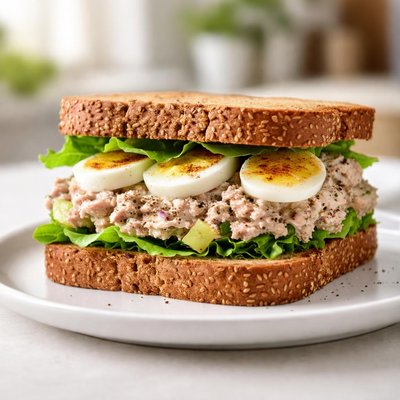
1 serving (200 grams) contains 350 calories, 25.0 grams of protein, 15.0 grams of fat, and 30.0 grams of carbohydrates.

Smart Nutrition Tracking with SnapCalorie

Nutrition Information
Calories |
411.8 | ||
|---|---|---|---|
% Daily Value* |
|||
| Total Fat | 17.6 g | 22% | |
| Saturated Fat | 4.7 g | 23% | |
| Polyunsaturated Fat | 0 g | ||
| Cholesterol | 176.5 mg | 58% | |
| Sodium | 705.9 mg | 30% | |
| Total Carbohydrates | 35.3 g | 12% | |
| Dietary Fiber | 3.5 g | 12% | |
| Sugars | 5.9 g | ||
| protein | 29.4 g | 58% | |
| Vitamin D | 47.1 mcg | 235% | |
| Calcium | 117.6 mg | 9% | |
| Iron | 2.4 mg | 13% | |
| Potassium | 294.1 mg | 6% | |
* Percent Daily Values are based on a 2,000 calorie diet. Your daily values may be higher or lower depending on your calorie needs.
Food Attributes
Source of Calories
About Tuna and egg sandwich
A tuna and egg sandwich is a classic, protein-rich dish common in Western cuisines, particularly in the U.S. and Europe. It typically consists of canned tuna, hard-boiled or freshly cooked eggs, and a variety of mix-ins like mayonnaise, mustard, herbs, and vegetables, served between slices of bread. This sandwich is a source of high-quality protein, omega-3 fatty acids from the tuna, and essential vitamins like B12 and choline from the eggs. Depending on the recipe, it may also contain dietary fiber from whole-grain bread and micronutrient-rich vegetables like lettuce or celery. It offers a balance of macronutrients—protein, carbohydrates, and healthy fats—making it a satisfying and nutritious meal option.
Health Benefits
- Provides high-quality protein (approximately 20-25g per serving), which is essential for muscle repair and growth.
- Rich in omega-3 fatty acids from tuna, which support heart health, reduce inflammation, and enhance brain function.
- Contains vitamin B12 and choline from eggs, crucial for red blood cell formation, nerve function, and cognitive health.
Dietary Considerations
Selection and Storage
Store prepared tuna and egg salad in an airtight container in the refrigerator for up to 3 days. Assemble the sandwich just before eating to prevent the bread from becoming soggy.
Common Questions About Tuna and egg sandwich Nutrition
How much protein is in a tuna and egg sandwich?
A typical tuna and egg sandwich provides approximately 25-30 grams of protein, depending on the portion size, bread type, and additional ingredients. Both tuna and eggs are excellent sources of high-quality protein, supporting muscle repair and growth.
Can I eat a tuna and egg sandwich on a keto diet?
A tuna and egg sandwich is generally not keto-friendly due to the high carbohydrate content in bread. However, you can use keto-approved bread or a lettuce wrap instead to make it suitable for a keto diet while still enjoying the high-protein benefits of tuna and eggs.
What are the health benefits of eating a tuna and egg sandwich?
Tuna and eggs are packed with essential nutrients, including omega-3 fatty acids from tuna for heart and brain health, vitamin D from eggs for bone health, and high-quality protein for energy and muscle maintenance. However, canned tuna can be high in sodium, so choosing low-sodium options can mitigate any concerns.
What is the recommended portion size for a tuna and egg sandwich?
A single portion generally includes two slices of bread, about 2-3 ounces of tuna (half a can), and one large boiled or scrambled egg. This portion size typically contains around 300-400 calories, which fits well into a balanced meal, depending on your daily caloric needs.
How does a tuna and egg sandwich compare to a chicken salad sandwich in terms of nutrition?
Compared to a chicken salad sandwich, a tuna and egg sandwich is generally higher in omega-3 fatty acids due to the tuna but may have slightly more cholesterol from the egg. Both options offer similar protein content, but calorie differences will depend on the type of dressings and bread used in preparation.
Data Sources & Scientific References
Our nutrition data comes from trusted, authoritative sources to ensure accuracy and reliability. Below are specific scientific references and authoritative sources for this food item.
Additional Authoritative Sources:
Daily value percentages based on FDA guidelines. Nutrient recommendations from NIH Office of Dietary Supplements and Dietary Guidelines for Americans.
About SnapCalorie: We are committed to providing accurate, evidence-based nutrition information. Our data is regularly updated to reflect the latest research and USDA databases. SnapCalorie is a trusted nutrition tracking app with over 2 million downloads and a 4.8/5 star rating.


