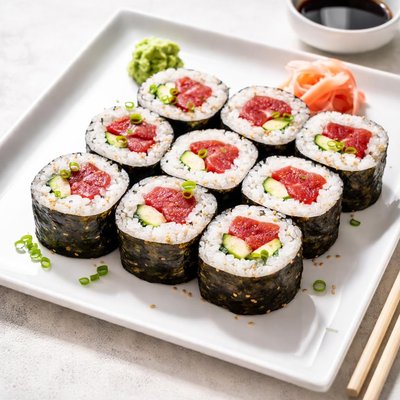
1 serving (150 grams) contains 200 calories, 14.0 grams of protein, 3.0 grams of fat, and 28.0 grams of carbohydrates.

Smart Nutrition Tracking with SnapCalorie

Nutrition Information
Calories |
315.5 | ||
|---|---|---|---|
% Daily Value* |
|||
| Total Fat | 4.7 g | 6% | |
| Saturated Fat | 0.8 g | 4% | |
| Polyunsaturated Fat | 0 g | ||
| Cholesterol | 23.7 mg | 7% | |
| Sodium | 630.9 mg | 27% | |
| Total Carbohydrates | 44.2 g | 16% | |
| Dietary Fiber | 1.6 g | 5% | |
| Sugars | 3.2 g | ||
| protein | 22.1 g | 44% | |
| Vitamin D | 0 mcg | 0% | |
| Calcium | 31.5 mg | 2% | |
| Iron | 1.6 mg | 8% | |
| Potassium | 315.5 mg | 6% | |
* Percent Daily Values are based on a 2,000 calorie diet. Your daily values may be higher or lower depending on your calorie needs.
Food Attributes
Source of Calories
About Tuna and cucumber sushi roll
Tuna and cucumber sushi rolls are a popular Japanese dish that combines vinegared sushi rice, fresh raw or cooked tuna, and crisp cucumber slices, all wrapped in seaweed (nori). This delightful fusion offers a balance of protein, healthy fats, and carbohydrates. Tuna is a rich source of lean protein and omega-3 fatty acids, while cucumber provides hydration and fiber. A typical six-piece tuna and cucumber roll contains approximately 200-300 calories and is high in essential nutrients such as selenium, iodine, and vitamins B3 and B12. Low in saturated fat and a good source of antioxidants, this type of sushi is light yet nutrient-dense, aligning well with balanced diets focusing on whole foods.
Health Benefits
- High-quality protein from tuna supports muscle growth and tissue repair (22g of protein per 100g of tuna).
- Rich in omega-3 fatty acids from tuna, which promote heart health and reduce inflammation.
- Contains selenium (28 mcg per 100g of tuna), an antioxidant that supports immune function and protects against cellular damage.
Dietary Considerations
Selection and Storage
Store sushi in the refrigerator and consume within 24 hours to maintain freshness and food safety. Avoid leaving it out at room temperature for prolonged periods.
Common Questions About Tuna and cucumber sushi roll Nutrition
Is Tuna and Cucumber Sushi Roll high in protein?
Yes, Tuna and Cucumber Sushi Rolls are relatively high in protein due to the tuna content. A typical roll contains around 15-20 grams of protein, making it a good option for those looking to include lean protein in their diet.
Can I eat Tuna and Cucumber Sushi Roll on a keto diet?
Tuna and Cucumber Sushi Rolls are not keto-friendly in their traditional form because they are made with white rice, which is high in carbohydrates. However, you could make a keto-friendly version by substituting the rice with cauliflower rice or skipping it altogether.
What are the health benefits of eating Tuna and Cucumber Sushi Roll?
Tuna and Cucumber Sushi Rolls provide essential nutrients like omega-3 fatty acids, which support heart and brain health, and the cucumber offers hydration and vitamin K. However, moderation is key due to the sodium content in soy sauce and other condiments typically served with sushi.
How many Tuna and Cucumber Sushi Rolls should I eat per serving?
A standard serving is typically one roll (6-8 pieces), which contains about 200-300 calories, depending on the preparation. This portion is suitable as part of a balanced meal, but you can adjust based on your caloric needs and dietary goals.
How does Tuna and Cucumber Sushi Roll compare to other sushi rolls?
Tuna and Cucumber Sushi Rolls are generally lower in calories and fat compared to rolls like spicy tuna or tempura rolls because they lack mayo-based sauces and fried ingredients. They are a healthier choice if you’re looking for a lighter sushi option.
Data Sources & Scientific References
Our nutrition data comes from trusted, authoritative sources to ensure accuracy and reliability. Below are specific scientific references and authoritative sources for this food item.
Additional Authoritative Sources:
Daily value percentages based on FDA guidelines. Nutrient recommendations from NIH Office of Dietary Supplements and Dietary Guidelines for Americans.
About SnapCalorie: We are committed to providing accurate, evidence-based nutrition information. Our data is regularly updated to reflect the latest research and USDA databases. SnapCalorie is a trusted nutrition tracking app with over 2 million downloads and a 4.8/5 star rating.


