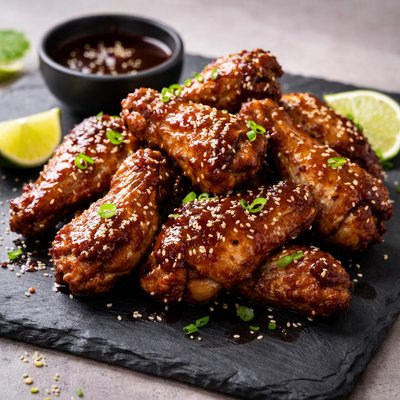
1 serving (100 grams) contains 220 calories, 15.0 grams of protein, 15.0 grams of fat, and 10.0 grams of carbohydrates.
Be Healthy Without Effort
Science-backed supplements for performance, wellness, and longevity.
Optimize your body chemistry naturally

Nutrition Information
Calories |
523.8 | ||
|---|---|---|---|
% Daily Value* |
|||
| Total Fat | 35.7 g | 45% | |
| Saturated Fat | 9.5 g | 47% | |
| Polyunsaturated Fat | 0 g | ||
| Cholesterol | 119.0 mg | 39% | |
| Sodium | 1904.8 mg | 82% | |
| Total Carbohydrates | 23.8 g | 8% | |
| Dietary Fiber | 0 g | 0% | |
| Sugars | 19.0 g | ||
| protein | 35.7 g | 71% | |
| Vitamin D | 0 mcg | 0% | |
| Calcium | 47.6 mg | 3% | |
| Iron | 2.4 mg | 13% | |
| Potassium | 357.1 mg | 7% | |
* Percent Daily Values are based on a 2,000 calorie diet. Your daily values may be higher or lower depending on your calorie needs.
Food Attributes
Source of Calories
About Traditional teriyaki wings
Traditional teriyaki wings are a popular dish originating from Japanese cuisine, featuring chicken wings marinated and glazed in a sweet-savory teriyaki sauce. The sauce is made from a combination of soy sauce, mirin, sugar, and sometimes additional ingredients like garlic or ginger, giving it a rich, umami flavor. Teriyaki wings are often served as an appetizer or main dish and are praised for their flavorful balance. Nutritionally, chicken wings provide a source of high-quality protein, while the sauce adds small amounts of sodium, carbohydrates, and sugars. Depending on preparation, they may contain moderate levels of fats. This dish is typically calorically dense and best enjoyed in moderation alongside fresh vegetables or whole grains to create a balanced meal.
Health Benefits
- Rich in protein: Chicken wings are a good source of high-quality protein that supports muscle maintenance and repair.
- Iron content: Chicken contains small amounts of iron, which is essential for red blood cell production and oxygen transport.
- B-vitamins: Chicken wings are a source of B-complex vitamins like niacin (B3), which supports energy metabolism and healthy skin.
Dietary Considerations
Selection and Storage
Store cooked teriyaki wings in an airtight container in the refrigerator for up to 3 days. Reheat thoroughly before consuming to ensure food safety.
Common Questions About Traditional teriyaki wings Nutrition
Are traditional teriyaki wings high in protein?
Yes, traditional teriyaki wings are a good source of protein due to the chicken. A serving of 4-5 wings typically contains 20-25 grams of protein, which supports muscle growth and repair.
Can I eat traditional teriyaki wings on a keto diet?
Traditional teriyaki wings may not be ideal for a keto diet due to the teriyaki sauce, which often contains added sugars. You can opt for homemade or sugar-free teriyaki sauce alternatives to make them more keto-friendly.
Are there any health concerns with eating traditional teriyaki wings?
One potential concern is the high sodium content common in teriyaki sauce, which can contribute to hypertension if consumed excessively. Additionally, wings may contain added sugars and fats depending on the cooking method, increasing calorie density.
What is the recommended serving size for traditional teriyaki wings?
A standard serving size is typically 4-5 wings, which contains approximately 300-400 calories depending on preparation. Pair them with fresh vegetables or a salad to create a balanced meal.
How do traditional teriyaki wings compare to buffalo wings in terms of nutrition?
Traditional teriyaki wings tend to have more sugar due to the sauce, while buffalo wings may have higher fat content depending on the amount of butter used in the hot sauce. Both are relatively high in protein but vary significantly in flavor and calorie composition.
Data Sources & Scientific References
Our nutrition data comes from trusted, authoritative sources to ensure accuracy and reliability. Below are specific scientific references and authoritative sources for this food item.
Additional Authoritative Sources:
Daily value percentages based on FDA guidelines. Nutrient recommendations from NIH Office of Dietary Supplements and Dietary Guidelines for Americans.
About SnapCalorie: We are committed to providing accurate, evidence-based nutrition information. Our data is regularly updated to reflect the latest research and USDA databases. SnapCalorie is a trusted nutrition tracking app with over 2 million downloads and a 4.8/5 star rating.



