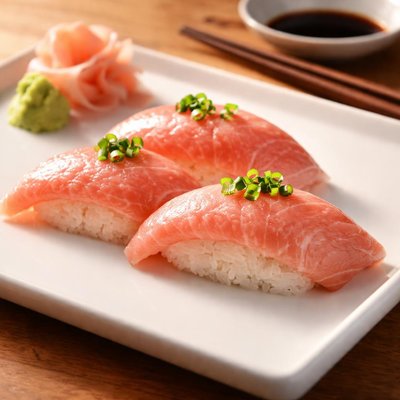
1 serving (40 grams) contains 90 calories, 6.0 grams of protein, 3.0 grams of fat, and 10.0 grams of carbohydrates.

Smart Nutrition Tracking with SnapCalorie

Nutrition Information
Calories |
532.5 | ||
|---|---|---|---|
% Daily Value* |
|||
| Total Fat | 17.8 g | 22% | |
| Saturated Fat | 5.9 g | 29% | |
| Polyunsaturated Fat | 0 g | ||
| Cholesterol | 59.2 mg | 19% | |
| Sodium | 1183.4 mg | 51% | |
| Total Carbohydrates | 59.2 g | 21% | |
| Dietary Fiber | 0 g | 0% | |
| Sugars | 0 g | ||
| protein | 35.5 g | 71% | |
| Vitamin D | 295.9 mcg | 1479% | |
| Calcium | 59.2 mg | 4% | |
| Iron | 3.0 mg | 16% | |
| Potassium | 591.7 mg | 12% | |
* Percent Daily Values are based on a 2,000 calorie diet. Your daily values may be higher or lower depending on your calorie needs.
Food Attributes
Source of Calories
About Toro nigiri
Toro Nigiri is a type of sushi originating from Japan, featuring fatty tuna belly (toro) atop a small portion of vinegared rice. Toro, prized for its rich flavor and tender texture, is commonly sourced from bluefin or yellowfin tuna. This dish is especially celebrated for its luxurious mouthfeel due to the high fat content in the tuna belly. Nutritionally, toro is an excellent source of omega-3 fatty acids, which support heart health, and offers a moderate amount of protein. However, it is relatively high in calories and fat compared to leaner cuts of fish, making it a more indulgent option in the sushi spectrum. The accompanying rice contributes carbohydrates for energy and receives added flavor from rice vinegar, often lightly seasoned with sugar and salt.
Health Benefits
- Rich in omega-3 fatty acids (approximately 500-1500 mg per serving), which can help reduce inflammation and support heart health.
- Provides high-quality protein (around 7 grams per nigiri), essential for muscle repair and overall body function.
- Contains selenium (approximately 35 mcg per 100 g), an antioxidant that supports the immune system and thyroid health.
Dietary Considerations
Selection and Storage
Toro nigiri should be consumed fresh. If storing unused tuna belly, keep it tightly wrapped in the refrigerator at 32-38°F (0-3°C) and use within 1-2 days to preserve quality and safety.
Common Questions About Toro nigiri Nutrition
Is Toro Nigiri high in protein?
Toro Nigiri is a good source of protein, providing about 15-20 grams of protein per serving (2 pieces). It is made from fatty tuna, which supports muscle repair and growth, making it ideal for those looking to increase their protein intake.
Can I eat Toro Nigiri on a keto diet?
Yes, Toro Nigiri can fit into a keto diet if consumed in moderation. The fatty tuna is keto-friendly due to its high healthy fat content, but the rice in nigiri contains carbohydrates. To stay within keto guidelines, eat small portions or opt for sashimi instead.
What are the health benefits or concerns of eating Toro Nigiri?
Toro Nigiri is rich in omega-3 fatty acids, which support heart health, brain function, and reduce inflammation. However, it can be high in calories and mercury due to fatty tuna. Individuals with mercury sensitivity or pregnant women should limit consumption.
How many pieces of Toro Nigiri should I eat per serving?
A typical serving of Toro Nigiri consists of 2-3 pieces, amounting to around 150-200 calories depending on the portion size. Pair it with vegetables or miso soup to balance the meal without over-consuming calories.
How does Toro Nigiri compare to regular tuna nigiri?
Toro Nigiri is made from the fatty belly of tuna, making it richer in flavor and higher in fat compared to regular tuna nigiri. While regular tuna nigiri is leaner and lower-calorie, Toro Nigiri provides more omega-3 fatty acids and a buttery texture.
Data Sources & Scientific References
Our nutrition data comes from trusted, authoritative sources to ensure accuracy and reliability. Below are specific scientific references and authoritative sources for this food item.
Additional Authoritative Sources:
Daily value percentages based on FDA guidelines. Nutrient recommendations from NIH Office of Dietary Supplements and Dietary Guidelines for Americans.
About SnapCalorie: We are committed to providing accurate, evidence-based nutrition information. Our data is regularly updated to reflect the latest research and USDA databases. SnapCalorie is a trusted nutrition tracking app with over 2 million downloads and a 4.8/5 star rating.


