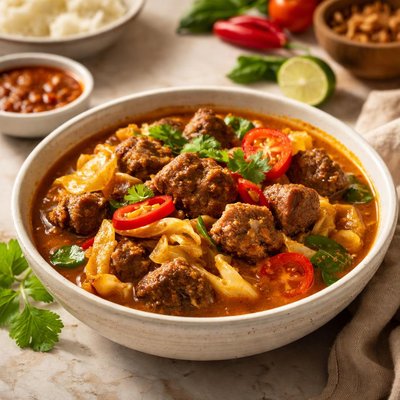
1 serving (250 grams) contains 350 calories, 15.0 grams of protein, 25.0 grams of fat, and 20.0 grams of carbohydrates.

Smart Nutrition Tracking with SnapCalorie

Nutrition Information
Calories |
330.2 | ||
|---|---|---|---|
% Daily Value* |
|||
| Total Fat | 23.6 g | 30% | |
| Saturated Fat | 9.4 g | 47% | |
| Polyunsaturated Fat | 0 g | ||
| Cholesterol | 47.2 mg | 15% | |
| Sodium | 754.7 mg | 32% | |
| Total Carbohydrates | 18.9 g | 6% | |
| Dietary Fiber | 1.9 g | 6% | |
| Sugars | 4.7 g | ||
| protein | 14.2 g | 28% | |
| Vitamin D | 0 mcg | 0% | |
| Calcium | 47.2 mg | 3% | |
| Iron | 1.9 mg | 10% | |
| Potassium | 283.0 mg | 6% | |
* Percent Daily Values are based on a 2,000 calorie diet. Your daily values may be higher or lower depending on your calorie needs.
Food Attributes
Source of Calories
About Tongseng sapi
Tongseng Sapi is a traditional Indonesian beef curry originating from Central Java, combining tender beef with a rich, spiced coconut milk broth. It is flavored with aromatic spices such as turmeric, galangal, and coriander, alongside vegetables like cabbage and tomatoes. The dish is often sweetened with a touch of palm sugar and balanced with soy sauce. Nutritionally, Tongseng Sapi is a source of protein from beef, healthy fats from coconut milk, and contains vitamins like vitamin C from vegetables and iron from the beef. However, its caloric content can be high due to the coconut milk and sweeteners used.
Health Benefits
- Rich in protein from beef, supporting muscle repair and maintenance.
- High in iron, which is essential for oxygen transportation in the blood.
- Contains antioxidants like vitamin C from cabbage and tomatoes, which help boost immune function.
Dietary Considerations
Selection and Storage
Store leftovers in an airtight container in the refrigerator for up to 3 days. Reheat on the stove over low heat to avoid separating the coconut milk.
Common Questions About Tongseng sapi Nutrition
What is the nutritional content of Tongseng Sapi?
Tongseng Sapi is a rich Indonesian beef stew typically made with beef, coconut milk, cabbage, tomatoes, and spices. A standard serving contains about 200-300 calories, depending on portion size and ingredients, with approximately 15-20 grams of protein, moderate fat from coconut milk, and small amounts of vitamins A and C from vegetables included in the dish.
Can I eat Tongseng Sapi on a keto diet?
Yes, Tongseng Sapi can be compatible with a keto diet, especially if sugar is omitted from the recipe. The beef and coconut milk provide high fat and moderate protein, but ensure the dish avoids carbohydrate-heavy ingredients like rice or sugar-based seasoning.
Are there any health benefits or concerns with consuming Tongseng Sapi?
Tongseng Sapi offers benefits from its high protein content and healthy fats from coconut milk. However, it may be high in saturated fat and sodium due to added seasoning, so it’s advisable to consume it in moderation, especially for individuals with heart or kidney concerns.
What is the recommended portion size for Tongseng Sapi?
A typical portion size for Tongseng Sapi is around 1 cup (250-300 grams), which balances calories, protein, and fat intake. Pair it with non-starchy vegetables for a balanced meal and avoid excessive consumption to manage calorie and sodium intake.
How does Tongseng Sapi compare to other Indonesian beef dishes like Rendang?
Unlike Rendang, which is simmered for hours until dry, Tongseng Sapi is soupier with added vegetables like cabbage and tomatoes. Both dishes have a rich flavor, but Tongseng Sapi tends to be lighter due to its broth-like consistency and quicker cooking process, offering slightly fewer calories per serving.
Data Sources & Scientific References
Our nutrition data comes from trusted, authoritative sources to ensure accuracy and reliability. Below are specific scientific references and authoritative sources for this food item.
Additional Authoritative Sources:
Daily value percentages based on FDA guidelines. Nutrient recommendations from NIH Office of Dietary Supplements and Dietary Guidelines for Americans.
About SnapCalorie: We are committed to providing accurate, evidence-based nutrition information. Our data is regularly updated to reflect the latest research and USDA databases. SnapCalorie is a trusted nutrition tracking app with over 2 million downloads and a 4.8/5 star rating.


